
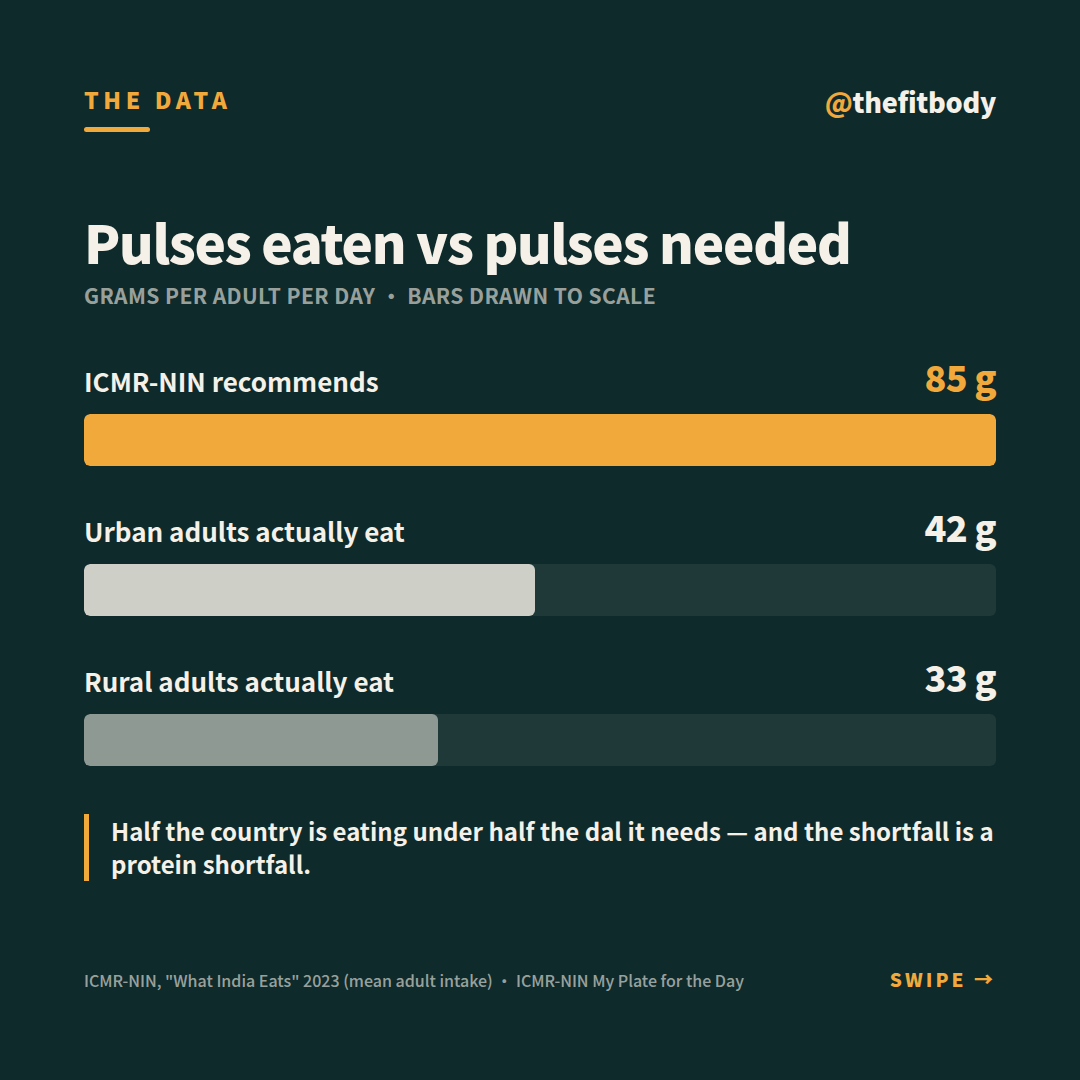
Most of us eat under half the dal we need — and a dal shortfall is a protein shortfall.
Real plates run about 7 parts cereal to 1 part pulse in cities and 13 to 1 in villages. ICMR calls 3 to 1 a good-quality protein balance.
The Numbers
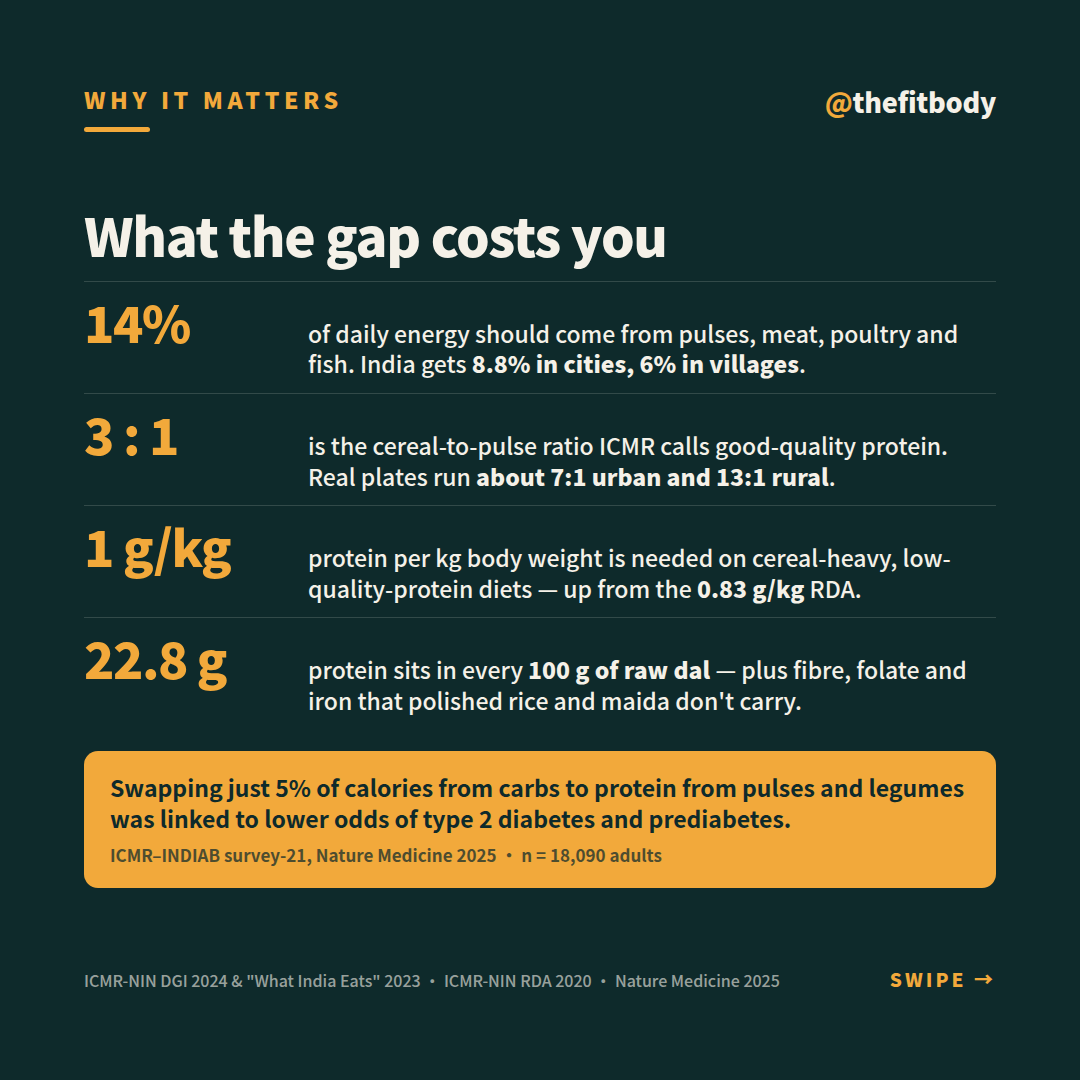
- Pulses, meat, poultry and fish should give 14% of daily energy. India gets 8.8% in cities, 6% in villages.
- ICMR calls a 3:1 cereal-to-pulse ratio good-quality protein. Real plates run about 7:1 urban, 13:1 rural.
- On a cereal-heavy, low-quality-protein diet, protein need rises to 1 g per kg body weight — up from the 0.83 g/kg RDA.
- 100 g of raw dal carries 22.8 g of protein, plus fibre, folate and iron.
- ICMR-INDIAB (Nature Medicine 2025, 18,090 adults): swapping 5% of calories from carbs to pulse protein was linked to lower odds of type 2 diabetes and prediabetes. Cereal protein wasn't.
Where The Dal Goes Missing
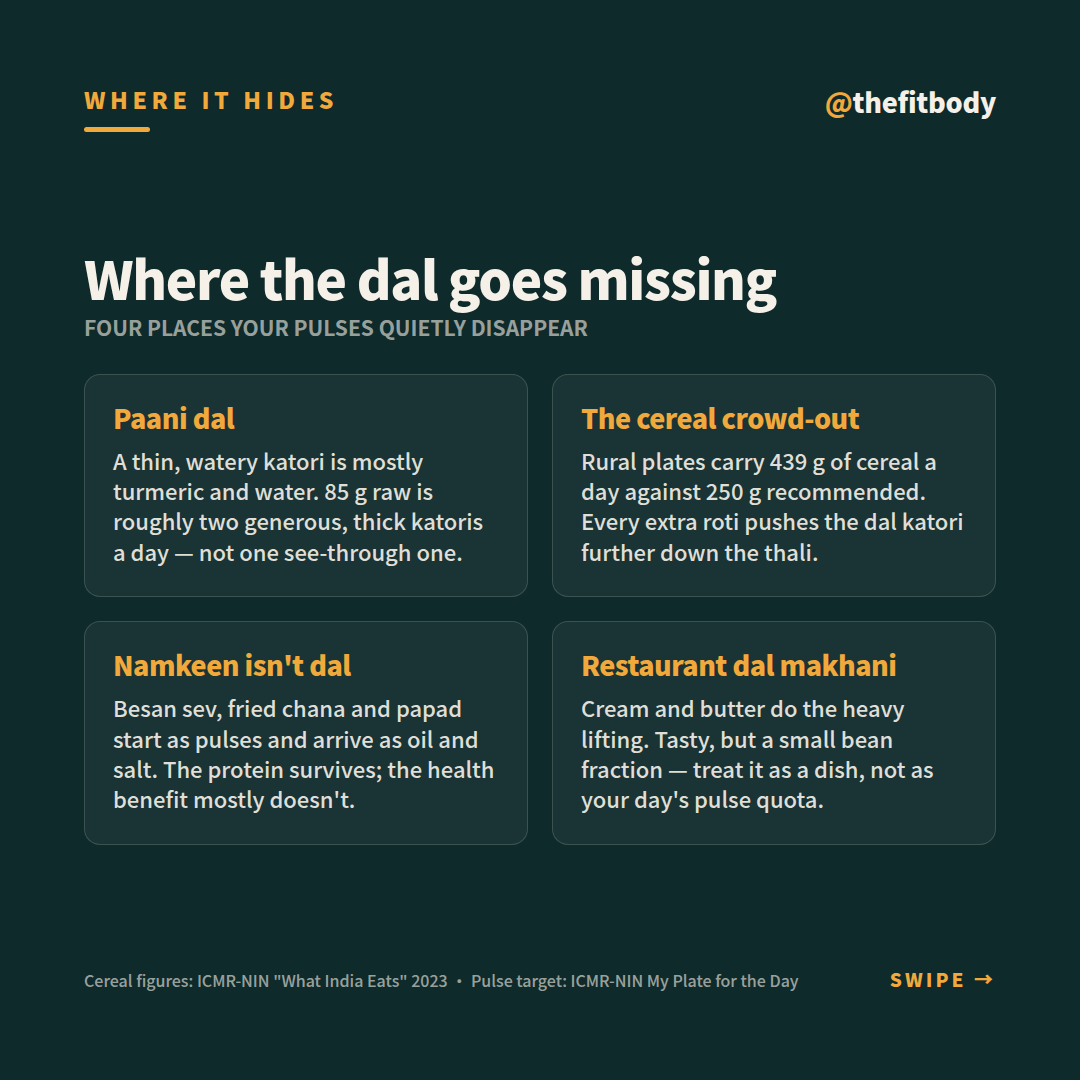
Paani dal — a thin katori is mostly turmeric and water.
The cereal crowd-out — rural plates carry 439 g of cereal against 250 g recommended.
Namkeen isn't dal — besan sev and fried chana arrive as oil and salt.
Restaurant dal makhani — cream and butter do the heavy lifting.
Five Things To Do
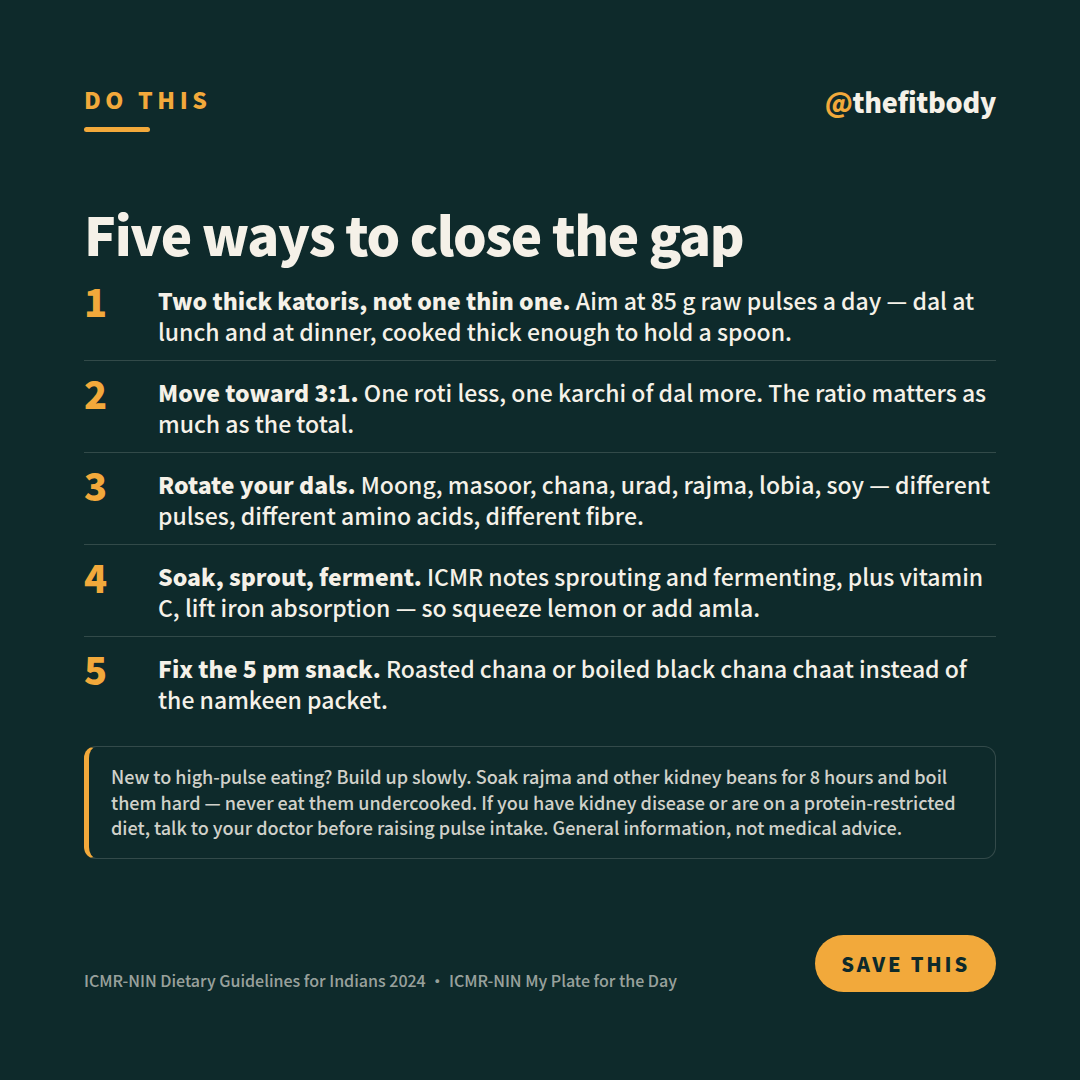
- Two thick katoris a day, not one thin one. Aim at 85 g raw.
- Move toward 3:1. One roti less, one karchi of dal more.
- Rotate your dals — moong, masoor, chana, urad, rajma, lobia, soy.
- Soak, sprout, ferment. Squeeze lemon or add amla — vitamin C lifts iron absorption from pulses.
- Fix the 5 pm snack: roasted chana or black chana chaat instead of the namkeen packet.
New to this? Build up slowly. Soak rajma and other kidney beans 8 hours and boil them hard — never eat them undercooked. If you have kidney disease or are on a protein-restricted diet, talk to your doctor before raising pulse intake.
What 85 g of dal looks like in a day
- Breakfast: a moong or besan chilla instead of a plain paratha.
- Lunch: a thick katori of dal — not a thin one.
- 5 pm: roasted chana or a black chana chaat, in place of the namkeen packet.
- Dinner: rajma, chole or lobia with one roti less.
The carousel
The five slides from our Instagram and X post — swipe through them, save them, share them.
Sources
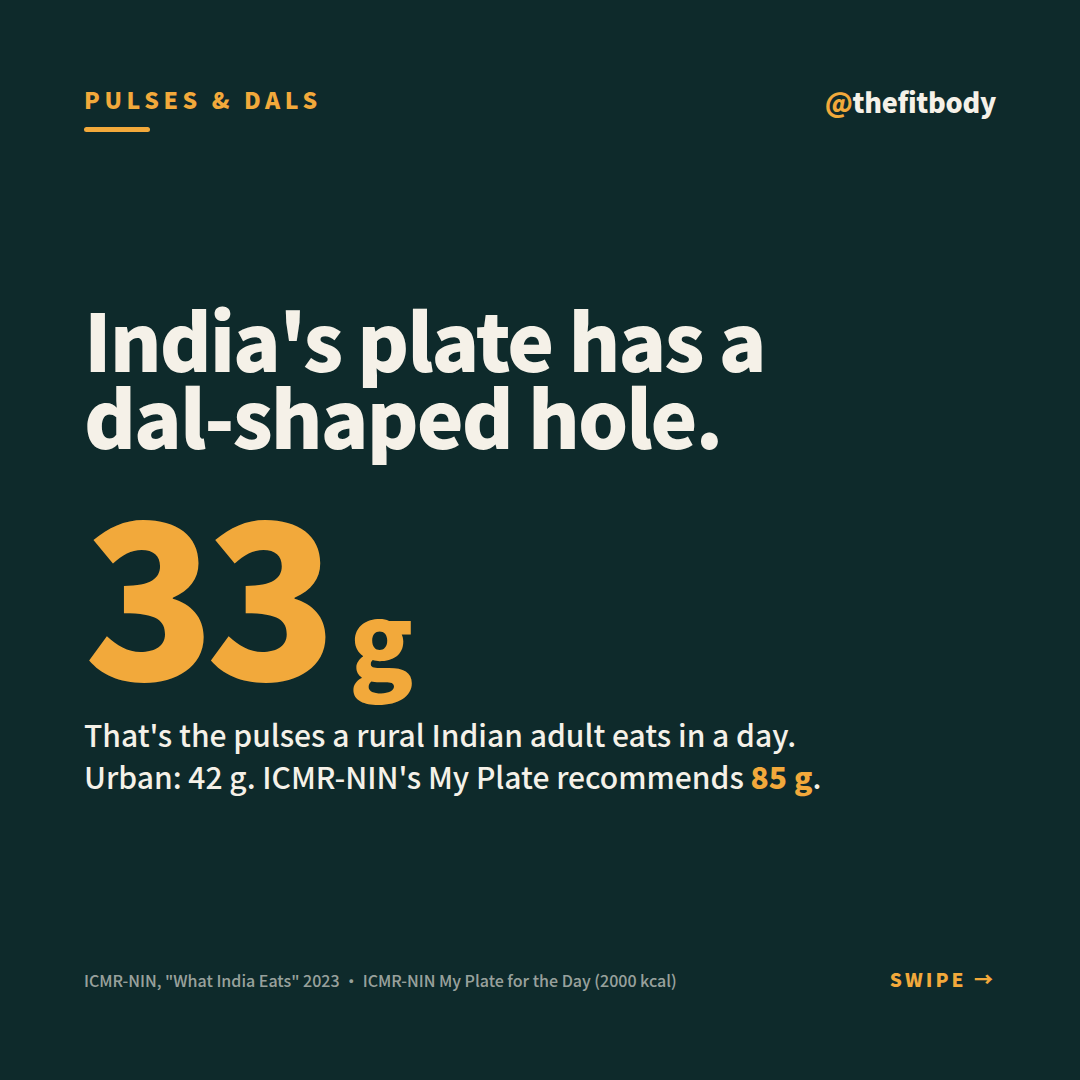
- ICMR-NIN, “What India Eats” (2023)Actual mean adult intake: pulses 42 g/day urban, 33 g/day rural; cereals 303 g urban, 439 g rural; pulses + meat + poultry + fish = 8.8% of energy urban, 6% rural.
- ICMR-NIN, My Plate for the Day (policy brief)The 85 g/day pulse recommendation and its 14% share of a 2,000 kcal day; cereals 250 g / 42%; vegetables + greens 400 g; nuts and seeds 35 g.
- ICMR-NIN, Dietary Guidelines for Indians (2024)22.8 g protein per 100 g of raw pulses; the 3:1 cereal-to-pulse ratio for good-quality protein; sprouting, fermenting and vitamin C improving iron bioavailability.
- ICMR-NIN, Nutrient Requirements for Indians (2020)Protein RDA 0.83 g/kg/day — 54.0 g/day for an adult man, 45.7 g/day for an adult woman — rising to 1 g/kg/day on cereal-based, low-quality-protein diets.
- ICMR–INDIAB survey-21, Nature Medicine (2025)In 18,090 adults, replacing 5% of energy from carbohydrate with protein from pulses and legumes was associated with lower odds of newly diagnosed type 2 diabetes and prediabetes; cereal protein was not.
- Legume intake and cardiovascular disease, dose–response meta-analysis, NMCD (2023)Background evidence: highest vs lowest legume intake, RR 0.90 (95% CI 0.85–0.96) for coronary heart disease, no association with stroke, benefit levelling off above 400 g cooked legumes per week.
General information, not medical advice. Figures are taken from the sources above; if you have a medical condition, speak to your doctor before changing your diet or activity.