
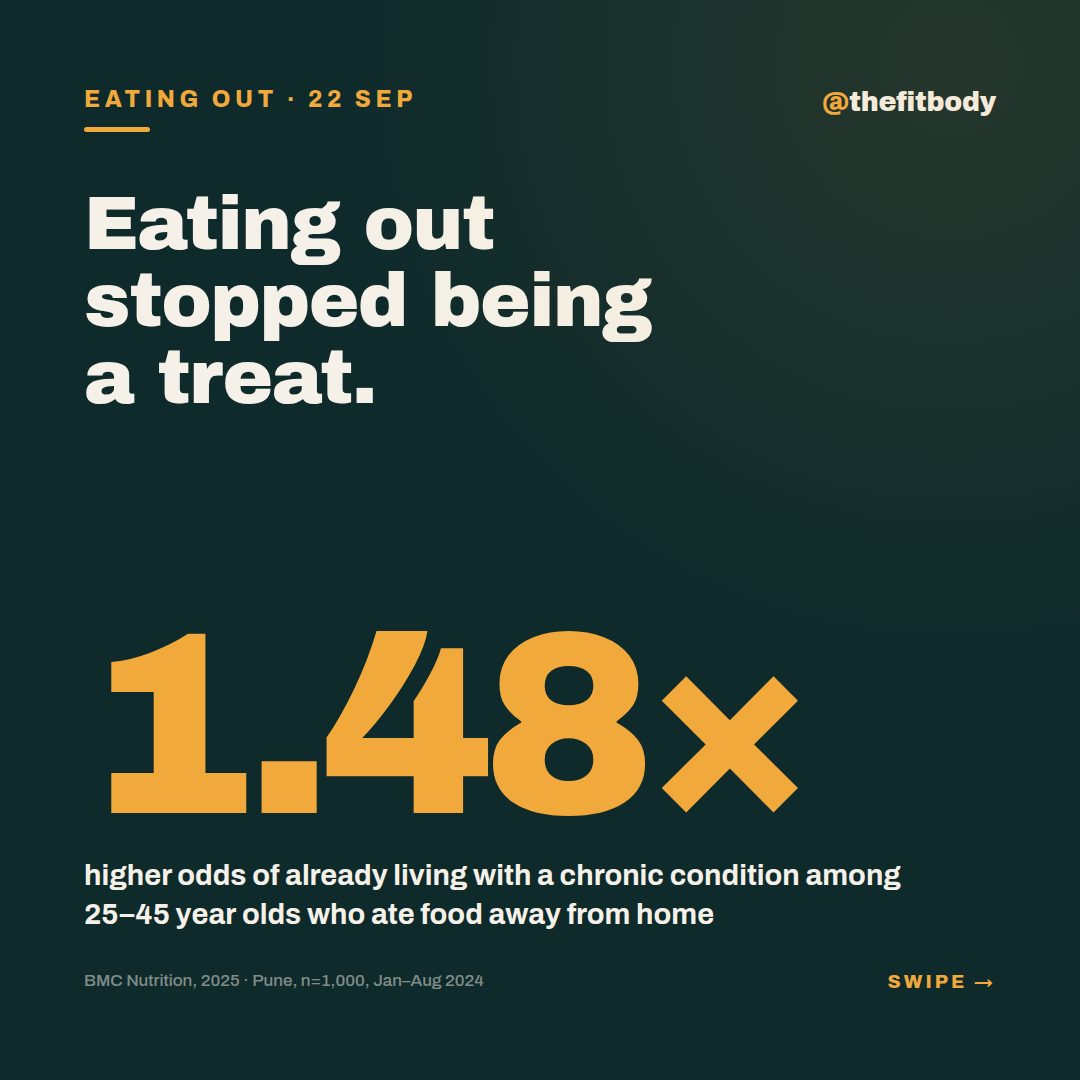
In a 2024 Pune study of 1,000 adults aged 25–45, 71% of those who ate food away from home did so three or more times in a single week.
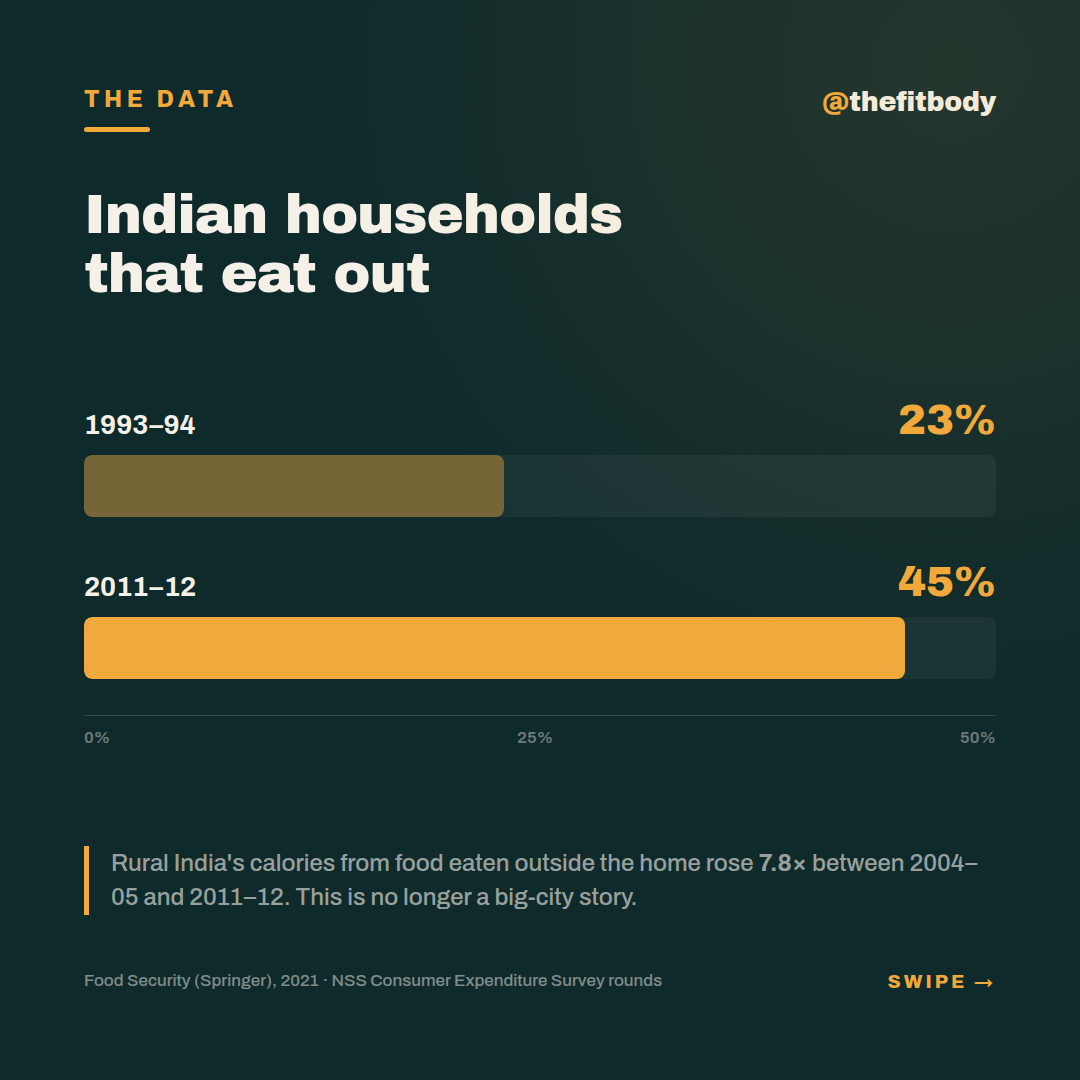
And this is no longer a big-city story. Households that eat out rose from 23% in 1993–94 to 45% by 2011–12, and rural calories from outside food rose 7.8-fold.
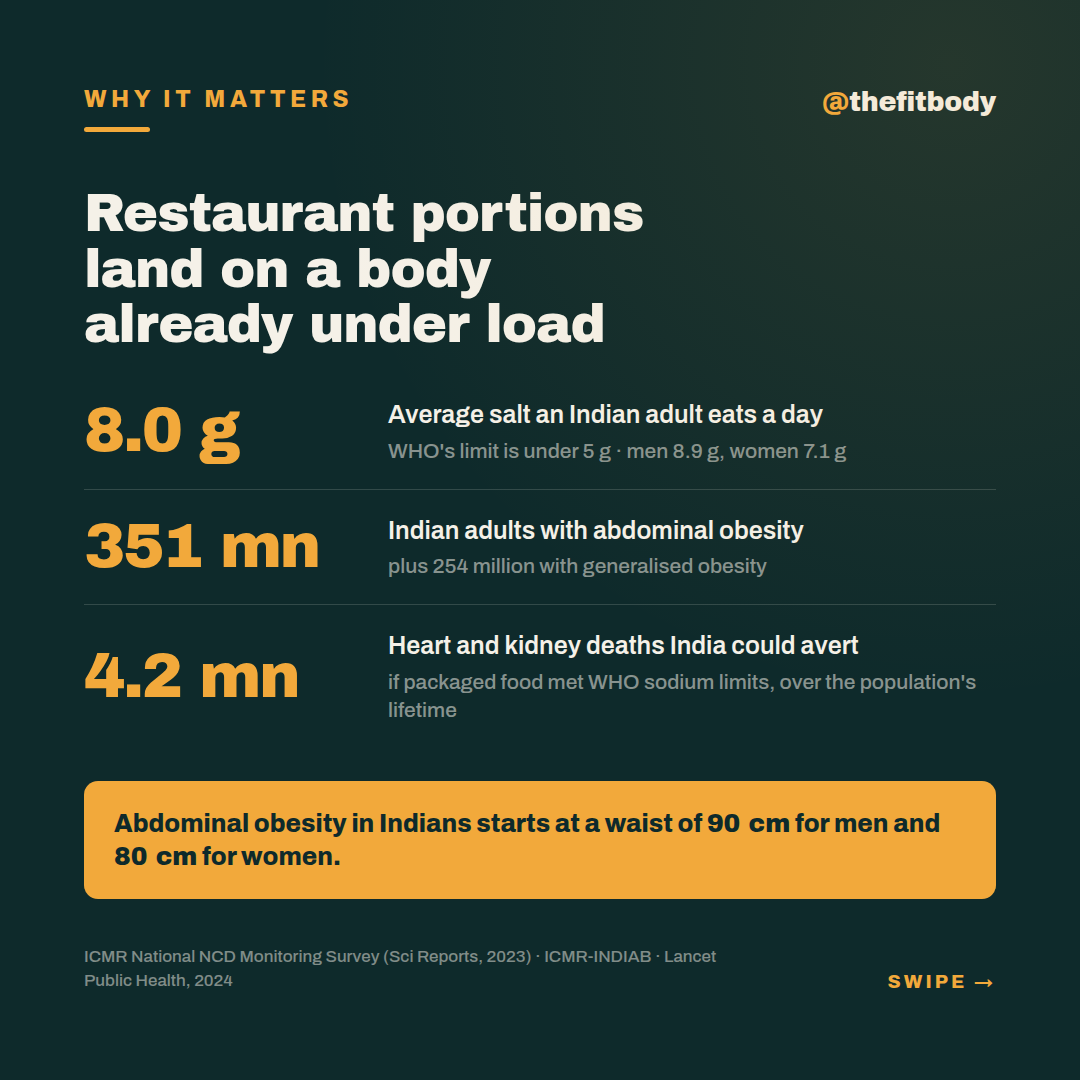
The load it lands on:
- 8.0 g — average salt an Indian adult eats a day. WHO says under 5 g.
- 351 million Indians have abdominal obesity; 254 million generalised.
- 4.2 million heart and kidney deaths avoidable if packaged food met WHO sodium limits.
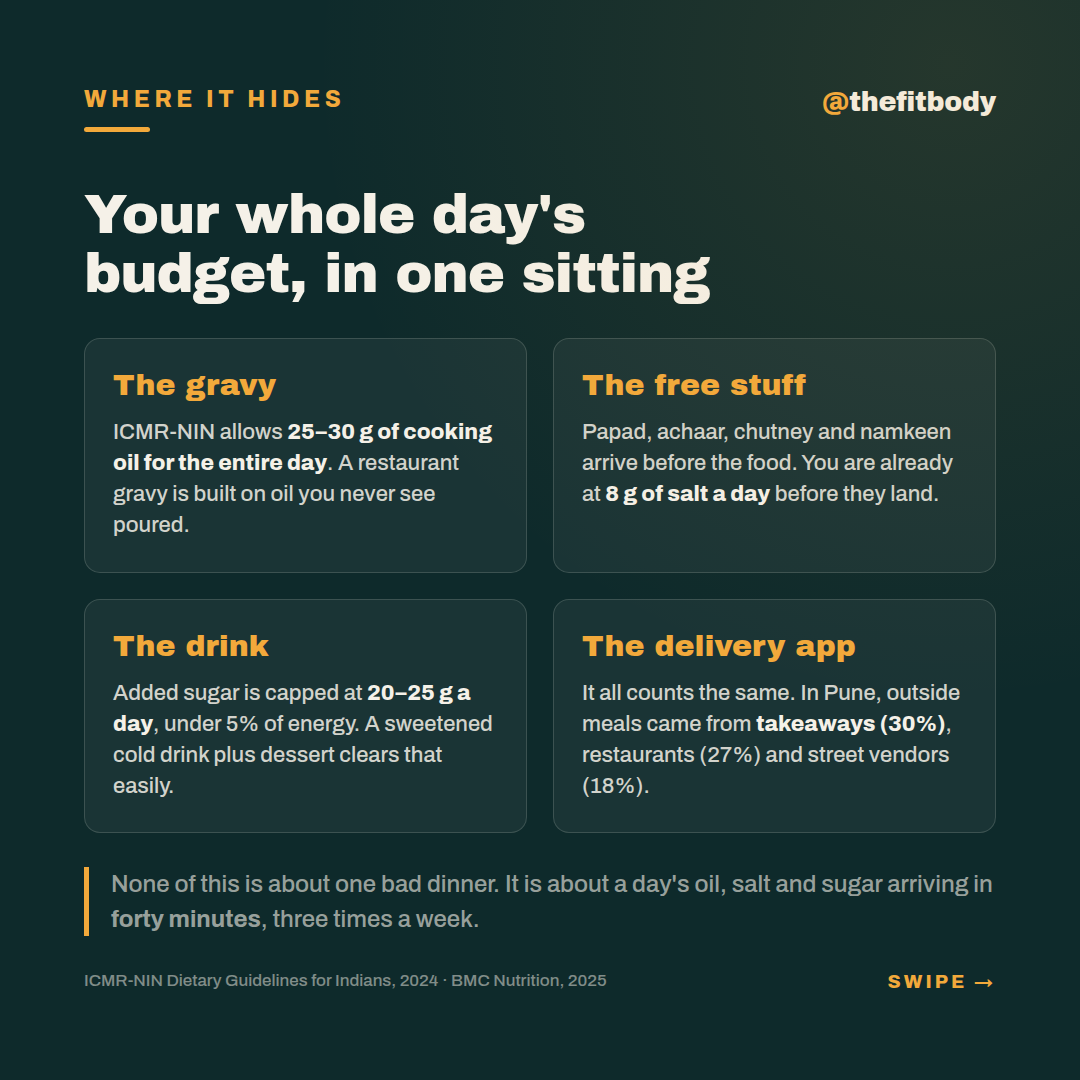
Where it hides on the table:
The gravy. ICMR-NIN allows 25–30 g of oil for your whole day. A restaurant gravy is built on oil you never see poured.
The free stuff. Papad, achaar, chutney, namkeen. You are past the WHO salt limit before they land.
The drink. Added sugar caps at 20–25 g a day. One sweetened cold drink plus dessert clears it.
The delivery app. It counts the same.
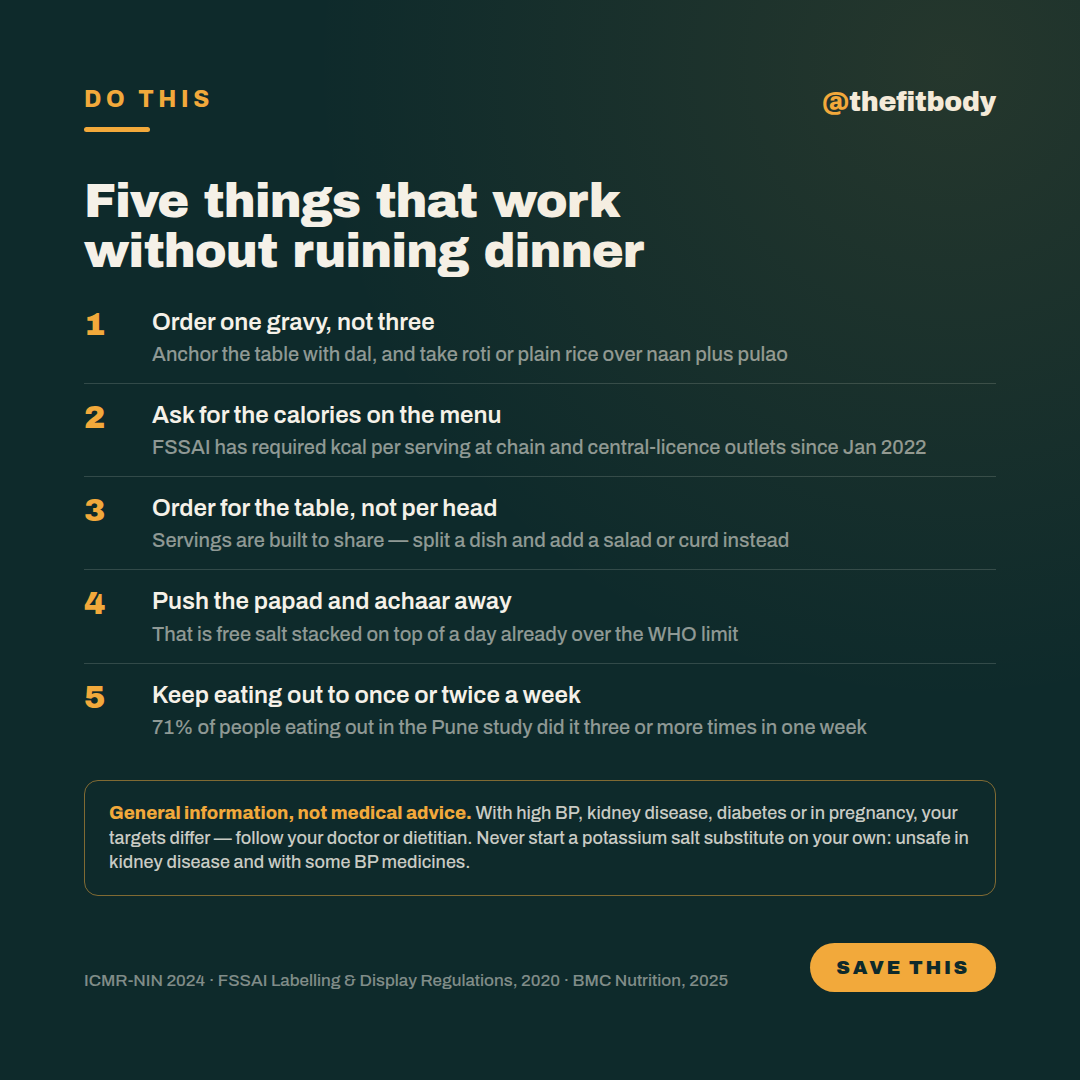
Five things that work without ruining dinner:
- Order one gravy, not three. Anchor the table with dal. Roti or plain rice over naan plus pulao.
- Ask for calories on the menu — FSSAI has required kcal per serving at chain outlets since Jan 2022.
- Order for the table, not per head. Split a dish, add curd or salad.
- Push the papad and achaar away.
- Keep eating out to once or twice a week.
It was never one bad dinner. It is a day's oil, salt and sugar arriving in forty minutes, three times a week.
⚠️ With high BP, kidney disease, diabetes or in pregnancy your targets differ — follow your doctor or dietitian. Never start a potassium salt substitute on your own: unsafe in kidney disease and with some BP medicines.
A table order that doesn’t ruin dinner
Start with dal tadka and a vegetable dish rather than three gravies. Choose roti or plain rice over naan and pulao, share one rich dish between the table, and add a plate of salad and a bowl of curd. Ask for the papad and achaar to be left off, and have water or chaas instead of a sweet drink.
The carousel
The five slides from our Instagram and X post — swipe through them, save them, share them.
Sources
- Food away from home and the risk of non-communicable diseases among young working adults in Pune, IndiaSupplies the headline 1.48× adjusted odds (95% CI 1.25–1.87) of a chronic condition; n=1,000 aged 25–45, Jan–Aug 2024; 71% ate out three or more times in a week; 27.9% of logged meals eaten outside; venue split 29.8% takeaways / 27.4% restaurants / 17.5% street vendors.
- Awareness, behaviour and determinants of dietary salt intake in adults — National NCD Monitoring SurveySupplies 8.0 g mean daily salt (men 8.9 g, women 7.1 g) against the WHO limit of under 5 g; n=2,266 adults aged 18–69, survey 2017–18.
- High prevalence of metabolic obesity in India — ICMR-INDIAB-23Supplies 351 million adults with abdominal obesity and 254 million with generalised obesity, and the Indian waist cut-offs of ≥90 cm (men) and ≥80 cm (women); n=113,043 across 31 states and UTs.
- Estimated health benefits, costs and cost-effectiveness of implementing WHO's sodium benchmarks for packaged foods in IndiaSupplies 4.2 million (2.4–6.0) cardiovascular and chronic kidney disease deaths averted over the population lifetime, plus 14.0 million CVD events avoided.
- Dietary Guidelines for Indians, 2024Supplies the daily budgets: cooking oil 25–30 g, added sugar 20–25 g and under 5% of energy, and the My Plate targets of 400 g vegetables, 100 g fruit and 85 g pulses.
- Food away from home and the reversal of the calorie intake decline in IndiaSupplies the slide-2 bars — households eating out 23% in 1993–94 rising to 45% in 2011–12 — and the 7.8× rise in rural calories from food away from home between 2004–05 and 2011–12. Based on NSS Consumer Expenditure Survey rounds.
- Guidance Note on Labelling & DisplaySupplies the menu-labelling rule: calorific value in kcal per serving plus serving size must be displayed by food service establishments holding a central licence or operating 10 or more outlets, in force from 1 January 2022, along with allergen declarations.
General information, not medical advice. Figures are taken from the sources above; if you have a medical condition, speak to your doctor before changing your diet or activity.