
Same house. Same kitchen. Same dal. Yet only 25% of men the same age are anaemic, against 57% of women.
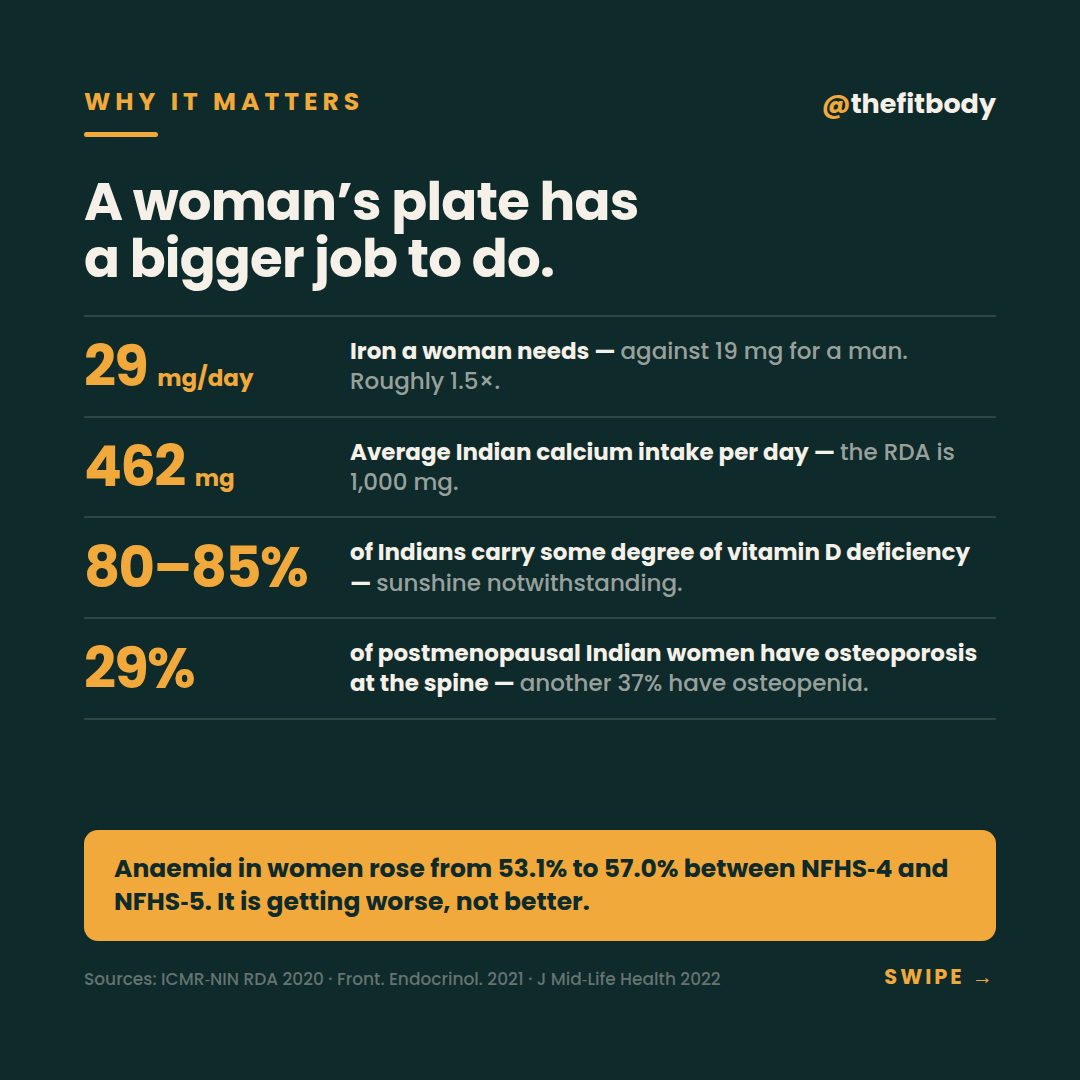
A woman needs 29 mg of iron a day; a man needs 19 mg. She needs more — and very often eats less, and eats last.
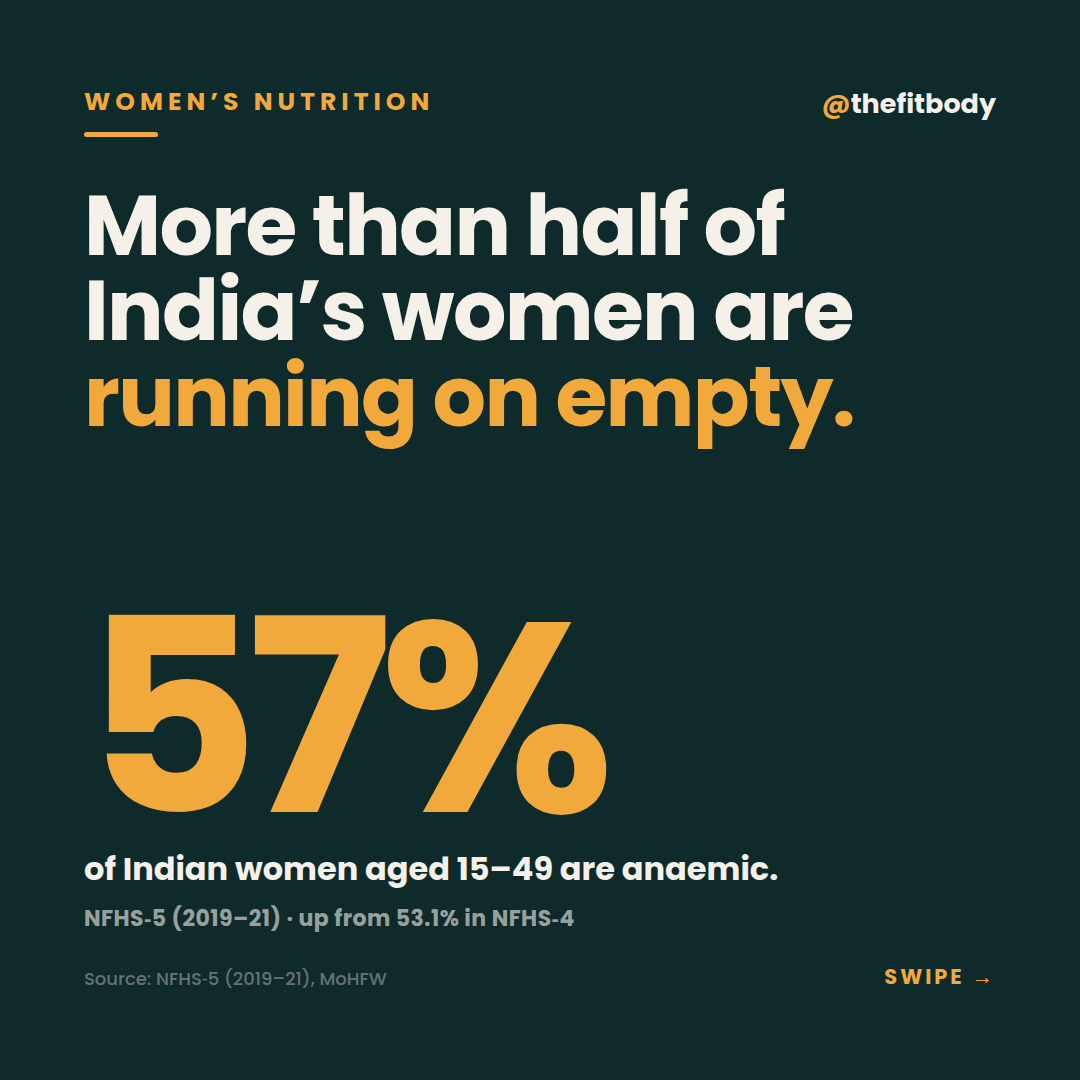
And it went up, not down — from 53.1% in NFHS-4 to 57.0% in NFHS-5.
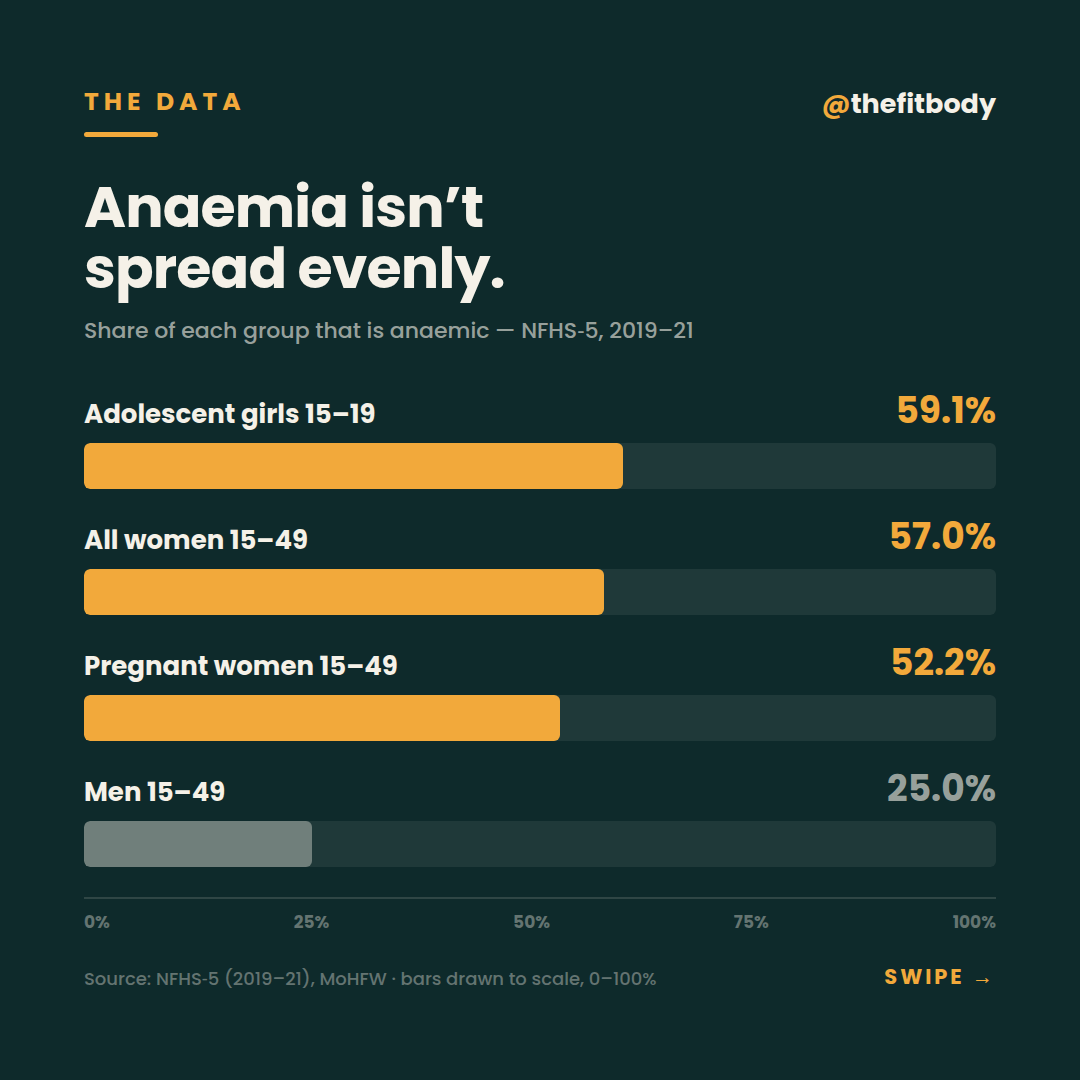
Adolescent girls 15–19: 59.1%
All women 15–49: 57.0%
Pregnant women: 52.2%
Men, same age: 25.0%
Sit with that last line. Same house. Same kitchen. Same dal.
Here's what gets missed: a woman needs 29 mg of iron a day. A man needs 19 mg. She needs more — and usually eats less.
And it isn't only iron.
- Average Indian calcium intake: 462 mg/day. The RDA is 1,000 mg.
- 80–85% of Indians carry some degree of vitamin D deficiency.
- 29% of postmenopausal Indian women have osteoporosis at the spine. Another 37% have osteopenia.
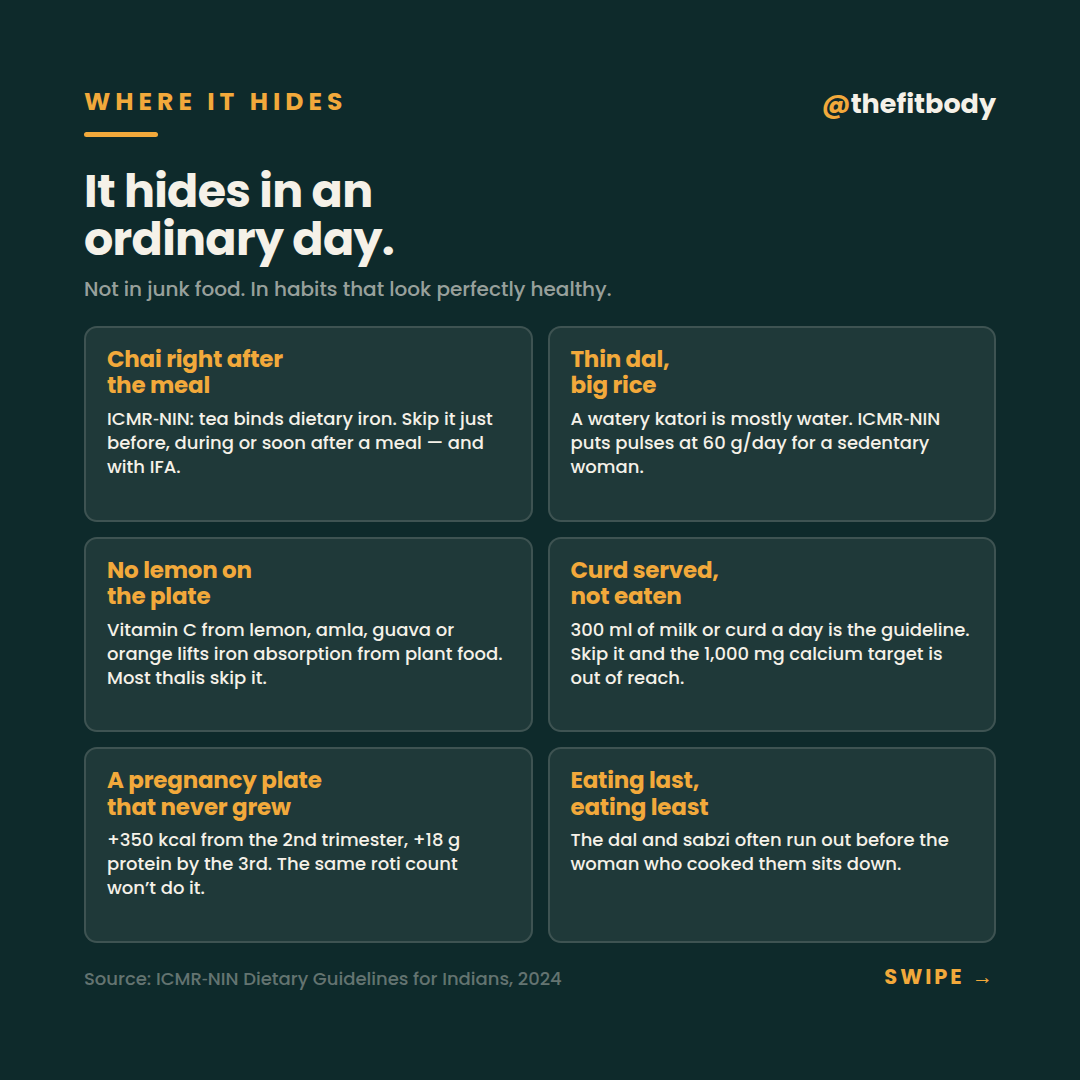
WHERE IT HIDES — not in junk food, in an ordinary day:
- Chai right after lunch. ICMR-NIN: tea binds dietary iron. Skip it just before, during or soon after a meal — and with your IFA tablet.
- Dal so thin it's flavoured water. The guideline is 60 g of pulses a day.
- No lemon on the plate. Vitamin C pulls more iron out of plant food.
- Curd served to everyone else.
- A pregnancy plate that never got bigger.
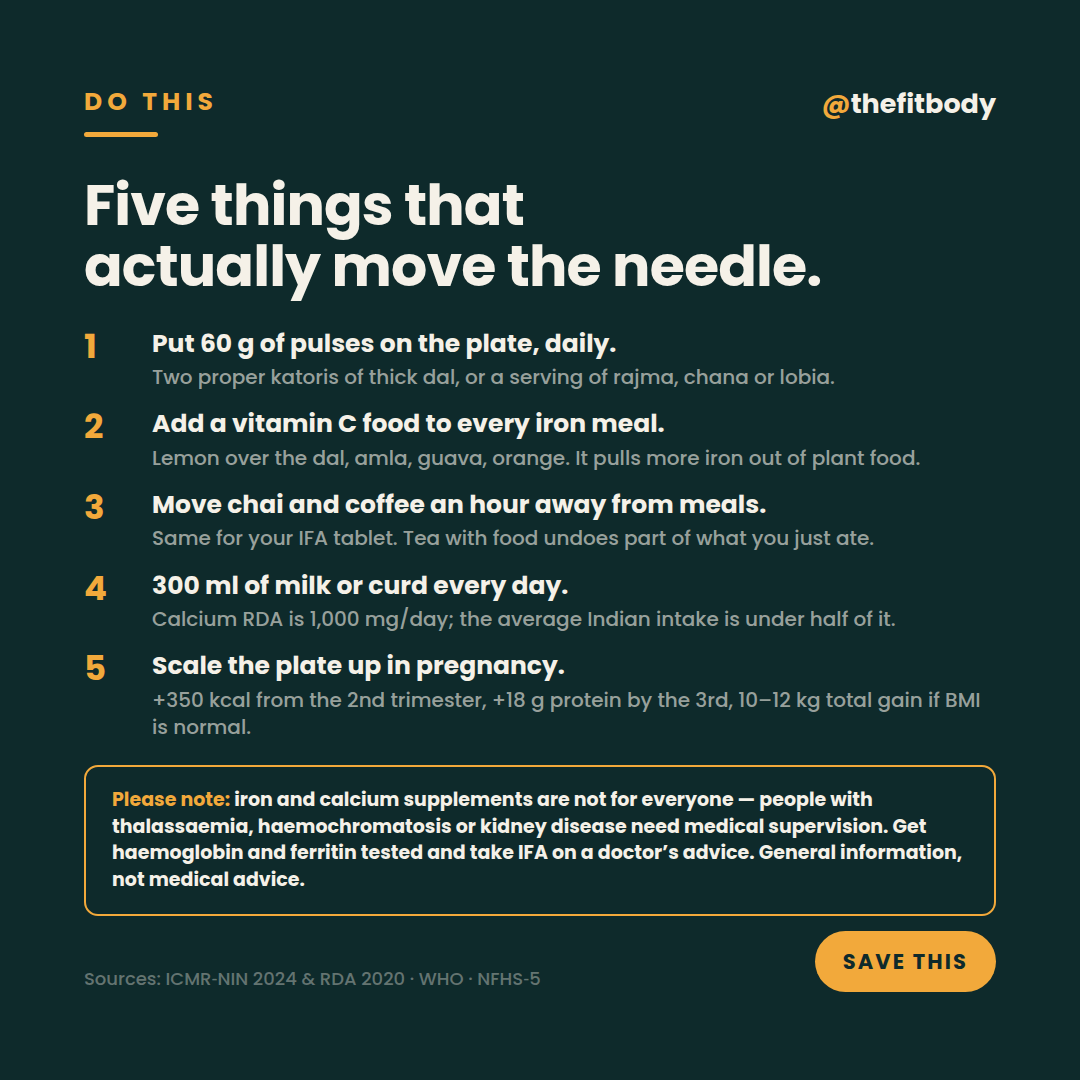
Five Things That Move The Needle:
- 60 g pulses daily — two proper katoris of thick dal, or rajma, chana, lobia.
- Lemon, amla, guava or orange with every iron meal.
- Chai and coffee an hour away from food and from IFA.
- 300 ml milk or curd every day.
- In pregnancy: +350 kcal from the 2nd trimester, +18 g protein by the 3rd, 10–12 kg total gain if your BMI is normal.
Tag a woman who feeds everyone else first.
⚠️ Iron and calcium supplements are not for everyone. Thalassaemia, haemochromatosis and kidney disease need medical supervision. Get haemoglobin and ferritin tested and take IFA on your doctor's advice.
It is not only iron
Calcium and vitamin D gaps compound the problem over decades. Among postmenopausal Indian women, 29% have osteoporosis at the spine and another 37% have osteopenia — the quiet result of years of low calcium, low vitamin D and little weight-bearing activity.
The carousel
The five slides from our Instagram and X post — swipe through them, save them, share them.
Sources
- MoHFW / PIB — Anaemia Mukt Bharat, NFHS‑5 anaemia prevalence57.0% of women 15–49 anaemic · 52.2% pregnant women · 59.1% adolescent girls 15–19 · 25.0% men 15–49 · the 53.1% → 57.0% rise from NFHS‑4 to NFHS‑5.
- ICMR‑NIN — Nutrient Requirements for Indians (RDA/EAR), 2020Iron RDA 29 mg/day for an adult woman against 19 mg/day for a man · calcium RDA 1,000 mg/day for adults.
- ICMR‑NIN — Dietary Guidelines for Indians, 2024Pulses 60 g/day and milk or curd 300 ml/day for a sedentary adult woman · pregnancy +350 kcal from the second trimester, +8 g protein in the second and +18 g in the third · weight gain 10–12 kg at a normal BMI · tea binds dietary iron, avoid it before, during or soon after a meal or with IFA · vitamin C foods improve iron absorption from plant foods.
- Frontiers in Endocrinology, 2021 — calcium and vitamin D status in IndiaAverage total calcium intake 462 ± 179 mg per consumption unit per day, “far below the RDA” · 80–85% of the Indian population with some degree of vitamin D deficiency.
- Journal of Mid-Life Health, 2022 — osteopenia and osteoporosis in postmenopausal Indian women (meta-analysis, 12 studies)Pooled osteoporosis 29% at the lumbar spine · pooled osteopenia 37% at the lumbar spine.
- WHO — Anaemia fact sheetContext for the global burden and the haemoglobin thresholds behind the NFHS anaemia definition; WHO also recommends daily 30–60 mg elemental iron with 400 µg folic acid in pregnancy.
General information, not medical advice. Figures are taken from the sources above; if you have a medical condition, speak to your doctor before changing your diet or activity.