
The ICMR-INDIAB study measured the blood lipids of 23,665 adults, making it India’s largest lipid survey. The result: almost nine in ten had at least one abnormal reading.
The biggest driver is not high LDL — it is low HDL, the ‘good’ cholesterol, which affected two in three adults. And it is not a city problem: rural India is almost as affected as urban.
The Numbers
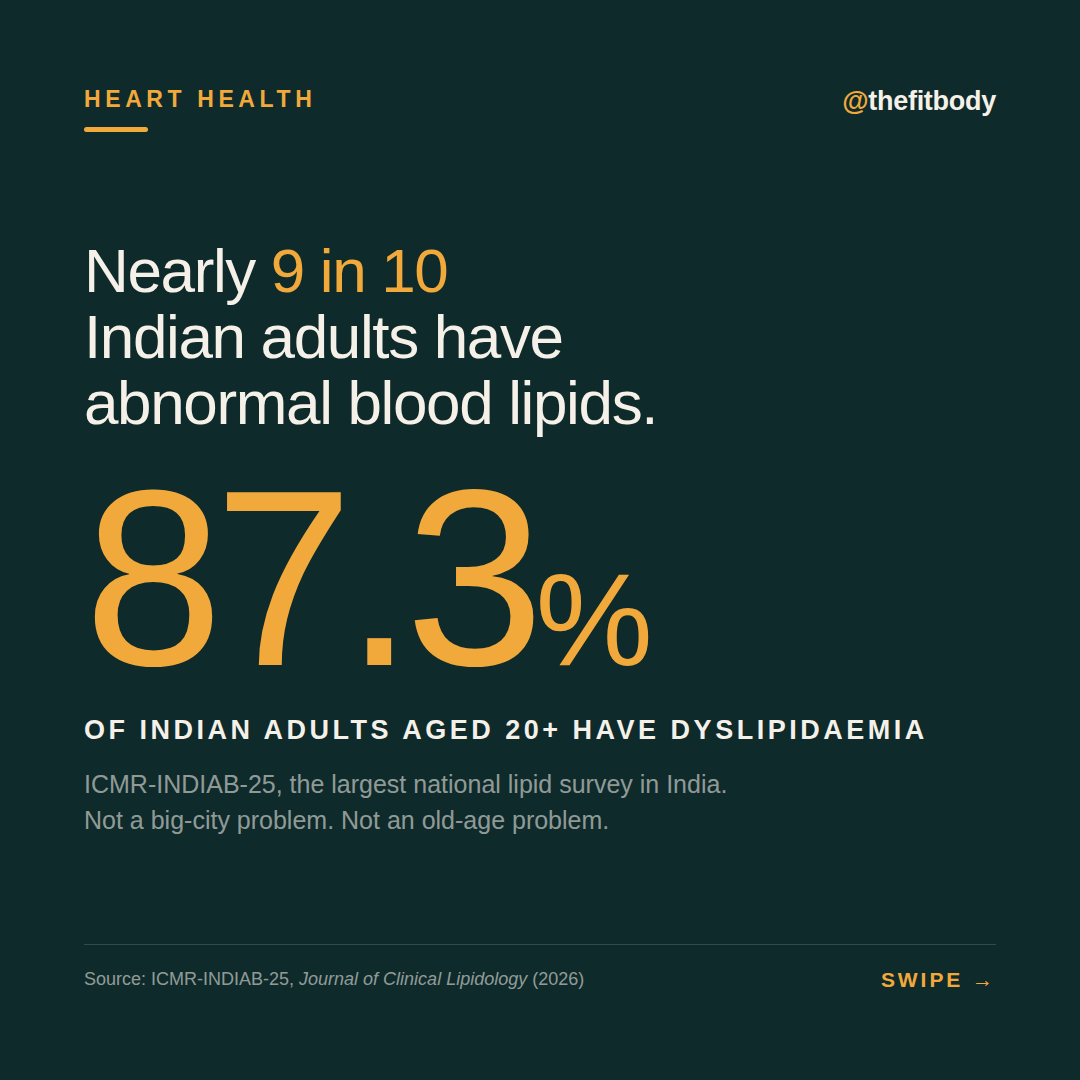
- 87.3% of adults 20+ have dyslipidaemia
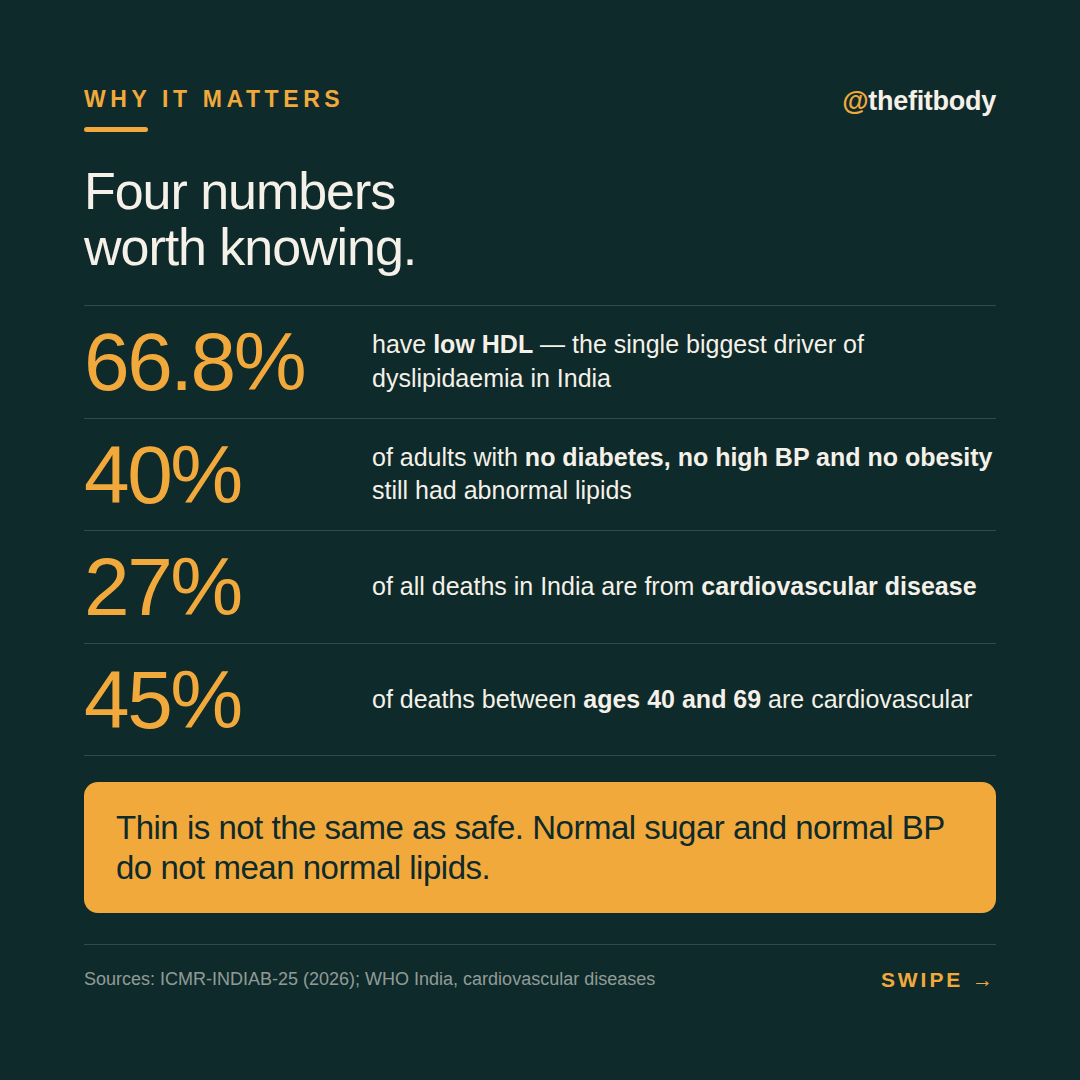
- 66.8% have low HDL — the biggest driver
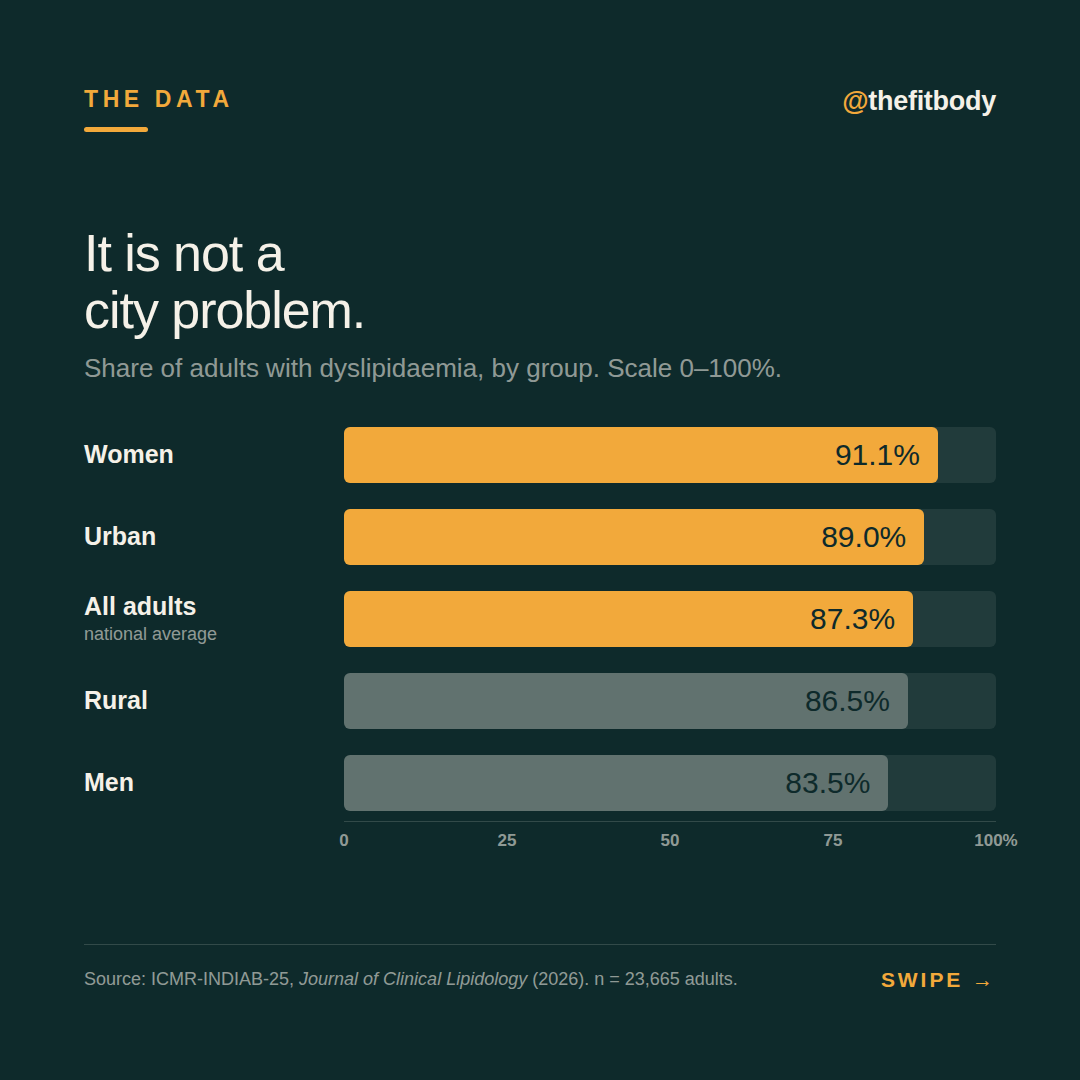
- Women 91.1%, men 83.5%
- Urban 89.0%, rural 86.5%. Not a city problem.
- 40% of adults with no diabetes, no high BP, no obesity still had abnormal lipids
Cardiovascular disease causes 27% of all deaths in India, and 45% of deaths between ages 40 and 69 (WHO India).
WHERE IT HIDES — ordinary kitchen food
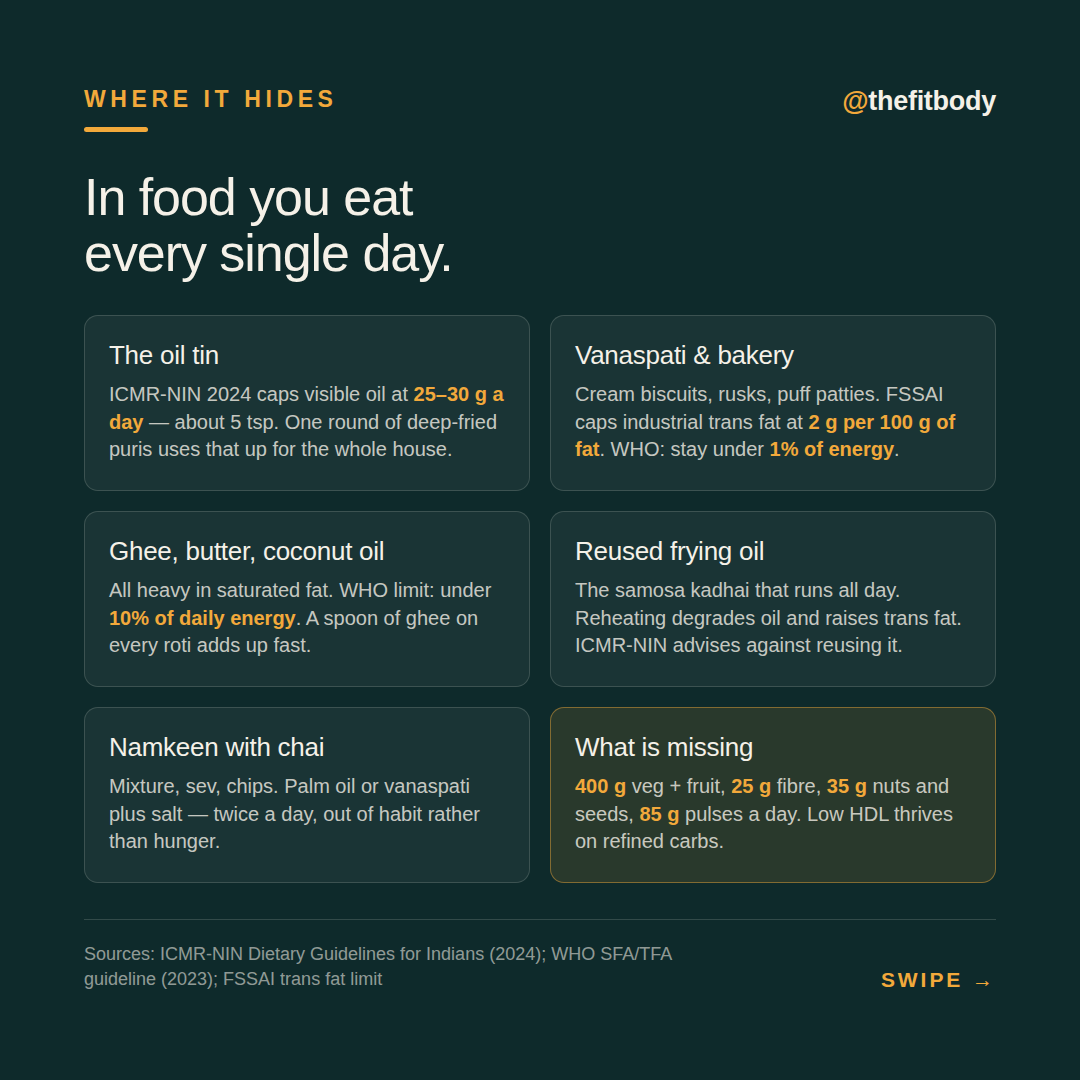
The oil tin. ICMR-NIN 2024 puts visible oil at 25–30 g a day, about 5 tsp. One round of deep-fried puris uses that up for the whole house.
Vanaspati and bakery. Cream biscuits, rusks, puff patties. FSSAI caps industrial trans fat at 2 g per 100 g of fat.
Ghee, butter, coconut oil. Saturated fat. WHO limit: under 10% of daily energy.
Reused frying oil. The samosa kadhai that runs all day.
Namkeen with chai. Palm oil or vanaspati plus salt, twice a day, out of habit.
Missing from most plates: 400 g veg and fruit, 25 g fibre, 35 g nuts and seeds, 85 g pulses.
Five Things, Starting Today
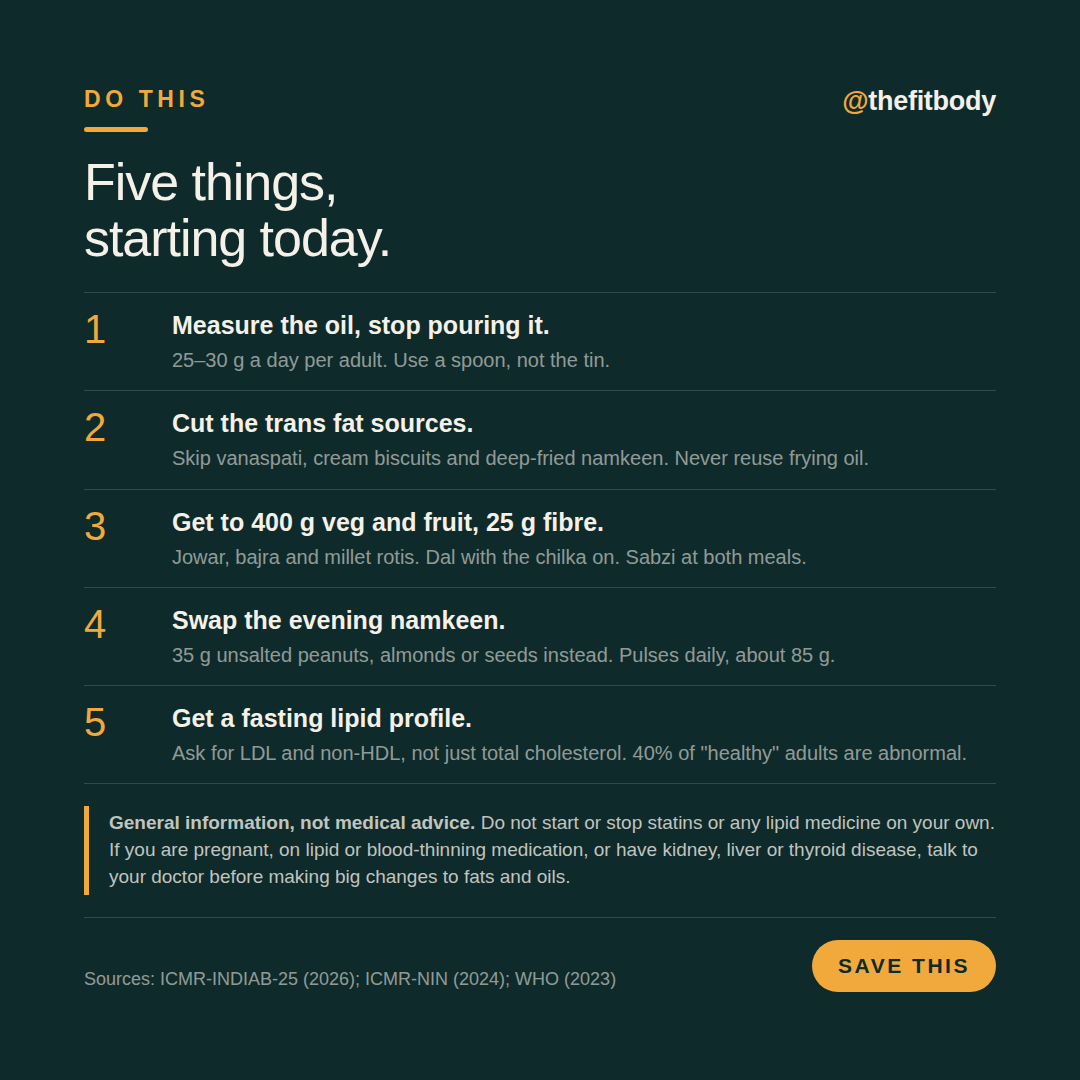
- Measure the oil. 25–30 g a day per adult. Use a spoon, not the tin.
- Skip vanaspati, cream biscuits, deep-fried namkeen. Never reuse frying oil.
- Hit 400 g veg and fruit, 25 g fibre. Jowar, bajra, millet rotis. Dal with the chilka on.
- Swap the evening namkeen for 35 g unsalted peanuts, almonds or seeds. Pulses daily.
- Get a fasting lipid profile. Ask for LDL and non-HDL, not just total cholesterol.
Thin is not safe.
Thin is not safe
Because 40% of adults without diabetes, high blood pressure or obesity still had abnormal lipids, looking healthy tells you very little. The only way to know is a fasting lipid profile — and ask for LDL and non-HDL, not just total cholesterol.
The carousel
The five slides from our Instagram and X post — swipe through them, save them, share them.
Sources
- Prevalence of dyslipidemia in India: ICMR‑INDIAB‑25Journal of Clinical Lipidology, 2026 · n = 23,665 adults. 87.3% overall dyslipidaemia · 66.8% low HDL‑C · women 91.1% / men 83.5% · urban 89.0% / rural 86.5% · 40% among adults with no diabetes, hypertension or obesity.
- ICMR‑NIN Dietary Guidelines for Indians, 2024Visible oil 25–30 g/day for a sedentary adult · total fat 20–30% of energy · My Plate: 400 g vegetables, 100 g fruit, 85 g pulses, 35 g nuts and seeds · advice against reusing frying oil.
- WHO guideline on saturated and trans-fatty acid intake, 2023Saturated fat under 10% of total energy · trans fat under 1% of total energy · 25 g dietary fibre a day · at least 400 g vegetables and fruit a day.
- WHO India — Cardiovascular diseasesNCDs cause 63% of deaths in India, of which 27% are cardiovascular · CVDs account for 45% of deaths in the 40–69 age group.
- WHO fact sheet — Trans fatBenchmark of 2 g industrial trans fat per 100 g of total fat · under 1% of energy is roughly 2.2 g/day on 2,000 kcal.
- FSSAI — trans fatty acid limitIndustrial trans fat capped at 2% by mass of total oils and fats in all foods, in force from January 2022.
General information, not medical advice. Figures are taken from the sources above; if you have a medical condition, speak to your doctor before changing your diet or activity.