
India receives more sunshine than most countries in the world, yet vitamin D deficiency is one of our most common nutritional problems. A six-state study of 2,500 children and teenagers found that fewer than half had enough.
The reason is not the sun — it is how we live. We work, study and play indoors during the exact hours when the sun’s UVB rays are strong enough to make vitamin D in our skin.
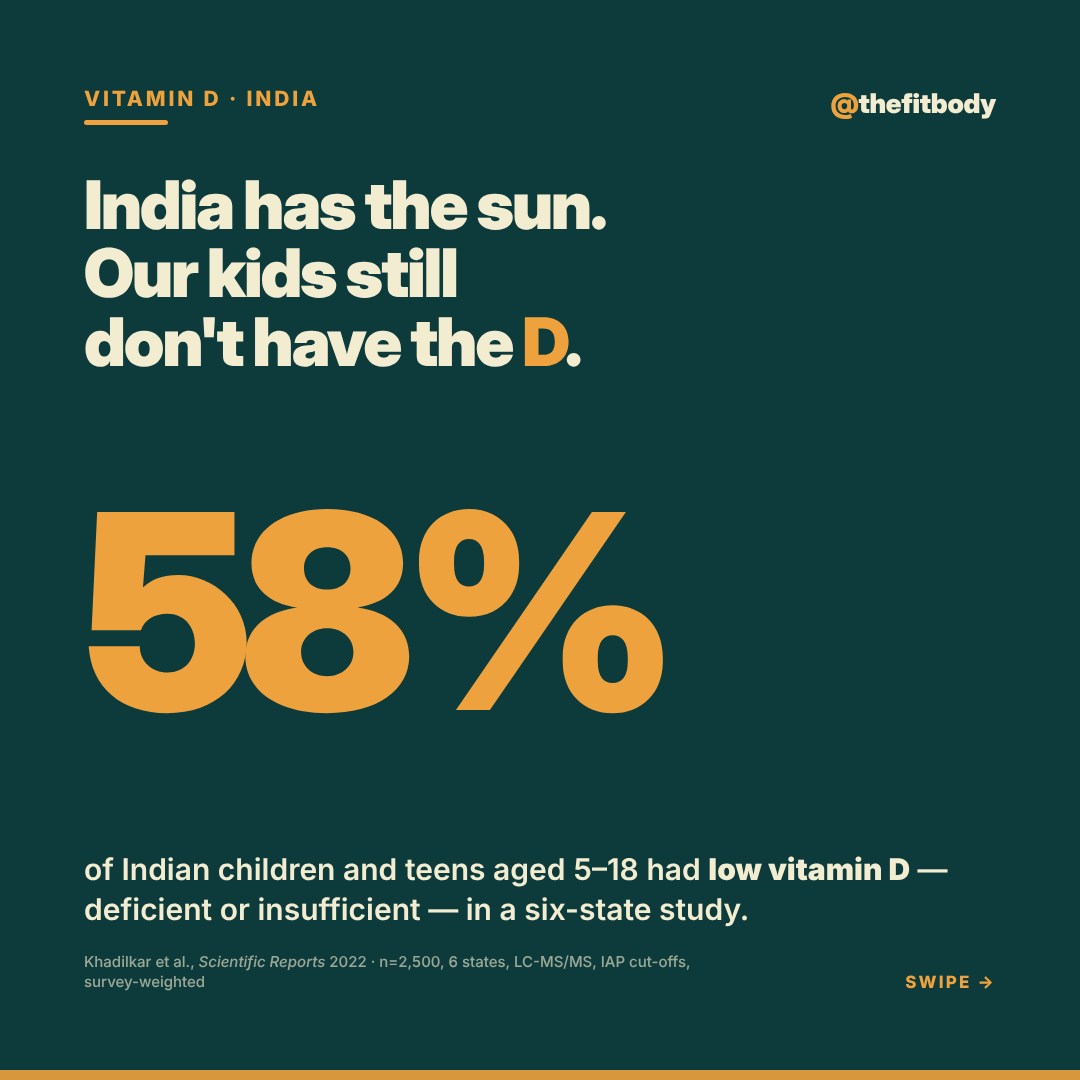
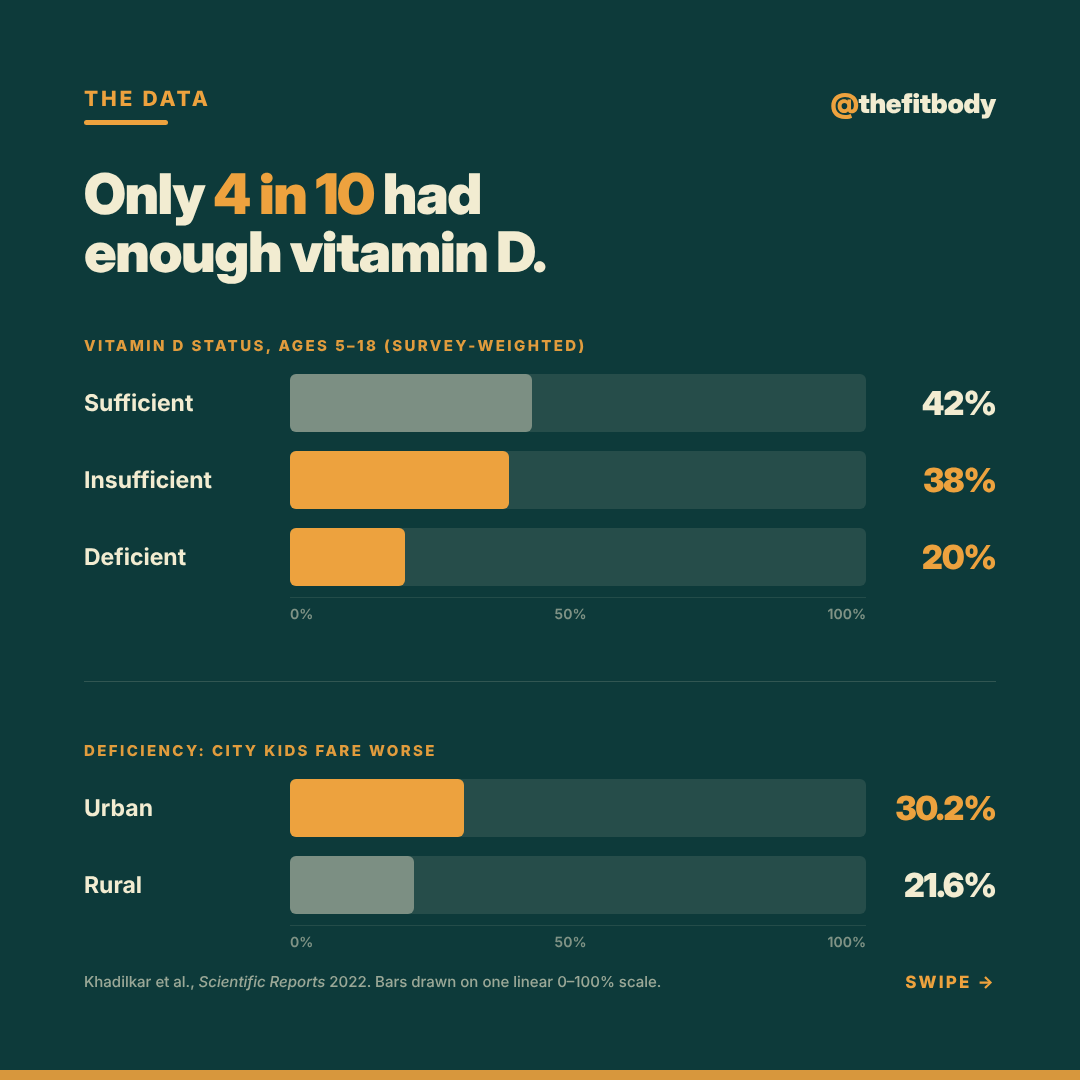
58% of Indian children and teens aged 5–18 had low vitamin D — deficient or insufficient. Only about 4 in 10 had enough. (Six-state study, 2,500 kids, Scientific Reports 2022.)
The Numbers
- 20% deficient, 38% insufficient
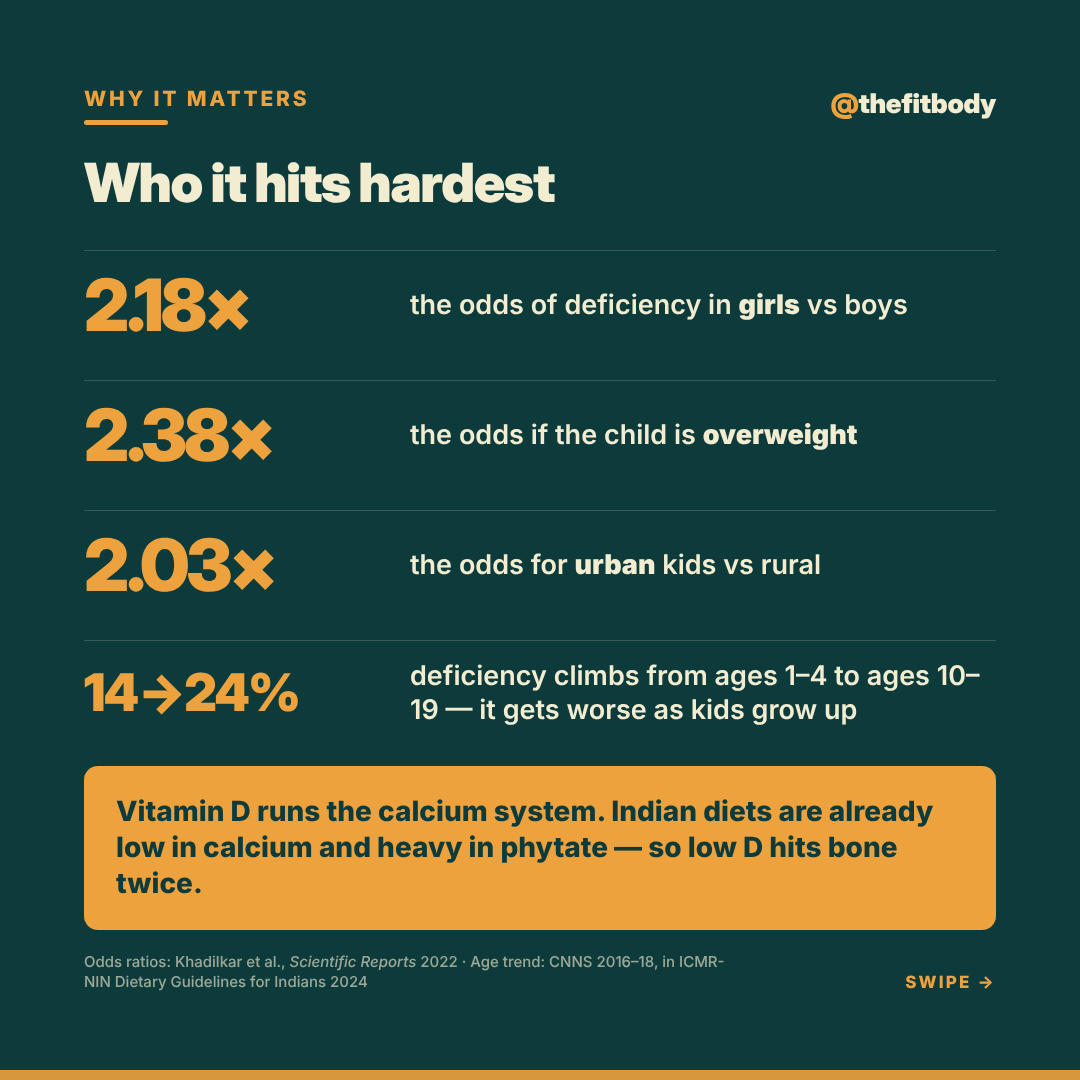
- Urban kids 30.2% deficient vs rural 21.6%
- Girls: 2.18× the odds vs boys
- Overweight kids: 2.38× the odds
- Deficiency climbs from 14% at ages 1–4 to 24% at ages 10–19
Why, In A Country This Sunny?
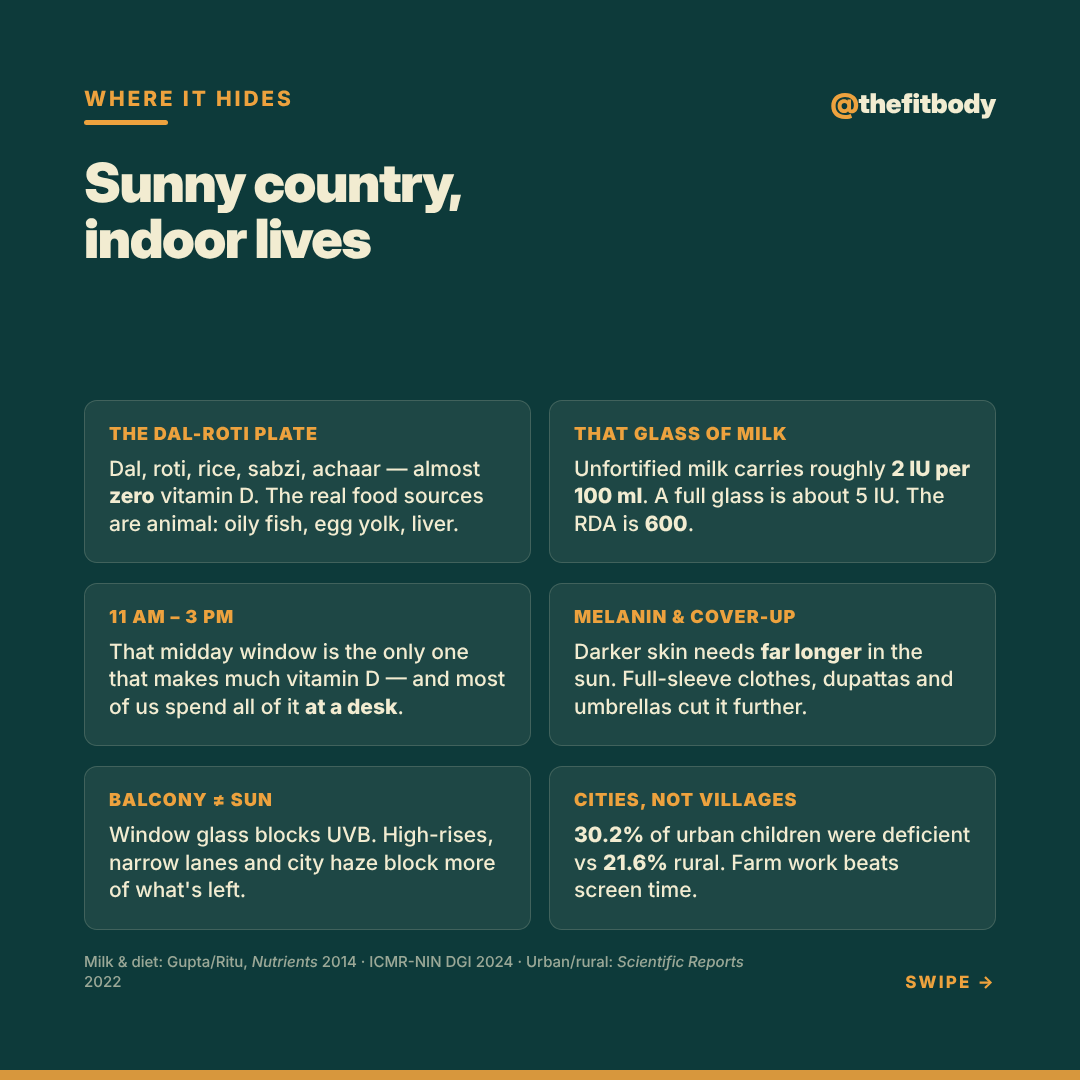
The vitamin D window is 11am–3pm, and most of us spend all of it indoors.
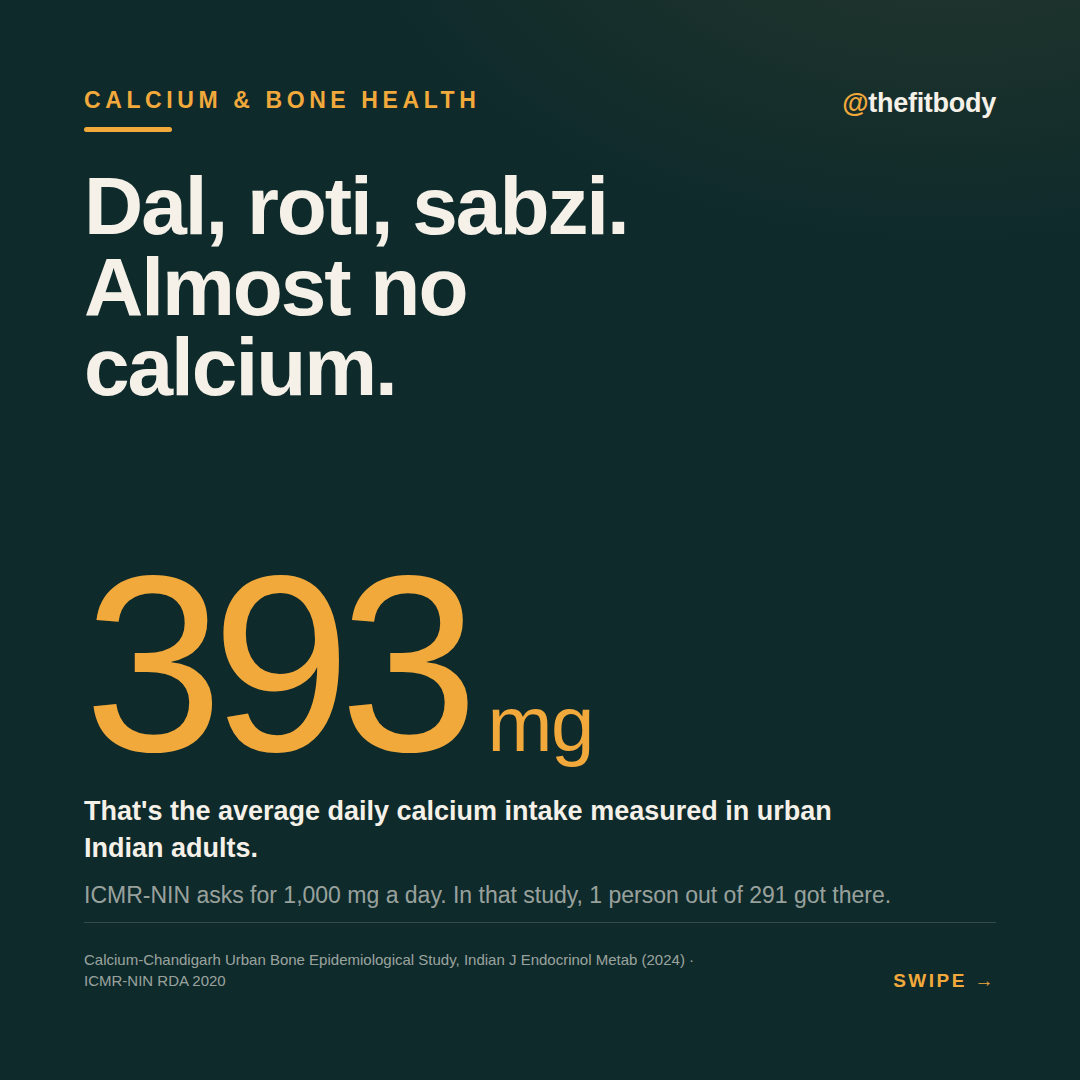
Dal, roti, rice, sabzi, achaar, namkeen — almost zero vitamin D. The real food sources are animal ones: oily fish, egg yolk, liver.
Unfortified milk is roughly 2 IU per 100 ml. A full glass is about 5 IU. The RDA is 600.
Darker skin needs longer in the sun. Full sleeves, dupattas and umbrellas cut it further. Window glass blocks UVB — a balcony behind glass does nothing.
Five Fixes
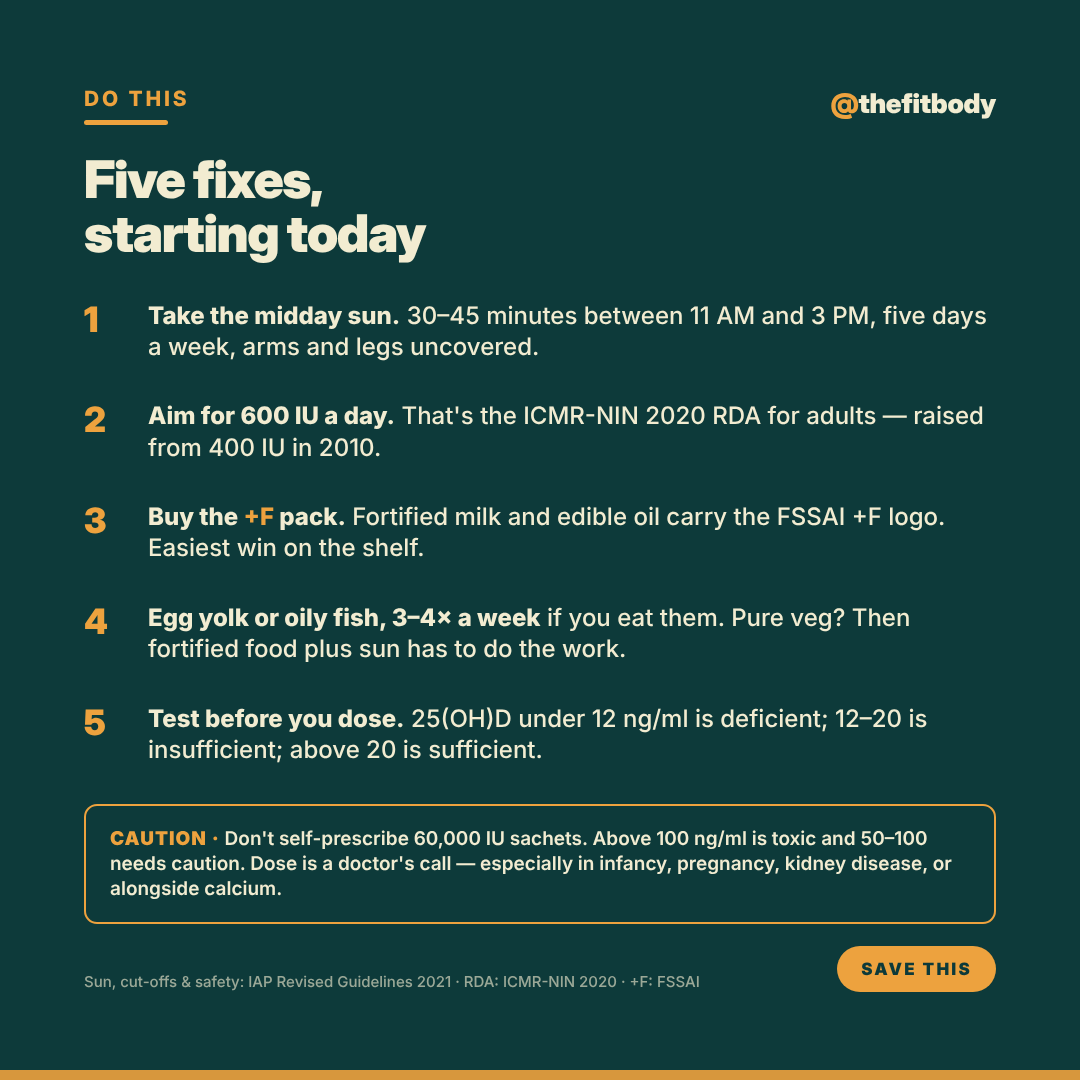
- 30–45 min of midday sun, 11am–3pm, five days a week, arms and legs out.
- Aim for 600 IU/day — the ICMR-NIN 2020 RDA for adults, raised from 400 IU.
- Buy milk and oil carrying the FSSAI +F logo. Easiest win on the shelf.
- Egg yolk or oily fish 3–4× a week if you eat them. Pure veg? Fortified food plus sun has to do the lifting.
- Test before you dose: under 12 ng/ml is deficient, 12–20 insufficient, above 20 sufficient.
Why a sunny country still runs short
Vitamin D is made when skin is exposed to midday sun, so several everyday habits quietly cut our supply: office and school hours indoors, full-sleeved clothing, sunscreen and umbrellas, pollution, and crowded high-rise housing. Darker skin, which protects against sun damage, also needs longer exposure to make the same amount. And a balcony behind window glass does not help — glass blocks the UVB rays your skin needs.
The carousel
The five slides from our Instagram and X post — swipe through them, save them, share them.
Sources
- Khadilkar A, et al. Vitamin D status and determinants in Indian children and adolescents: a multicentre study. Scientific Reports 12:16790 (2022)The headline 58% low (20% deficient + 38% insufficient, survey-weighted), 42% sufficient, urban 30.2% vs rural 21.6% deficient, girls 28.4% vs boys 23.9%, and the odds ratios: female 2.18×, overweight 2.38×, urban 2.03×. n=2,500, ages 5–18, six states, dried blood spots by LC-MS/MS, IAP cut-offs.
- ICMR-NIN. Dietary Guidelines for Indians, 2024The age trend from the Comprehensive National Nutrition Survey — 13.7% deficient at ages 1–4, 18.2% at 5–9, 23.9% at 10–19 (rounded to 14% and 24% on the slide). Also the guidance that adequate sunlight is needed to meet vitamin D requirements, and the note that food-table values are for unfortified milk and oil.
- ICMR-NIN Expert Group. Nutrient Requirements for Indians — RDA and EAR, 2020The 600 IU/day RDA for adults and the 400 IU EAR, and that the RDA was raised from 400 IU in the 2010 edition.
- Indian Academy of Pediatrics. Revised Guidelines on Prevention and Treatment of Vitamin D and Calcium Deficiency, 2021Sun exposure of 30–45 minutes for older children, at least five times a week, around midday (11 AM–3 PM), over 15–40% of body surface. The cut-offs: deficient under 12 ng/ml, insufficient 12–20, sufficient above 20. The safety numbers: toxicity above 100 ng/ml with hypercalcaemia, 50–100 ng/ml to be viewed with caution, 60,000 IU pack sizes, and parenteral megadoses above 300,000 IU not recommended.
- G R, Gupta A. Vitamin D Deficiency in India: Prevalence, Causalities and Interventions. Nutrients 6(2):729–775 (2014)Unfortified milk at roughly 2 IU per 100 ml; that vitamin D’s main food sources are animal foods while Indian staples carry almost none; and the reasons deficiency persists in a sunny country — melanin, covering clothing, crowded high-rise housing, air pollution and indoor work.
- FSSAI. Press release on milk fortification standards, 6 September 2018That FSSAI sets upper and lower limits for vitamin A and D in fortified milk, and that dairies adopt it on self-compliance — the basis for “look for the +F pack”. No IU figures are quoted on the slides, because the press release does not state them.
General information, not medical advice. Figures are taken from the sources above; if you have a medical condition, speak to your doctor before changing your diet or activity.