
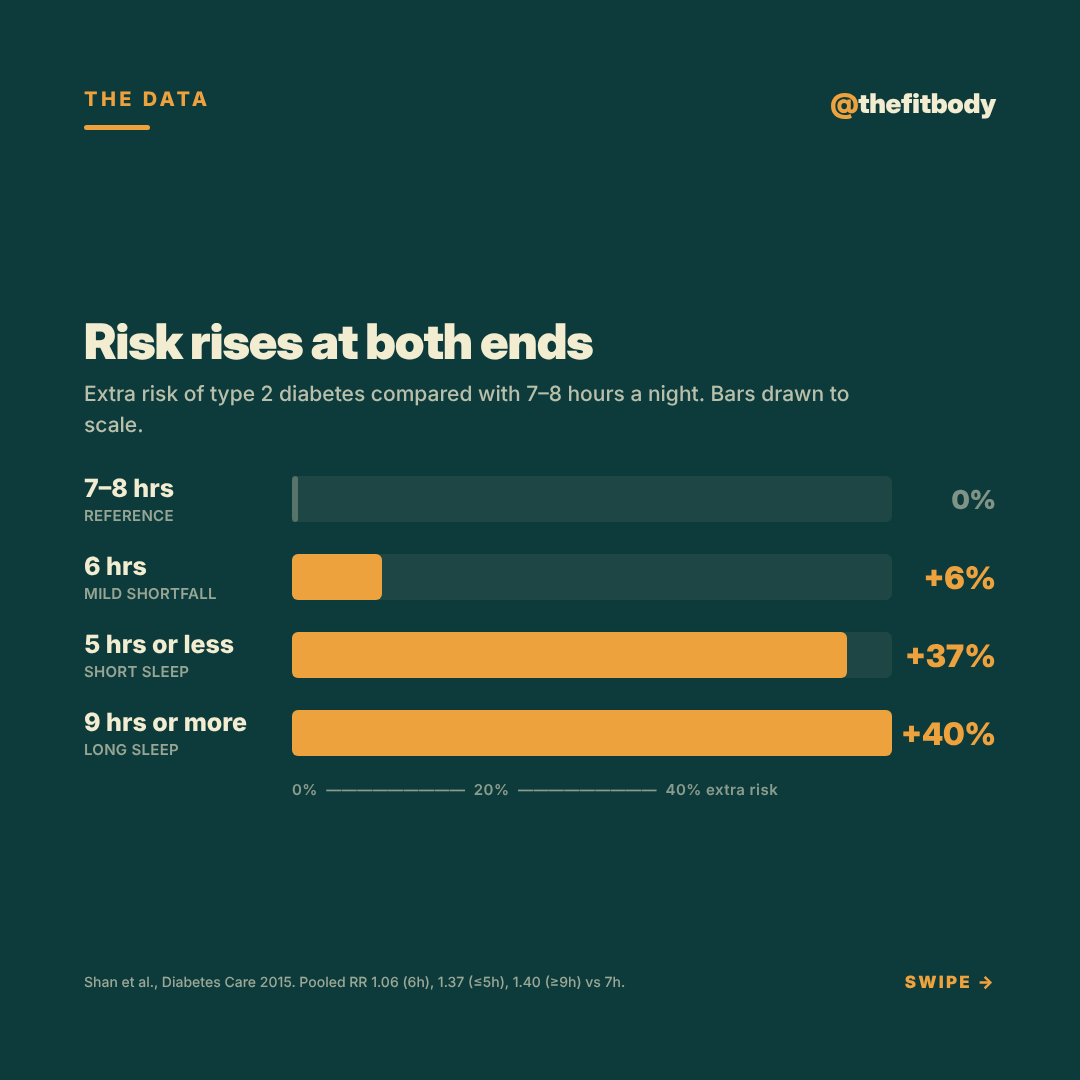
Pooled data from 482,502 adults show the risk climbs with every hour you lose below 7 — and that too much sleep carries a risk of its own.
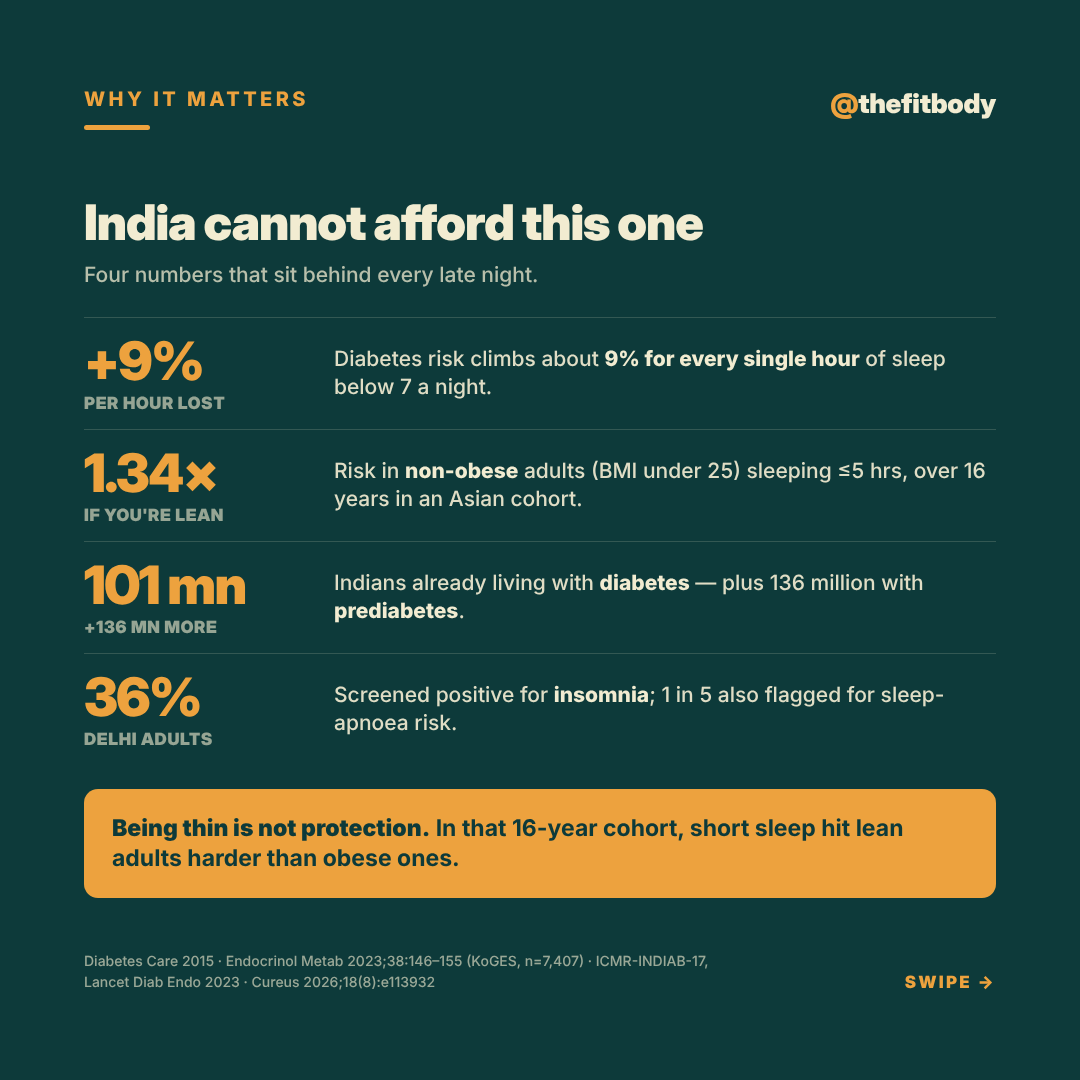
Lean is not safe either. In a 16-year Asian cohort, short sleep raised diabetes risk 1.34 times in adults with a BMI under 25.
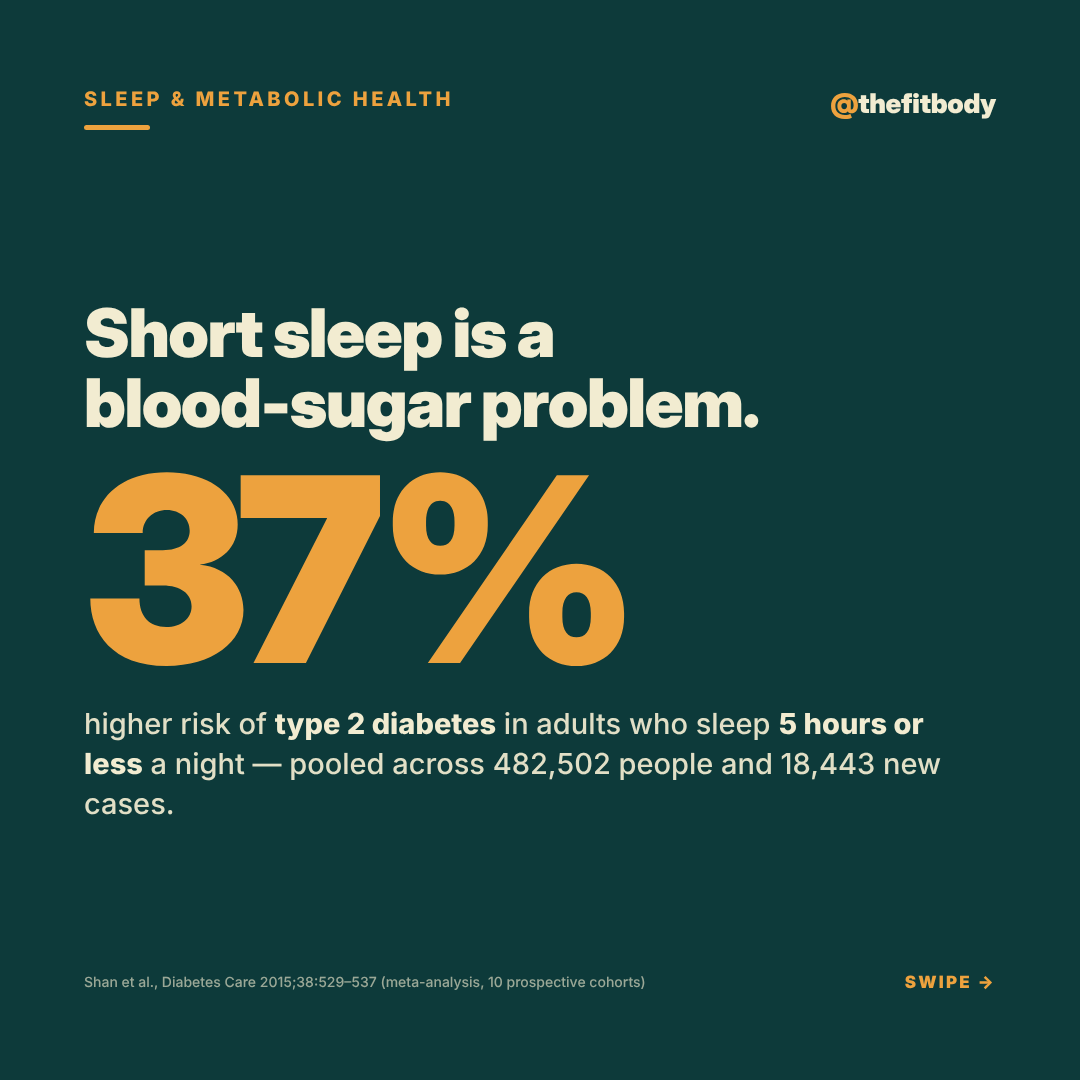
Pooled data from 482,502 adults: sleeping 5 hours or less a night is linked to a 37% higher risk of type 2 diabetes.
The Numbers
- +9% risk for every single hour you lose below 7
- +6% at 6 hrs · +37% at 5 or less · +40% at 9 or more. Both ends hurt.
- Lean is not safe. In a 16-year Asian cohort, short sleep raised risk 1.34x in adults with BMI under 25.
- India already carries 101 million people with diabetes and 136 million with prediabetes.
- In 700 South Delhi adults, 36% screened positive for insomnia; 1 in 5 for sleep-apnoea risk.
Where The Hours Leak
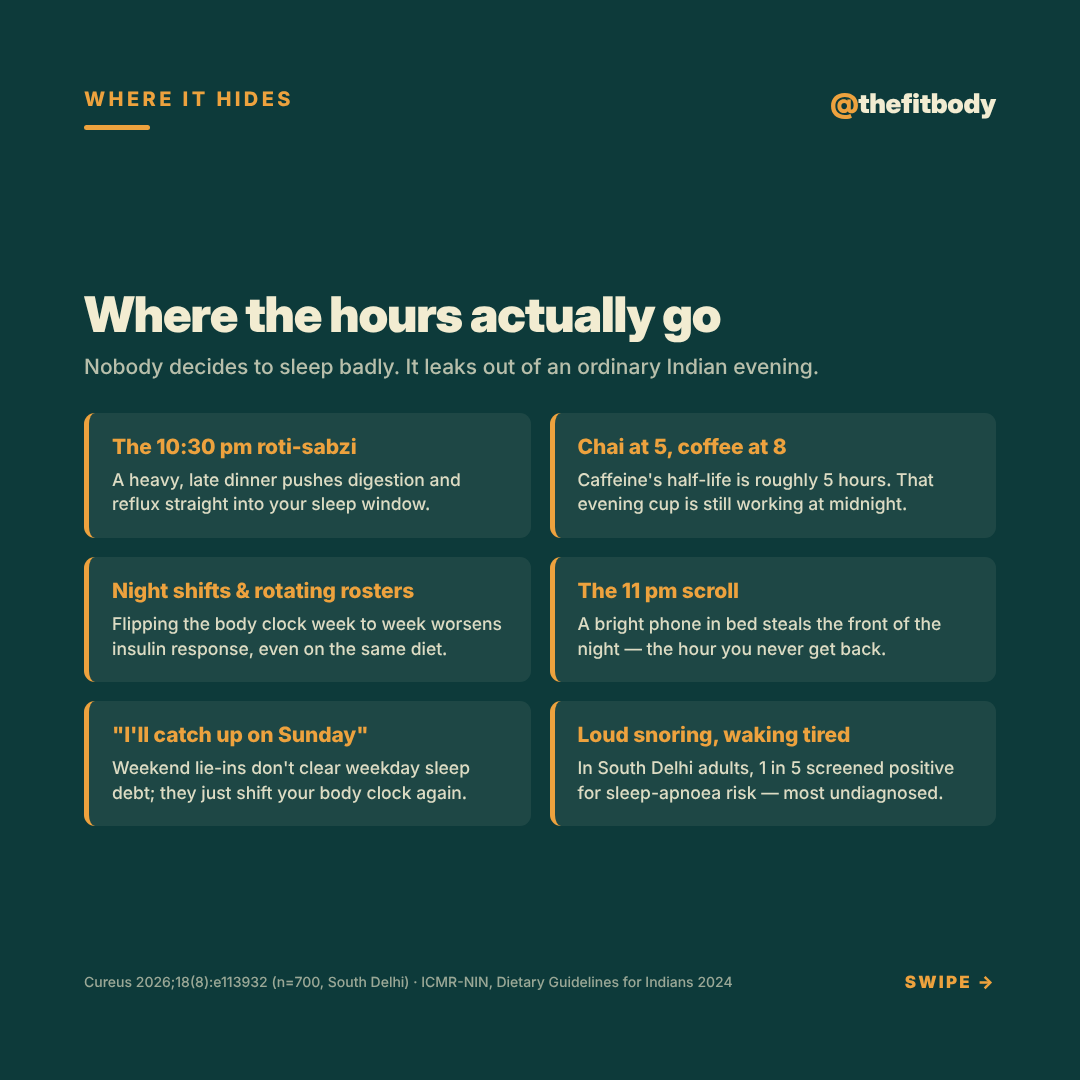
The 10:30pm roti-sabzi. Chai at 5, coffee at 8 — caffeine’s half-life is about 5 hours, so that cup is still working at midnight. The 11pm scroll. Rotating night shifts. “I’ll catch up on Sunday” (you don’t).
Five Fixes, Tonight
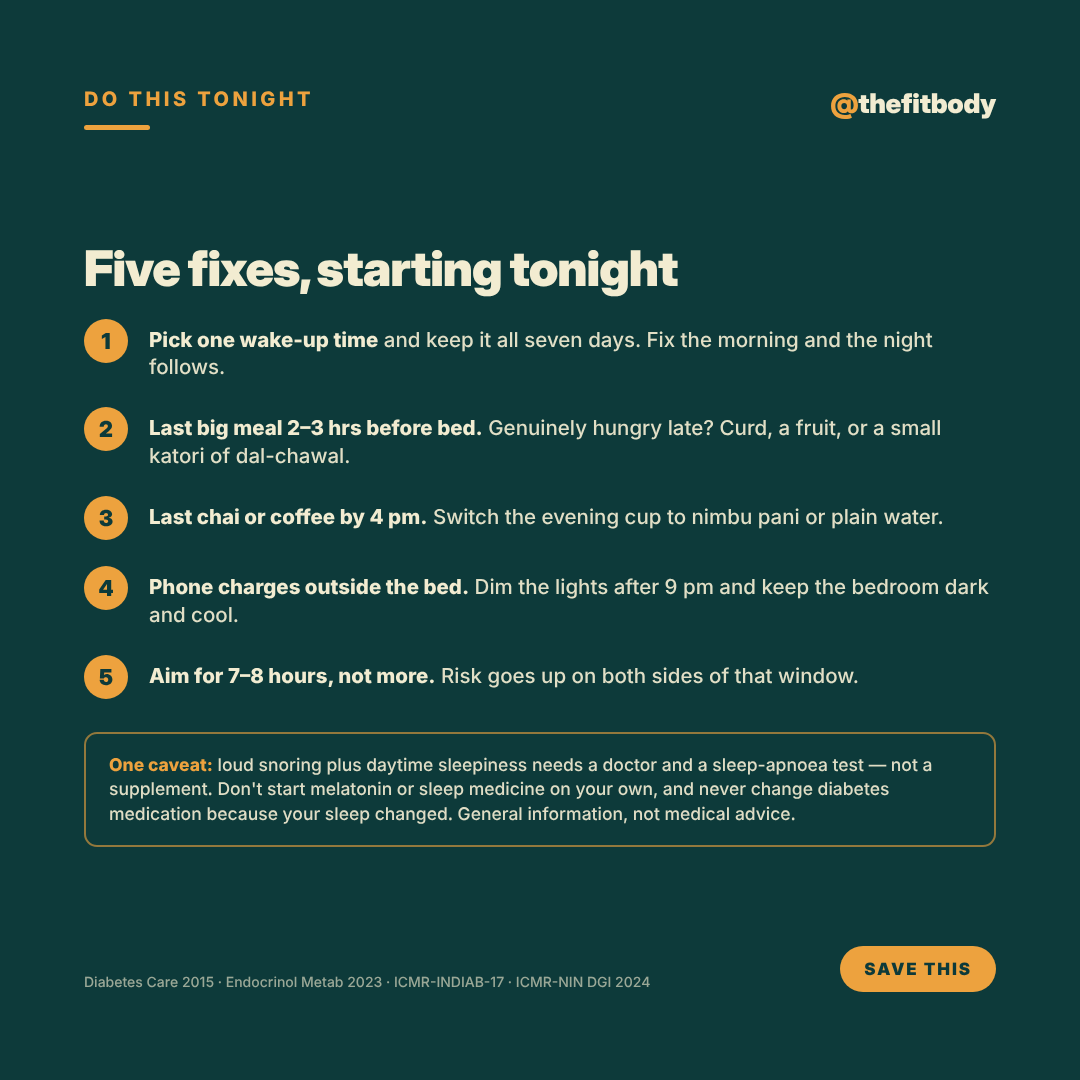
- One wake-up time, all seven days. Fix the morning and the night follows.
- Last big meal 2-3 hrs before bed. Genuinely hungry late? Curd, a fruit, or a small katori of dal-chawal — not namkeen.
- Last chai or coffee by 4pm. Swap the evening cup for nimbu pani.
- Phone charges outside the bed. Lights down after 9.
- Aim for 7-8 hours. Not 5. Not 10.
ONE CAVEAT: loud snoring plus daytime sleepiness needs a doctor and a sleep-apnoea test, not a supplement. Don’t start melatonin or any sleep medicine on your own, and never change diabetes medication because your sleep changed.
An evening that protects your sleep
- By 4 pm: your last chai or coffee. Switch to nimbu pani.
- 2–3 hours before bed: the last big meal. If you are hungry later, a katori of curd or a fruit.
- After 9 pm: lights down, phone charging outside the bed.
- Every morning: the same wake-up time, even on Sunday.
The carousel
The five slides from our Instagram and X post — swipe through them, save them, share them.
Sources
- Shan Z, Ma H, Xie M, et al. Sleep Duration and Risk of Type 2 Diabetes: A Meta-analysis of Prospective Studies.Figures used: The 37% headline (RR 1.37, 95% CI 1.18–1.59 at ≤5 h) · +9% per hour lost below 7 h (RR 1.09, 1.04–1.15) · +6% at 6 h (RR 1.06) · +40% at ≥9 h (RR 1.40, 1.08–1.80) · 482,502 adults, 18,443 new cases.
- Lee DY, Jung I, Park SY, et al. Sleep Duration and the Risk of Type 2 Diabetes: A Community-Based Cohort Study with a 16-Year Follow-up.Figures used: The 1.34× figure for lean adults (BMI <25) sleeping ≤5 h (HR 1.34, 1.11–1.61) · overall HR 1.17 (1.02–1.33) · Korean Genome and Epidemiology Study, n=7,407, 2,024 incident cases, 16-year follow-up.
- Anjana RM, Unnikrishnan R, Deepa M, et al. Metabolic non-communicable disease health report of India: the ICMR-INDIAB national cross-sectional study (ICMR-INDIAB-17).Figures used: 101 million Indians with diabetes (11.4%) · 136 million with prediabetes (15.3%) · abdominal obesity 39.5% · survey of 113,043 adults.
- Ramachandra SS. An Epidemiological Study of Sleep-Related Disorders and Their Association With Cardiovascular Risk Factors in an Adult Population (30–69 Years) of South Delhi.Figures used: 36.0% screened positive for insomnia · 20.9% positive on STOP-Bang sleep-apnoea screen (the ‘1 in 5’) · 23.9% poor sleep quality · n=700 adults, South Delhi.
- ICMR–National Institute of Nutrition. Dietary Guidelines for Indians, 2024.Figures used: Background framing on India’s diet-related disease burden: “56.4% of total disease burden in India is due to unhealthy diets” and that diet plus activity can “prevent upto 80% of type 2 diabetes”.
General information, not medical advice. Figures are taken from the sources above; if you have a medical condition, speak to your doctor before changing your diet or activity.