
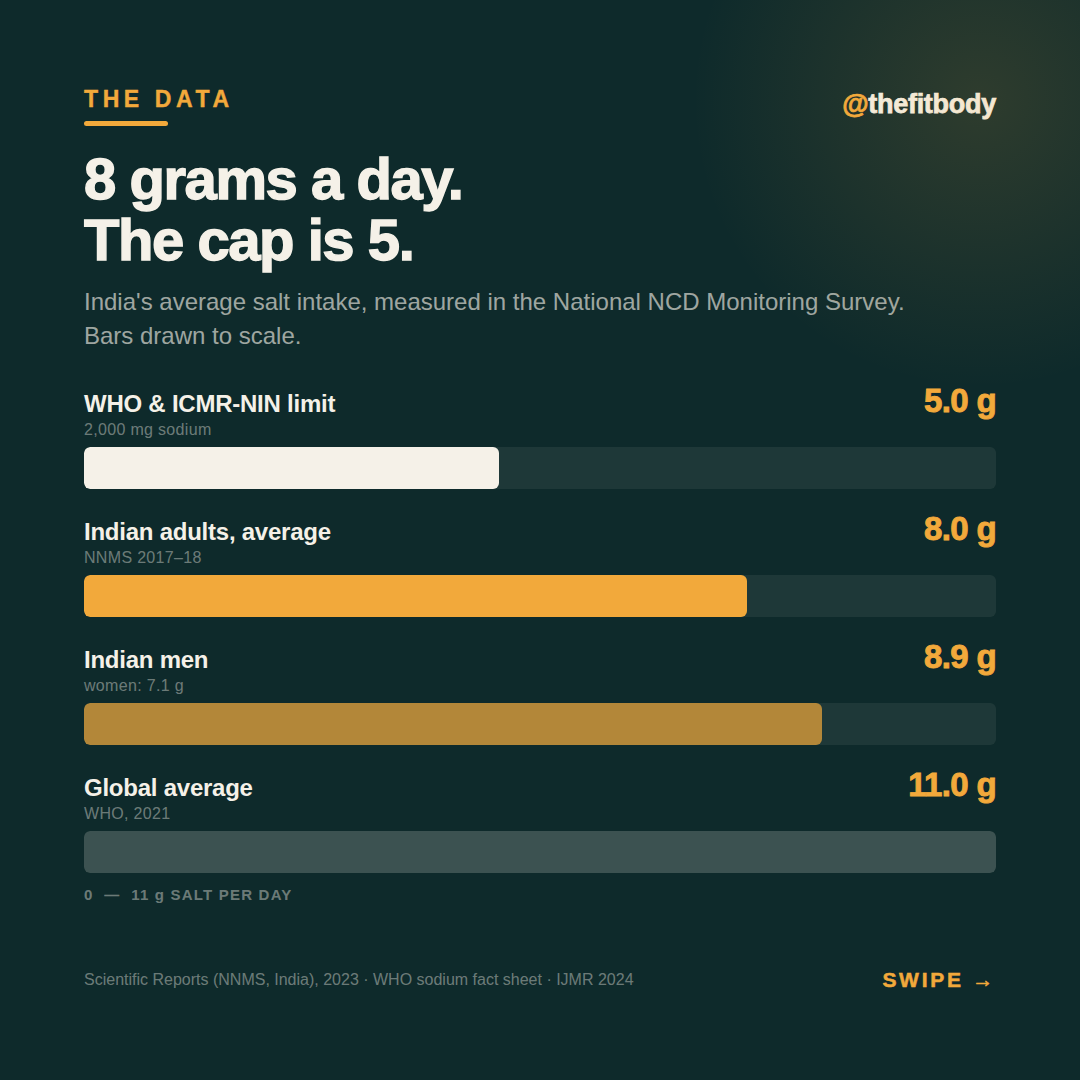
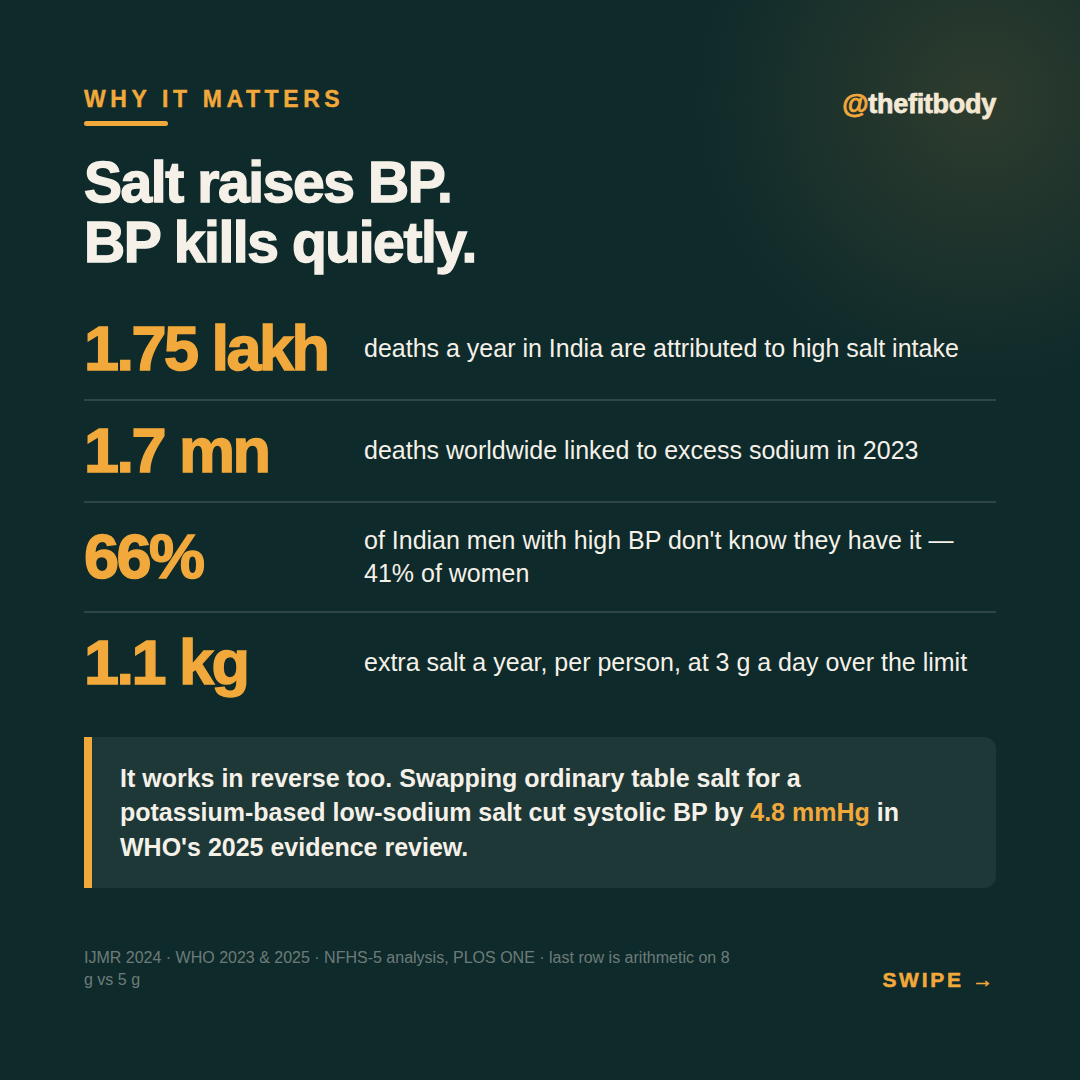
The limit set by WHO and ICMR-NIN is 5 g of salt a day — about one level teaspoon. India’s average is 8 g, which works out to roughly 1.1 kg of extra salt per person every year.
High salt intake is linked to around 1.75 lakh deaths a year in India, and because high blood pressure has no symptoms, two-thirds of Indian men who have it don’t know.
The Numbers
- The limit (WHO + ICMR-NIN): 5 g salt a day = 2,000 mg sodium
- India’s average: 8 g a day. Men 8.9 g, women 7.1 g.
- That gap is about 1.1 kg of extra salt per person, per year
- High salt is linked to roughly 1.75 lakh deaths a year in India
- 66% of Indian men with high BP don’t know they have it. 41% of women.
The Part Most People Get Wrong
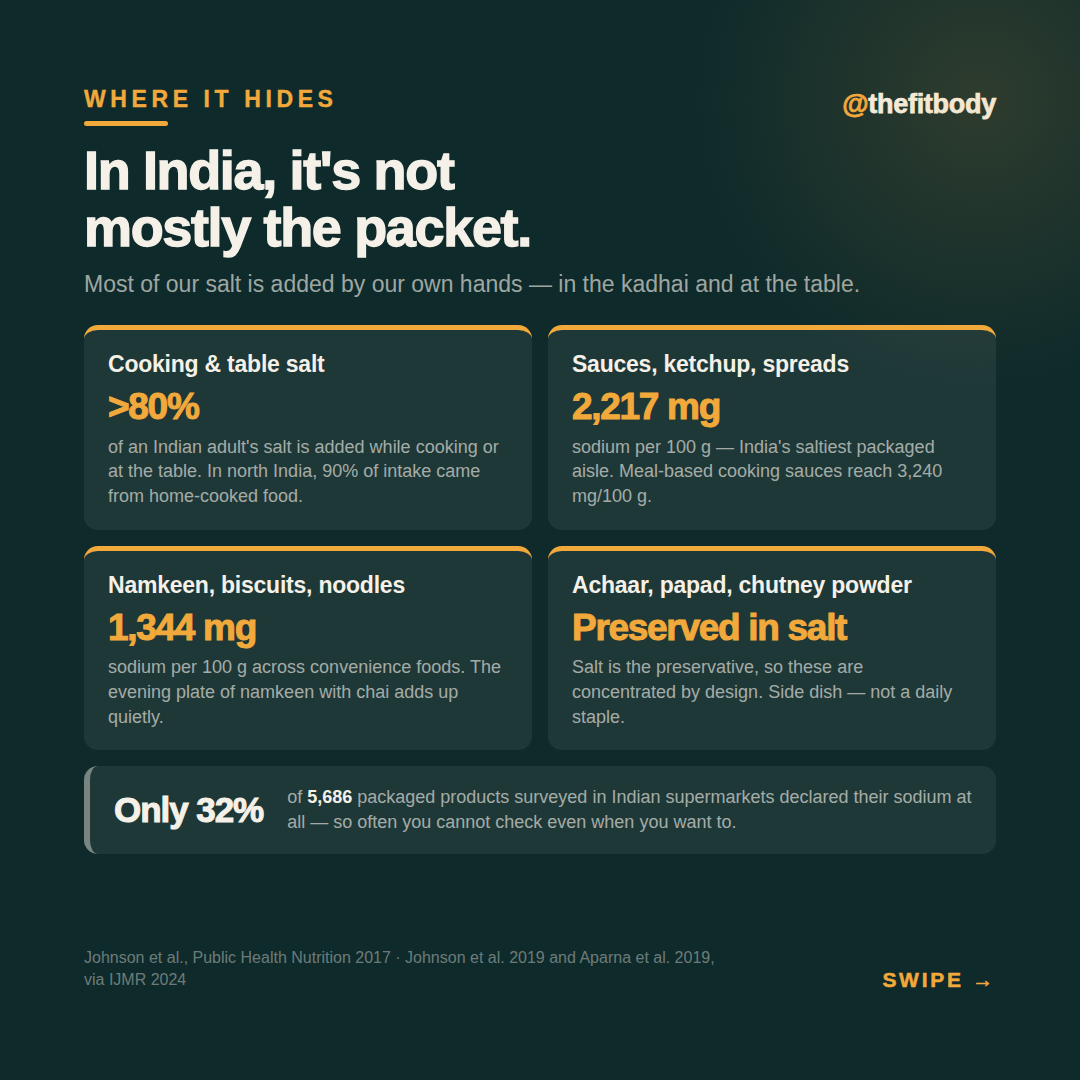
In the West, salt hides in packets. In India, mostly it doesn’t.
Over 80% of our salt is added by our own hands — in the kadhai and at the table. One north India study put 90% of intake on home-cooked food.
So the salt shaker matters more than the supermarket.
The packets still count:
- Sauces, ketchup, spreads — 2,217 mg sodium per 100 g
- Meal-based cooking sauces — up to 3,240 mg per 100 g
- Namkeen, biscuits, instant noodles — 1,344 mg per 100 g
- Only 32% of 5,686 packaged products surveyed in India declared their sodium at all
Five Things, From Tonight
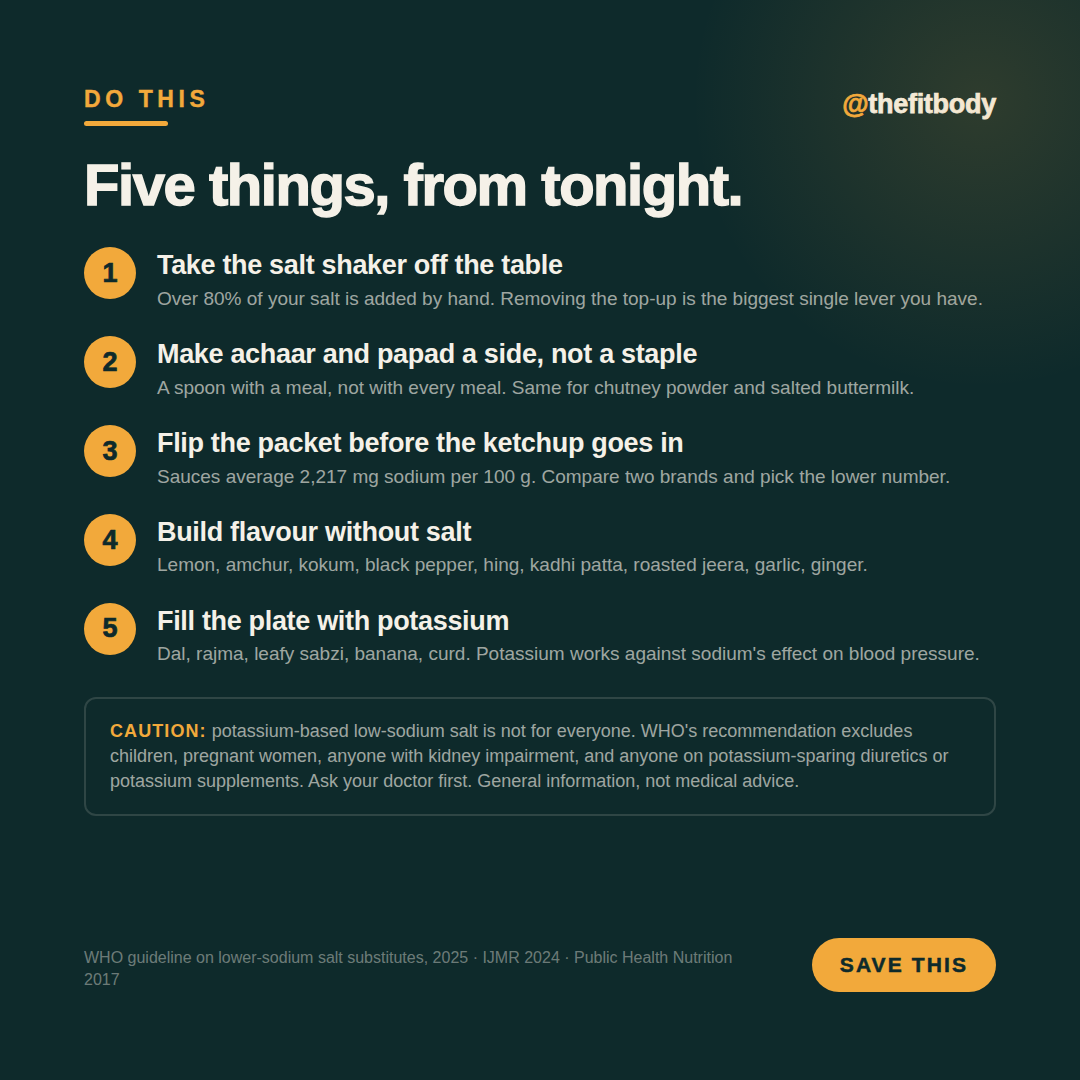
- Salt shaker off the table. Biggest single lever you have.
- Achaar, papad, chutney powder — side dish, not daily staple.
- Flip the packet before the ketchup goes in. Compare brands, pick the lower number.
- Flavour without salt — lemon, amchur, kokum, pepper, hing, kadhi patta, roasted jeera, garlic.
- More potassium on the plate — dal, rajma, leafy sabzi, banana, curd.
It works in reverse too: swapping ordinary table salt for a potassium-based low-sodium salt cut systolic BP by 4.8 mmHg in WHO's 2025 review.
In India, the kitchen matters more than the supermarket
In Western countries most salt hides in packets. In India it is mostly added by our own hands — in the kadhai, in the dal, and at the table. That means the biggest changes are within your control: take the shaker off the table, treat achaar, papad and chutney powder as occasional sides, and flavour food with lemon, amchur, kokum, pepper, hing and roasted jeera instead.
The carousel
The five slides from our Instagram and X post — swipe through them, save them, share them.
Sources
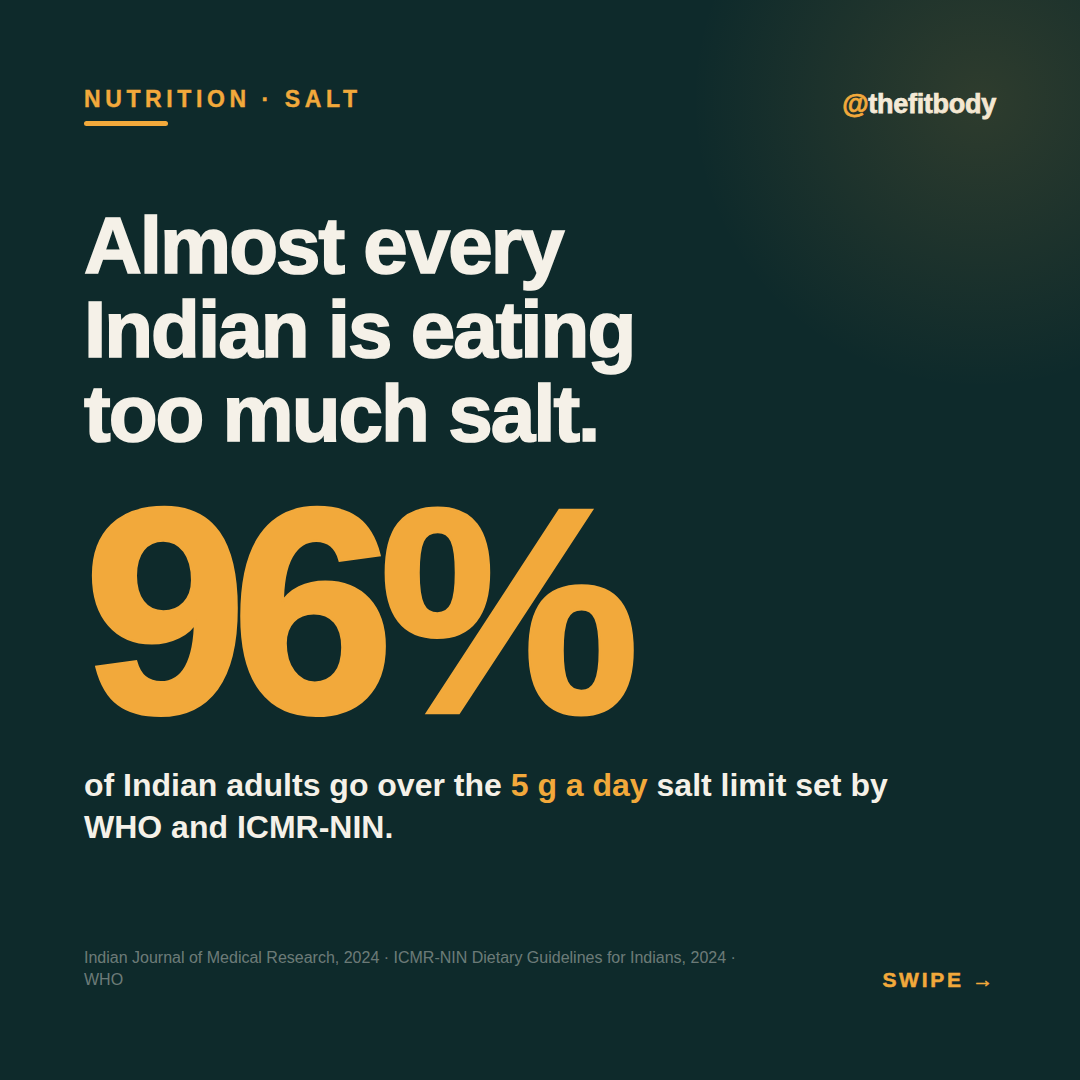
- Indian Journal of Medical Research (2024) — Dietary guidelines across different countries, compared to DGI 202496% of Indian adults exceed the <5 g/day salt limit; the 8 g/day mean intake figure.
- Indian Journal of Medical Research (2024) — India's tryst with salt: Dandi march to low sodium salts1.75 lakh deaths a year in India; >80% of salt added while cooking or at the table (Johnson 2019); 90% of intake from home-cooked food in north India (Aparna 2019); the 8 g/day mean with 95% CI 7.8–8.2.
- WHO — Sodium reduction fact sheetThe 5 g salt / 2,000 mg sodium daily limit; 1.7 million deaths worldwide linked to excess sodium in 2023; the 11 g/day global average (2021).
- Scientific Reports (2023) — National NCD Monitoring Survey, India: dietary salt intakeMean 8.0 g/day, 8.9 g for men and 7.1 g for women, from the 2017–18 NNMS (2,266 adults, 18–69).
- WHO (2025) — Guideline on the use of lower-sodium salt substitutesSystolic BP −4.76 mmHg and diastolic −2.43 mmHg; and the exclusions quoted in the caveat — children, pregnant women, kidney impairment, potassium-sparing diuretics or potassium supplements.
- PLOS ONE — Undiagnosed hypertension in India, NFHS-5 (2019–21)66.3% of men and 41.4% of women with hypertension are undiagnosed, rounded to 66% and 41% on the slide.
- Public Health Nutrition (2017), Johnson et al. — Sodium content of packaged foods in IndiaSauces and spreads 2,217 mg sodium/100 g; meal-based sauces 3,240 mg /100 g; convenience foods 1,344 mg /100 g; only 32% of 5,686 products surveyed declared sodium.
- ICMR-NIN — Dietary Guidelines for Indians, 2024India's own 5 g/day salt recommendation, quoted alongside WHO's on slides 1 and 2.
General information, not medical advice. Figures are taken from the sources above; if you have a medical condition, speak to your doctor before changing your diet or activity.