
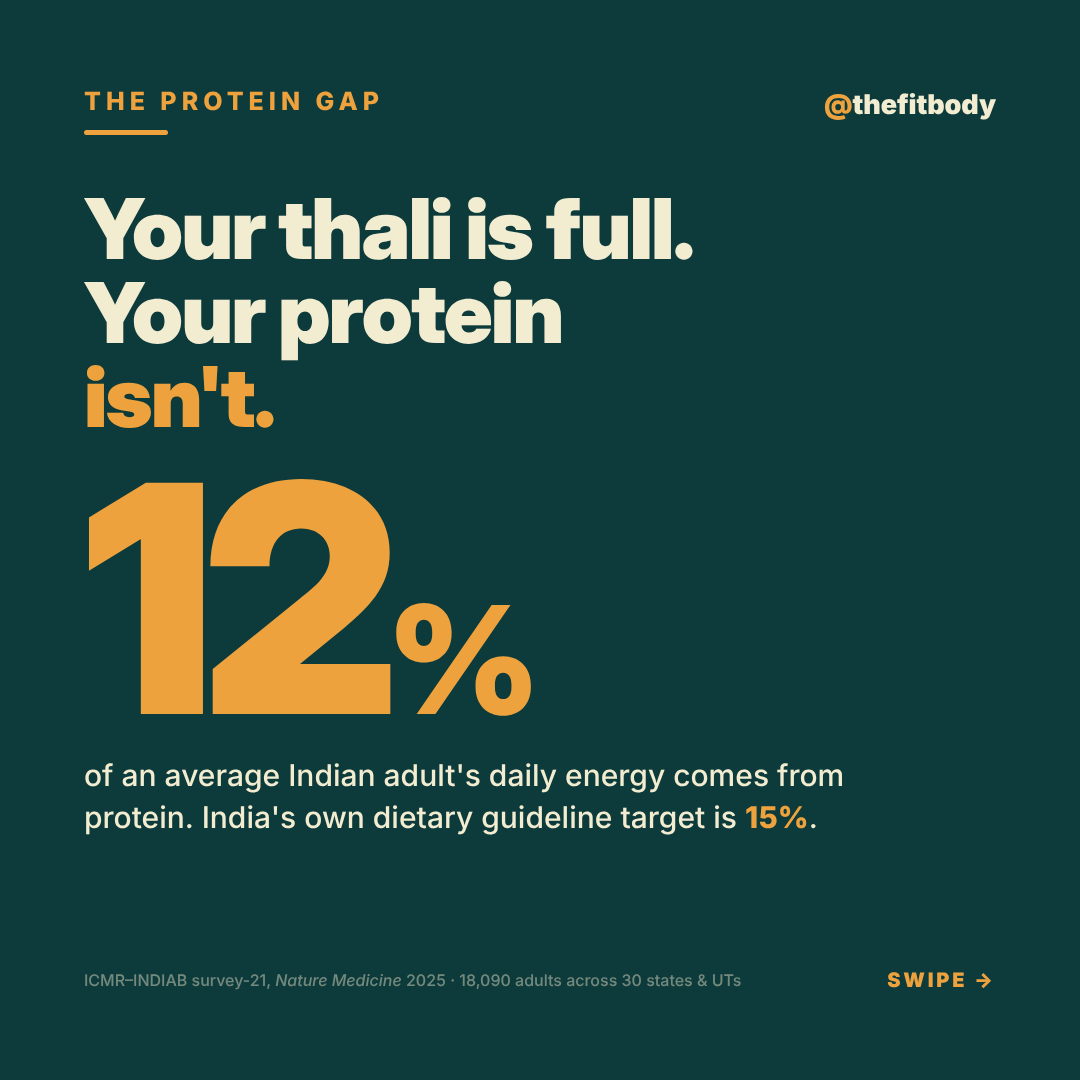
India’s two most recent national diet studies agree: we eat enough food, but not enough protein — and the protein we do get is the kind that moves health outcomes least.
The fix is not a protein powder. It is a bigger bowl of dal, a cup of curd instead of an extra cup of rice, and a handful of nuts.
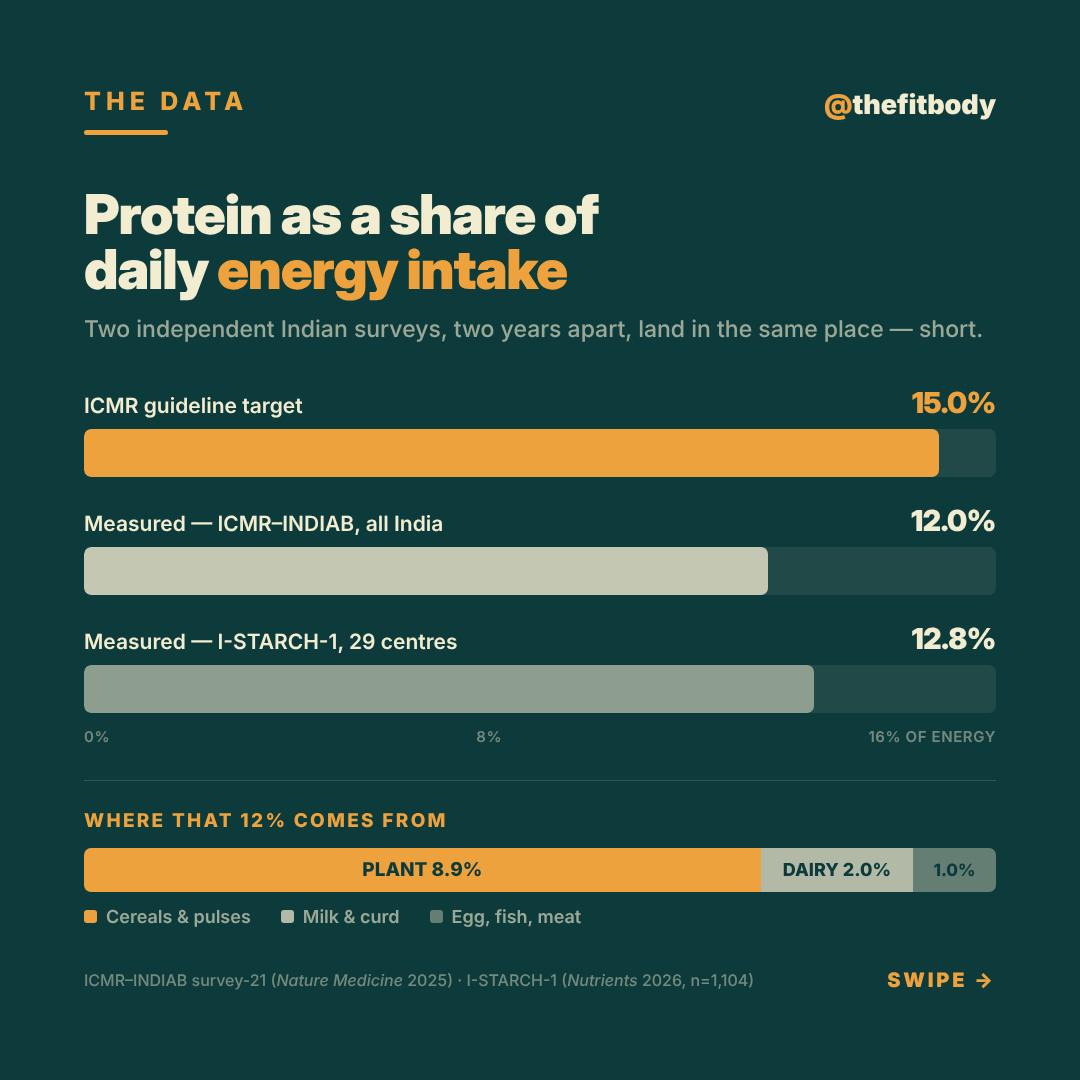
A separate study across 29 centres in 14 states got 12.8%. Same story.
It isn't only how much. It's what kind.
Of that 12%:
- 8.9% from plants, mostly cereals
- 2.0% from milk and curd
- 1.0% from egg, fish and meat
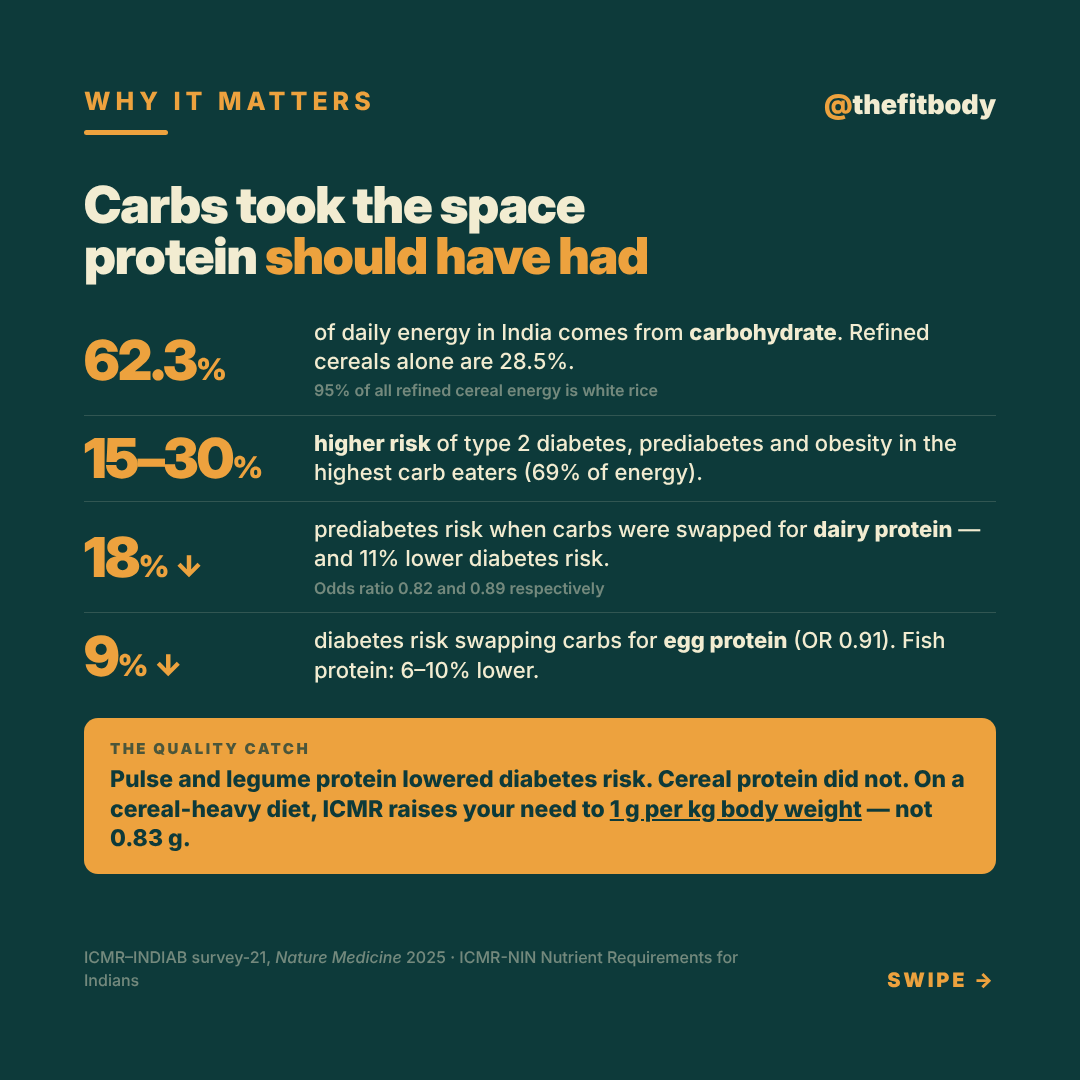
Meanwhile carbs take 62.3% of your energy. Refined cereals alone take 28.5% — and 95% of that is white rice.
The heaviest carb eaters (69% of energy) had 15–30% higher odds of type 2 diabetes, prediabetes and obesity.
Swap some of those carbs for protein and the numbers move:
- dairy protein: 18% lower prediabetes risk, 11% lower diabetes risk
- egg protein: 9% lower diabetes risk
- fish protein: 6–10% lower
Here's the catch nobody mentions. Protein from pulses and legumes lowered risk. Protein from cereals did not. Roti and rice are padding your protein count on paper, not in your body.
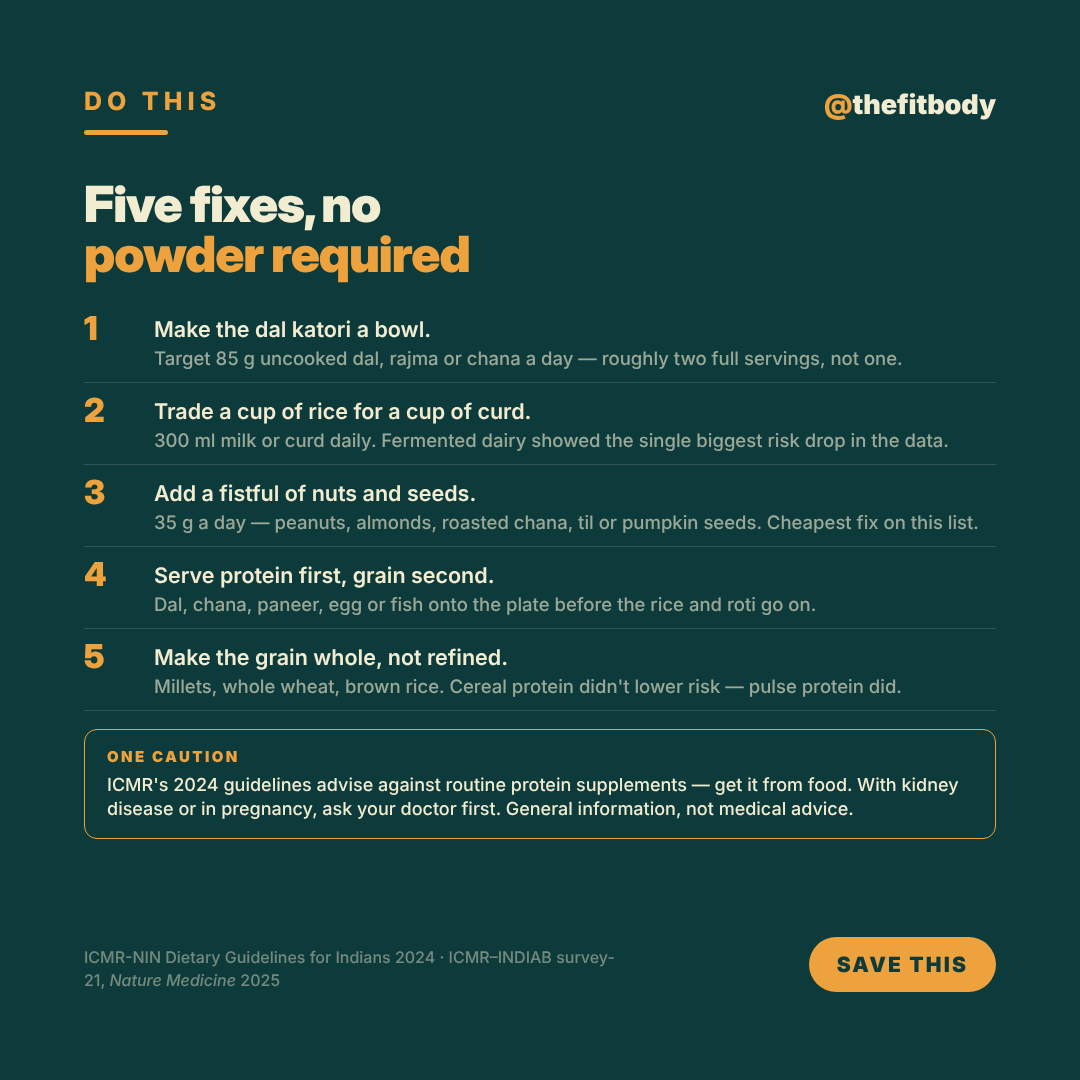
Five fixes. No powder.
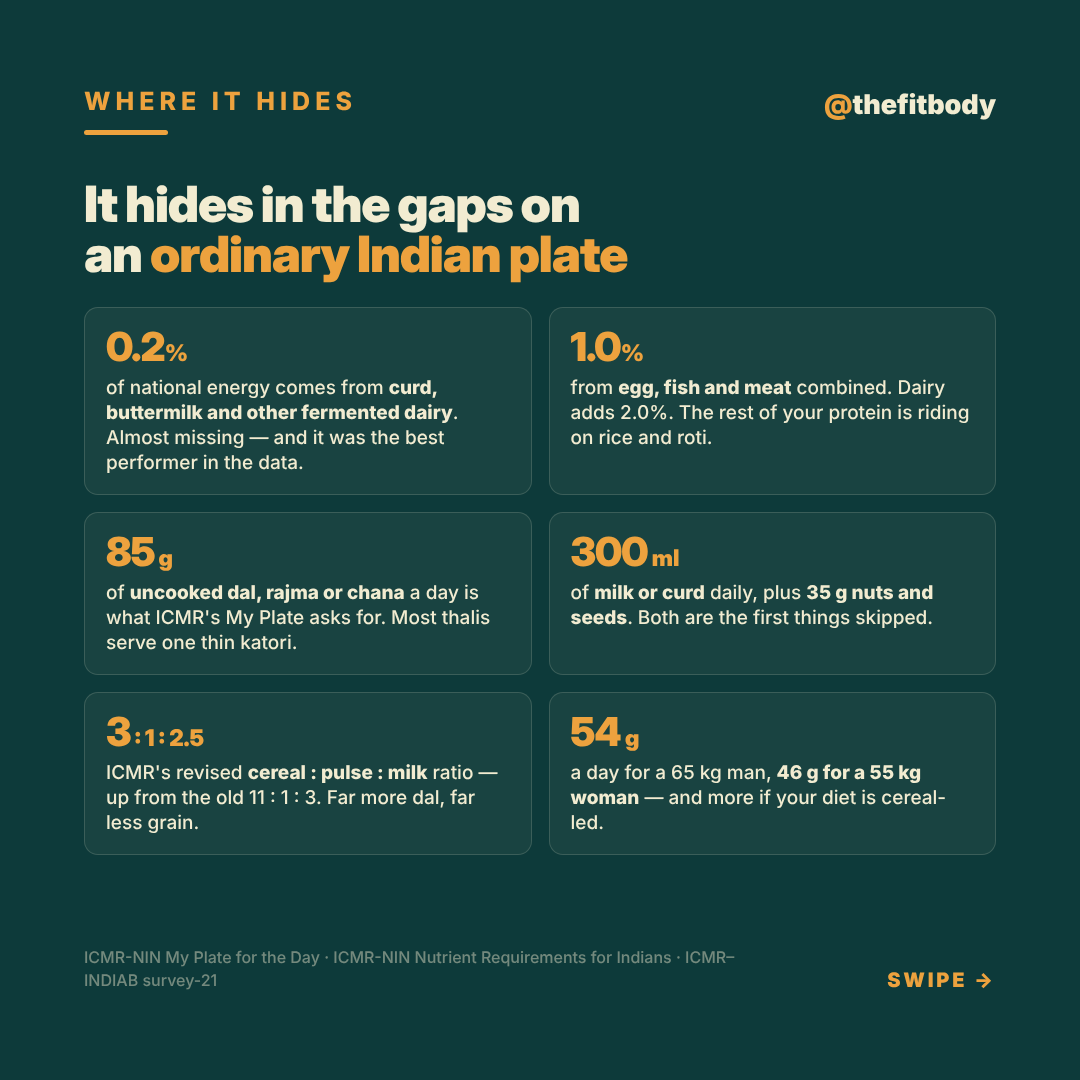
- Make the dal katori a bowl. ICMR's My Plate asks for 85 g uncooked dal, rajma or chana a day. Most of us serve a third of that.
- Trade a cup of rice for a cup of curd. 300 ml milk or curd daily. Fermented dairy is just 0.2% of national energy — almost absent, and the best performer in the data.
- A fistful of nuts and seeds. 35 g: peanuts, almonds, roasted chana, til.
- Protein on the plate first, grain second. Dal, chana, paneer, egg or fish — then the roti.
- Make the grain whole. Millets, whole wheat, brown rice over maida.
Target: 54 g a day for a 65 kg man, 46 g for a 55 kg woman — and about 1 g per kg if your diet is cereal-led.
⚠️ ICMR's 2024 guidelines advise against routine protein supplements to build muscle — get it from food. If you have kidney disease or are pregnant, speak to your doctor before raising protein. General information, not medical advice.
Pulses help — cereal protein doesn’t
In the ICMR–INDIAB analysis, swapping carbohydrate for protein from dairy, eggs, fish and pulses was linked with lower risk of prediabetes and diabetes, while protein from cereals was not. In other words, the roti and rice in your thali pad your protein count on paper — not in your body.
The carousel
The five slides from our Instagram and X post — swipe through them, save them, share them.
Sources
- ICMR–INDIAB survey-21 — Nature Medicine, 202518,090 adults, 30 states & UTs. Protein 12%E (plant 8.9, dairy 2.0, animal 1.0) · carbohydrate 62.3%E · refined cereals 28.5%E · 95% of refined cereal energy from white rice · fermented dairy 0.2%E · 15–30% higher risk at 69%E carbs · dairy-protein substitution OR 0.82 prediabetes / 0.89 T2D · egg OR 0.91 · fish 6–10% · pulse protein lowered risk, cereal protein did not.
- I-STARCH-1 — Nutrients, 2026n=1,104 across 29 centres in 14 states. Protein 12.8%E, carbohydrate 62.1%E, fat 25.1%E — “below the 15–20%E range recommended in contemporary Indian guidance”.
- ICMR-NIN — My Plate for the Day (2024)85 g pulses/legumes a day · 300 ml milk or curd · 35 g nuts & seeds · 250 g cereals · 400 g vegetables, on a ~2,000 kcal basis.
- ICMR-NIN — Nutrient Requirements for Indians (RDA)Protein RDA 0.83 g/kg/day (EAR 0.66) · 54.0 g/day for a 65 kg man, 45.7 g/day for a 55 kg woman · 1 g/kg/day on a cereal-based low-quality-protein diet · cereal:legume:milk ratio revised to 3:1:2.5 from 11:1:3.
- Dietary Guidelines for Indians 2024 — Indian Journal of Medical Research85 g/day uncooked pulses (30 g substitutable with meat) · 300 mL/day milk · DGI 2024 “suggested avoiding regular consumption of protein supplements to build muscle mass” · the need to close the gap between low protein and high carbohydrate intake.
General information, not medical advice. Figures are taken from the sources above; if you have a medical condition, speak to your doctor before changing your diet or activity.