
We usually think about health in terms of food and exercise, and treat sleep as whatever time is left over. But research increasingly shows that sleep is one of the quiet levers behind appetite, blood sugar and body weight.
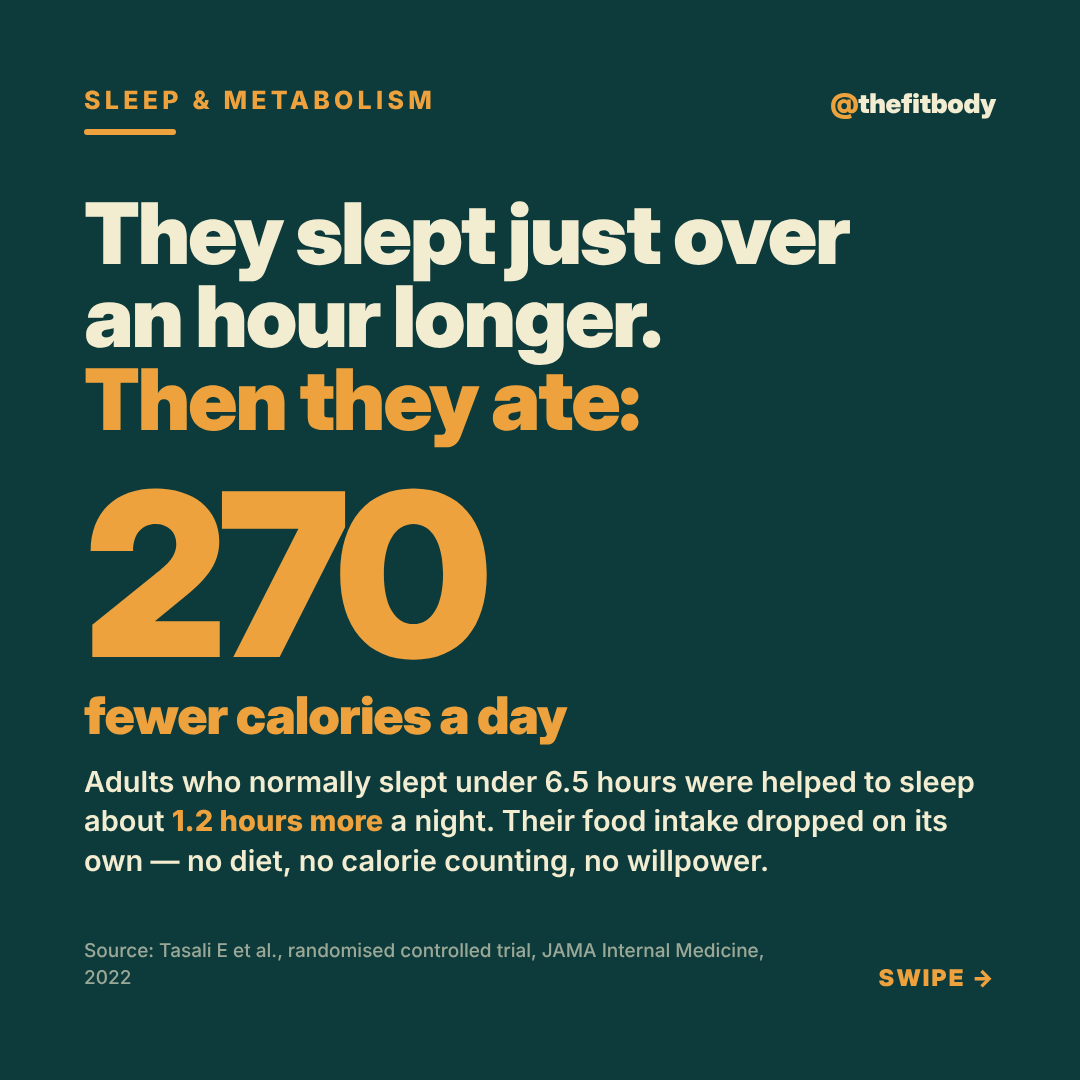
In a randomised trial, adults who normally slept under 6.5 hours extended their sleep and began eating less — without being asked to. And in India, where diabetes and abdominal obesity are already common, short nights land on a system that is under strain.
A randomised trial, not a theory: adults who normally slept under 6.5 hours extended sleep by about 1.2 hours a night. Intake dropped on its own. No diet, no counting.
Now the part that should worry us more.
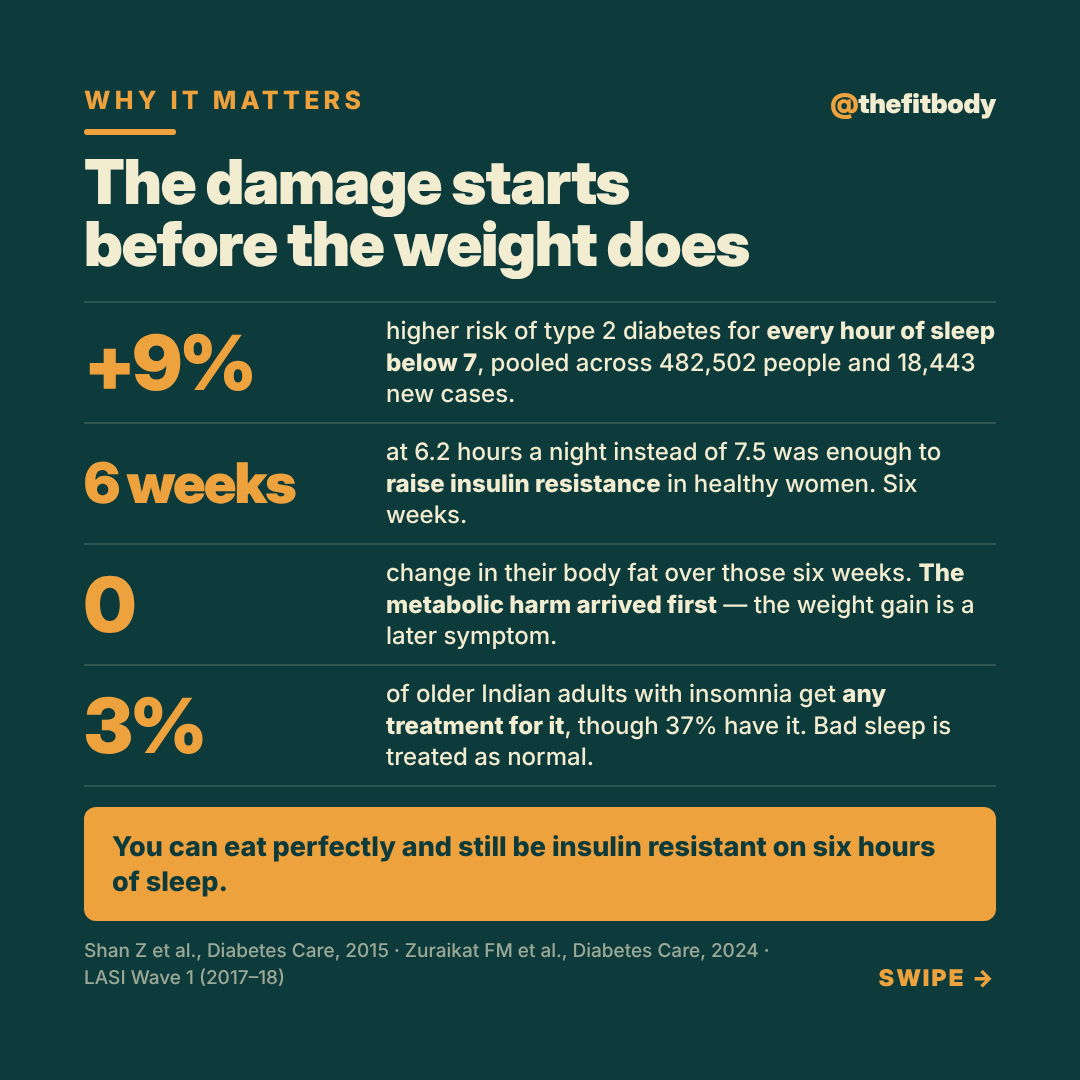
Across 482,502 people and 18,443 new cases, every hour of sleep below 7 raised type 2 diabetes risk by 9%. Risk was lowest at 7–8 hours.
And in a 6-week trial, healthy women who slept 6.2 hours instead of 7.5 became measurably more insulin resistant — with zero change in body fat. The metabolic damage arrives first. The weight gain is a later symptom.
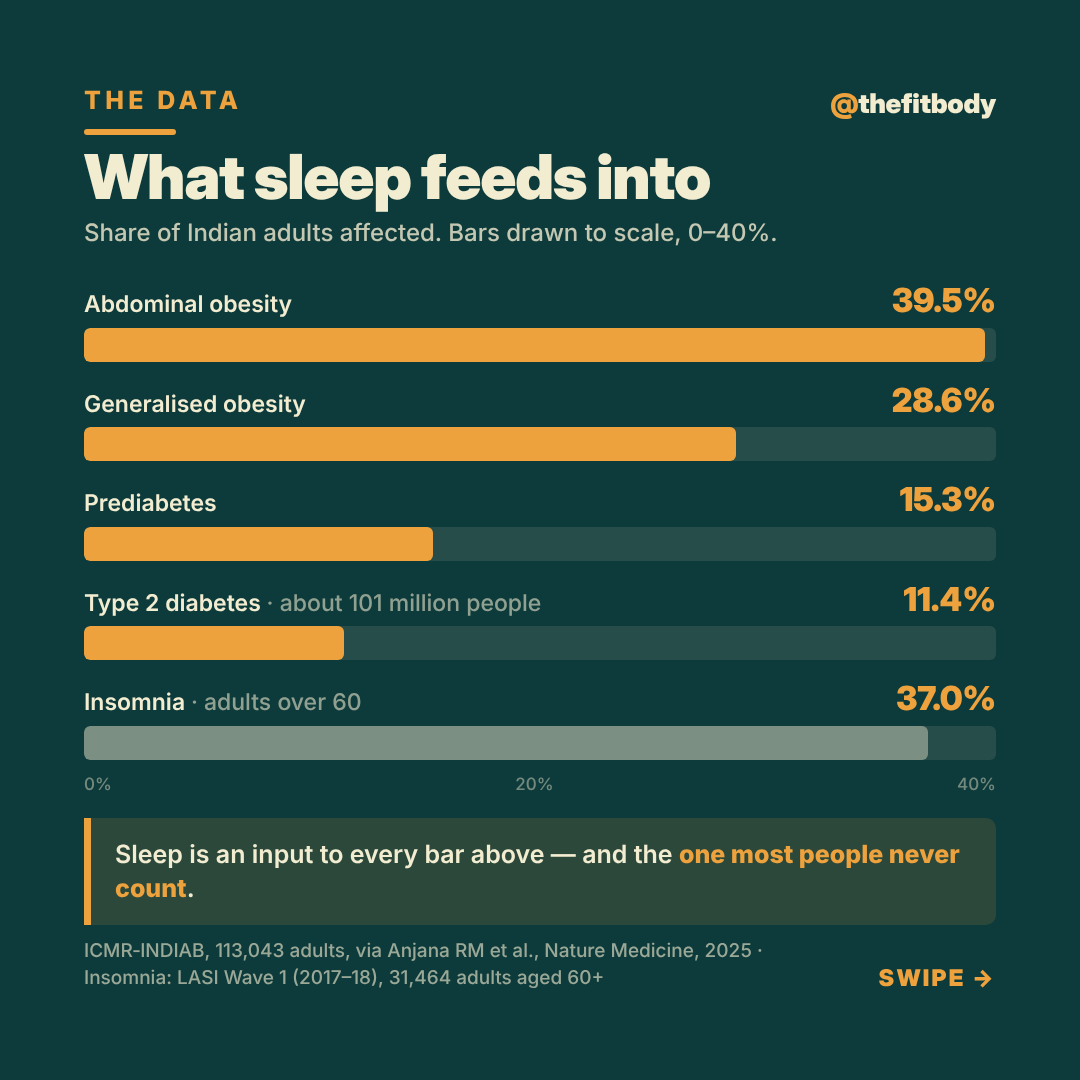
In India that lands on a loaded system: 39.5% of adults have abdominal obesity, 15.3% prediabetes, 11.4% diabetes. Among adults over 60, 37% have insomnia — and 3% get any treatment.
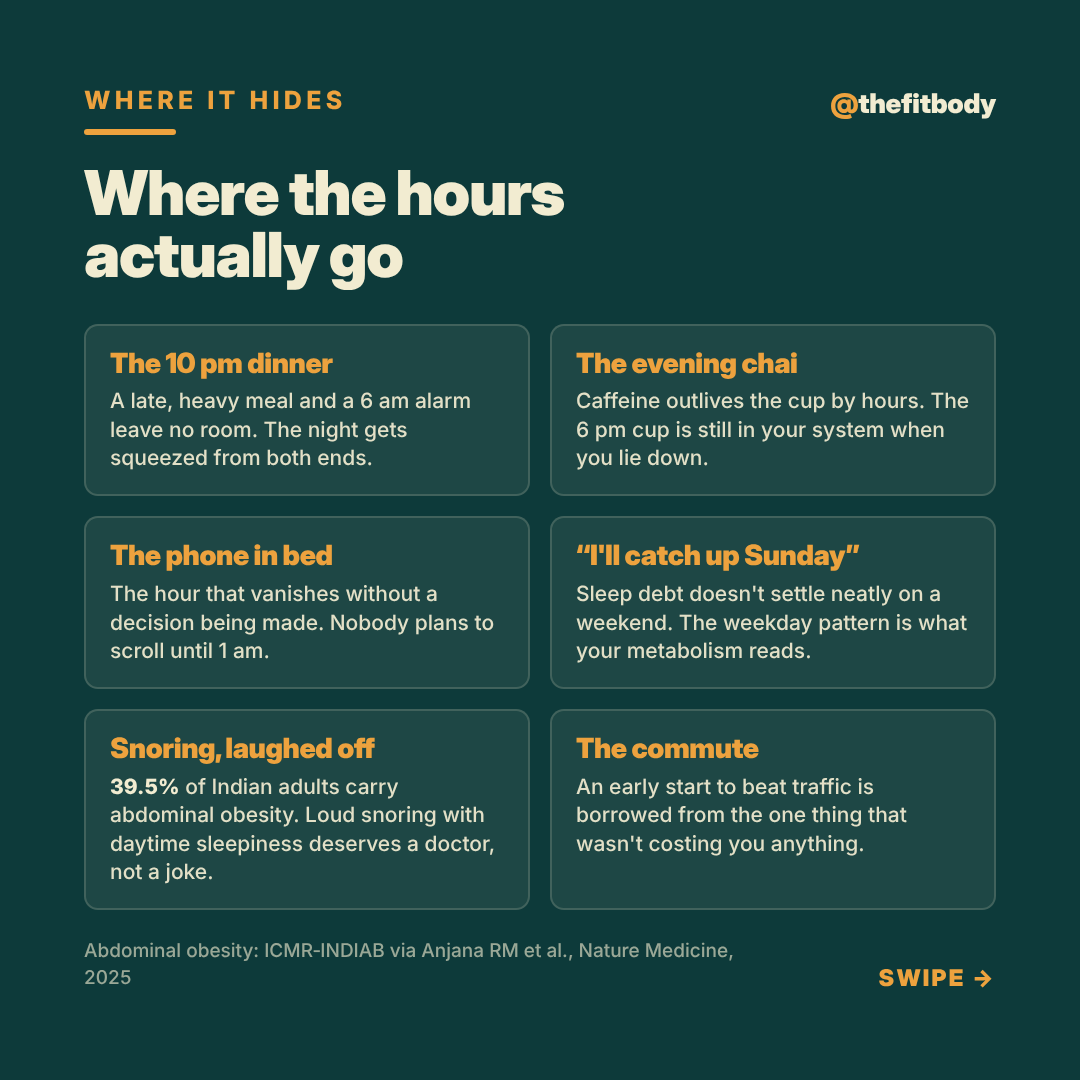
Where The Hours Go
- The 10 pm dinner, then a 6 am alarm.
- The evening chai. Caffeine outlives the cup by hours.
- The phone in bed. The hour nobody chooses to lose.
- “I’ll catch up Sunday.” Your metabolism reads the weekdays.
- Snoring laughed off. With daytime sleepiness, that deserves a doctor.
- The early start to beat traffic, borrowed from the one thing that cost you nothing.
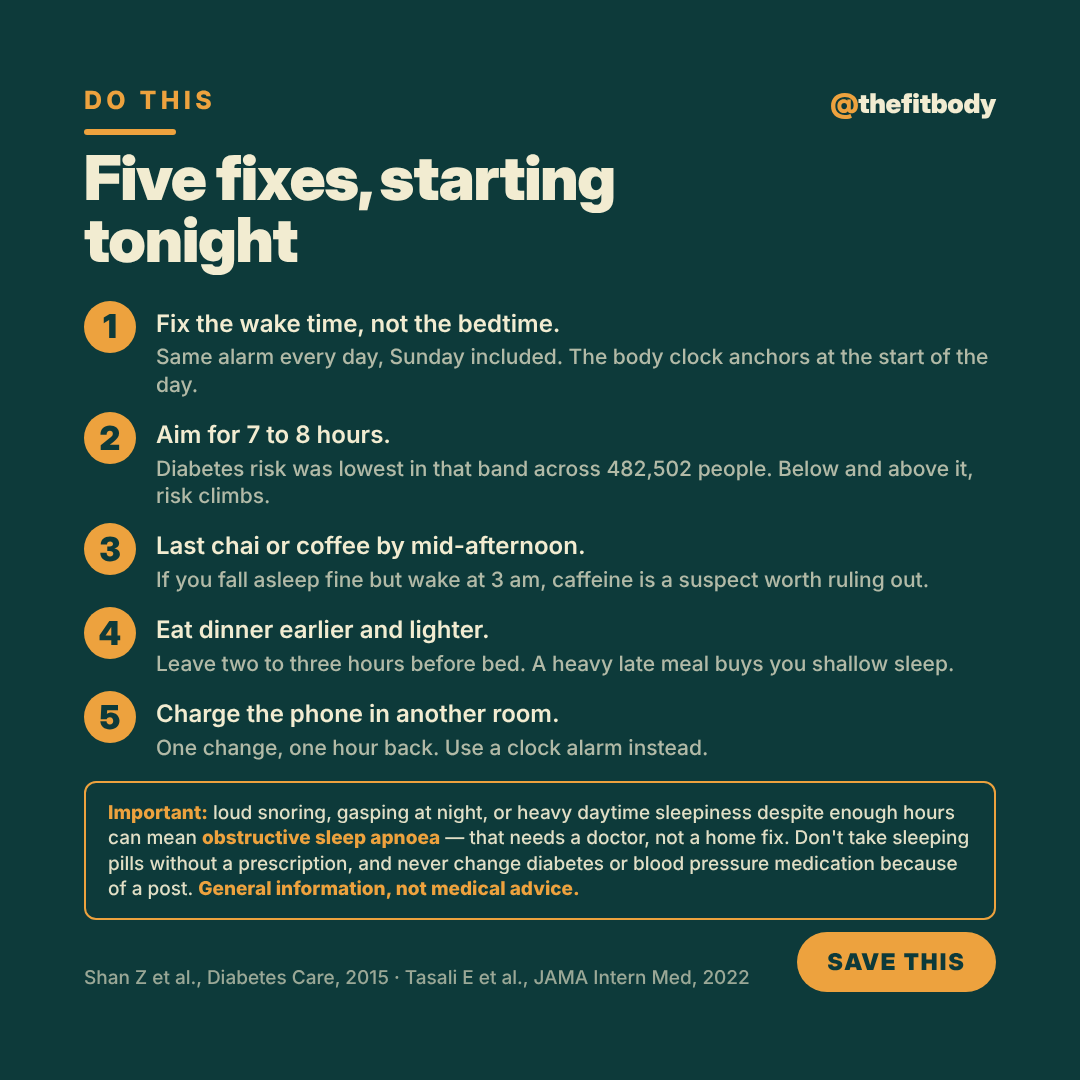
Five Fixes, Starting Tonight
- Fix the wake time, not the bedtime. Same alarm daily, Sunday included.
- Aim for 7–8 hours. That’s where diabetes risk sat lowest.
- Last chai or coffee by mid-afternoon.
- Dinner earlier and lighter — 2-3 hours before bed.
- Charge the phone in another room.
The damage arrives before the weight
In a six-week trial, healthy women who slept 6.2 hours instead of 7.5 hours became measurably more insulin resistant, even though their body fat did not change. That is why poor sleep can be a hidden contributor long before a scale or a blood report shows trouble.
The carousel
The five slides from our Instagram and X post — swipe through them, save them, share them.
Sources
- Tasali E et al., “Effect of Sleep Extension on Objectively Assessed Energy Intake Among Adults With Overweight in Real-life Settings”, JAMA Internal Medicine, 2022The headline figure: 80 adults with overweight habitually sleeping under 6.5 h; sleep extended by ~1.2 h a night; energy intake fell ~270 kcal/day versus control (NIH summary of the trial)
- Shan Z et al., “Sleep Duration and Risk of Type 2 Diabetes: A Meta-analysis of Prospective Studies”, Diabetes Care, 2015482,502 participants, 18,443 incident cases · RR 1.09 (95% CI 1.04–1.15) per hour below 7 h · RR 1.14 (95% CI 1.03–1.26) per hour above 7 h · U-shaped curve, lowest risk at 7–8 h
- Zuraikat FM, St-Onge M-P et al., “Chronic Insufficient Sleep in Women Impairs Insulin Sensitivity Independent of Adiposity Changes”, Diabetes Care, 2024Randomised crossover trial, 38 women with primary outcome data · 6 weeks at 6.2 h vs 7.5 h a night · HOMA-IR rose (β = 0.30 ± 0.12, P = 0.016) and fasting insulin rose (β = 6.8 ± 2.8 pmol/L, P = 0.016) · no significant change in visceral (P = 0.81) or total adipose tissue (P = 0.80)
- Anjana RM et al., “Dietary profiles and associated metabolic risk factors in India from the ICMR–INDIAB survey-21”, Nature Medicine, 2025ICMR–INDIAB national prevalence across 113,043 adults: type 2 diabetes 11.4% · prediabetes 15.3% · generalised obesity 28.6% · abdominal obesity 39.5%
- Pradhan MR & Saikia D, “Prevalence and predictors of insomnia and its treatment-seeking among older adults in India”, Journal of Activity, Sedentary and Sleep Behaviors, 2024LASI Wave 1 (2017–18), 31,464 adults aged 60+: 37% had insomnia (women 41%, men 32%) and only 3% had sought any treatment in the previous month
General information, not medical advice. Figures are taken from the sources above; if you have a medical condition, speak to your doctor before changing your diet or activity.