
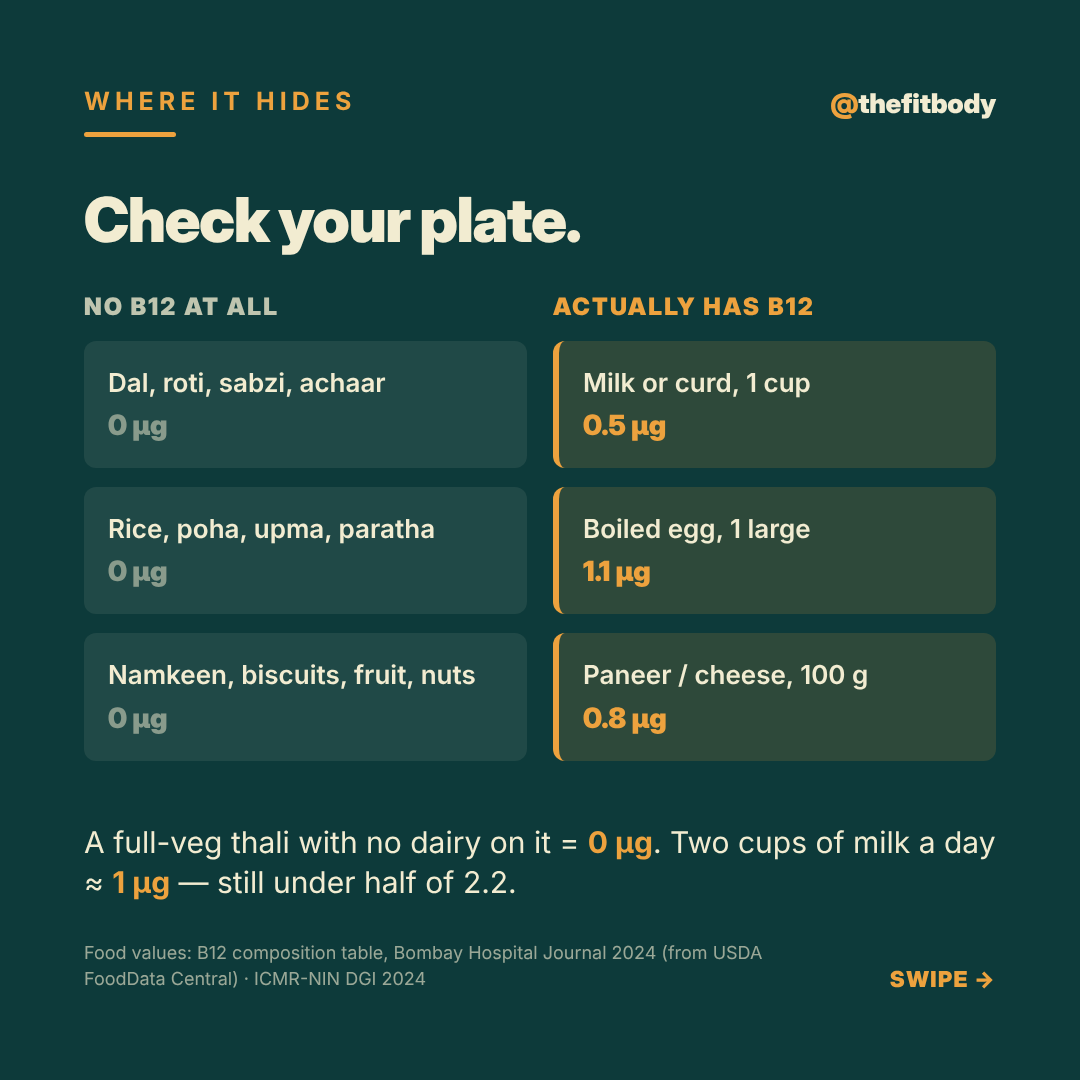
Dal, roti, sabzi, rice, poha, upma, paratha, achaar, fruit, nuts — every one of them has essentially zero vitamin B12. It isn’t a flaw in Indian food; it is biology. B12 is produced by bacteria, and the foods that carry it come from animals.
That makes B12 the one nutrient a fully vegetarian diet genuinely struggles to supply — which is why deficiency shows up so often, even in families that eat well.
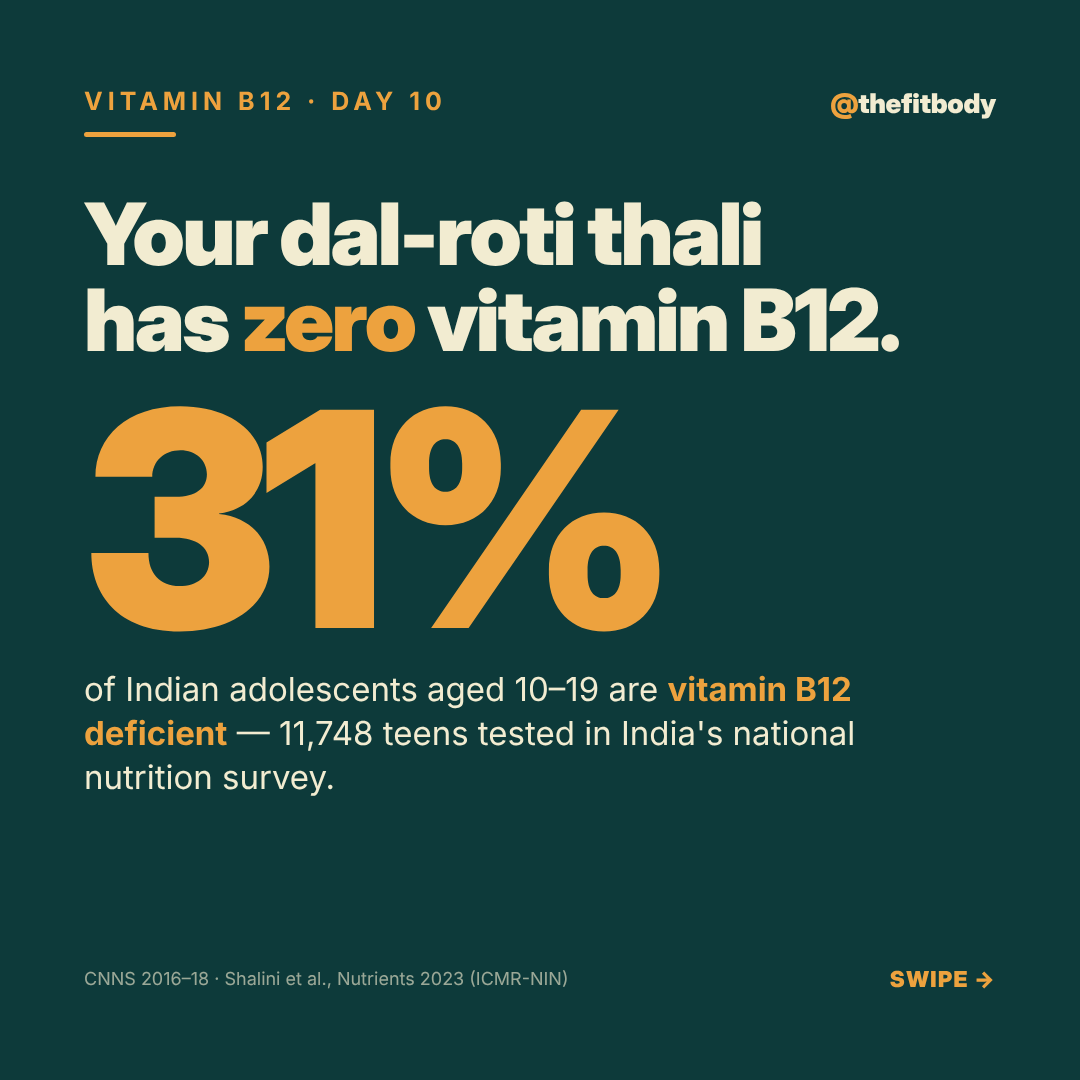
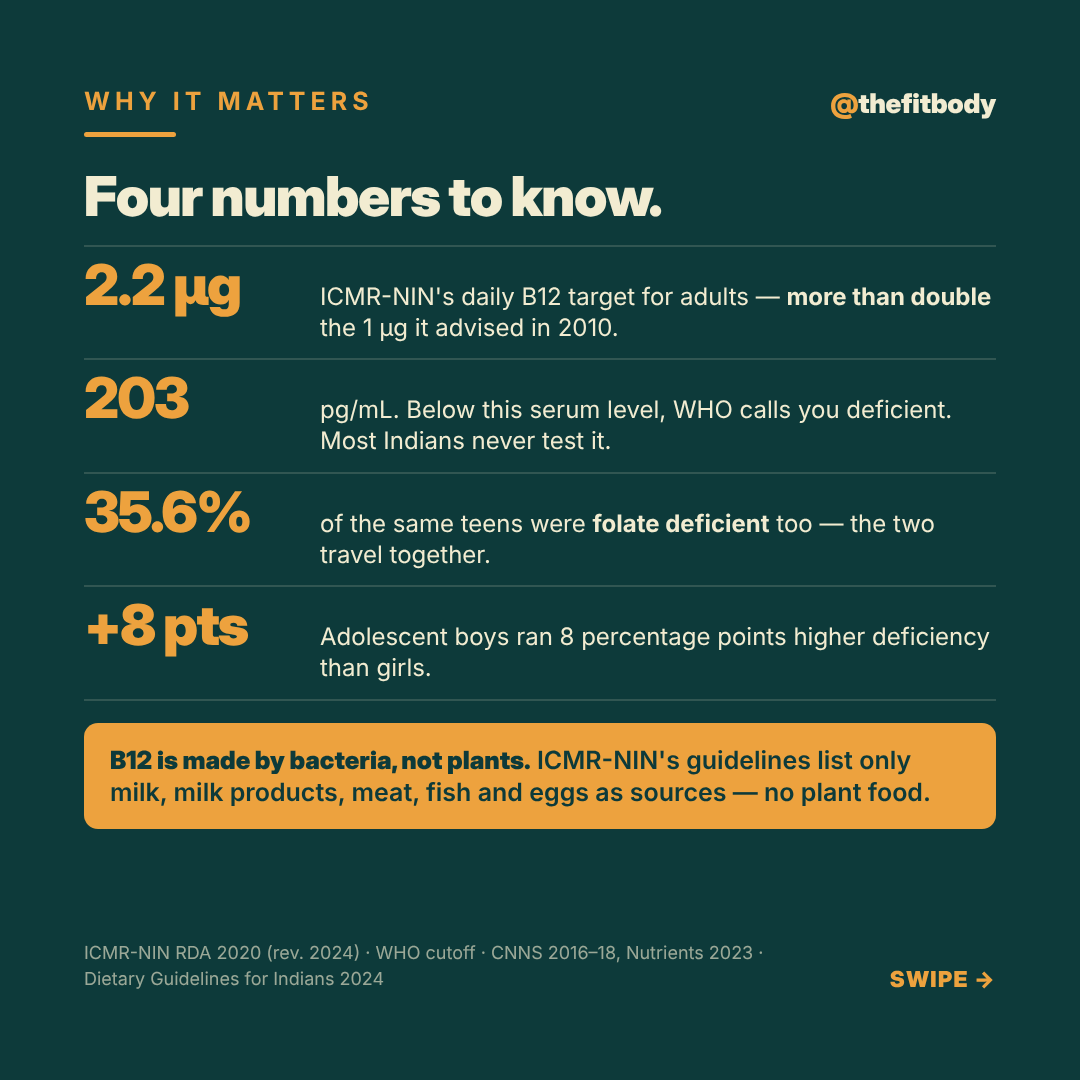
31% of Indian adolescents aged 10-19 are vitamin B12 deficient. That’s from the national nutrition survey — 11,748 teenagers tested, serum B12 under the WHO cutoff of 203 pg/mL.
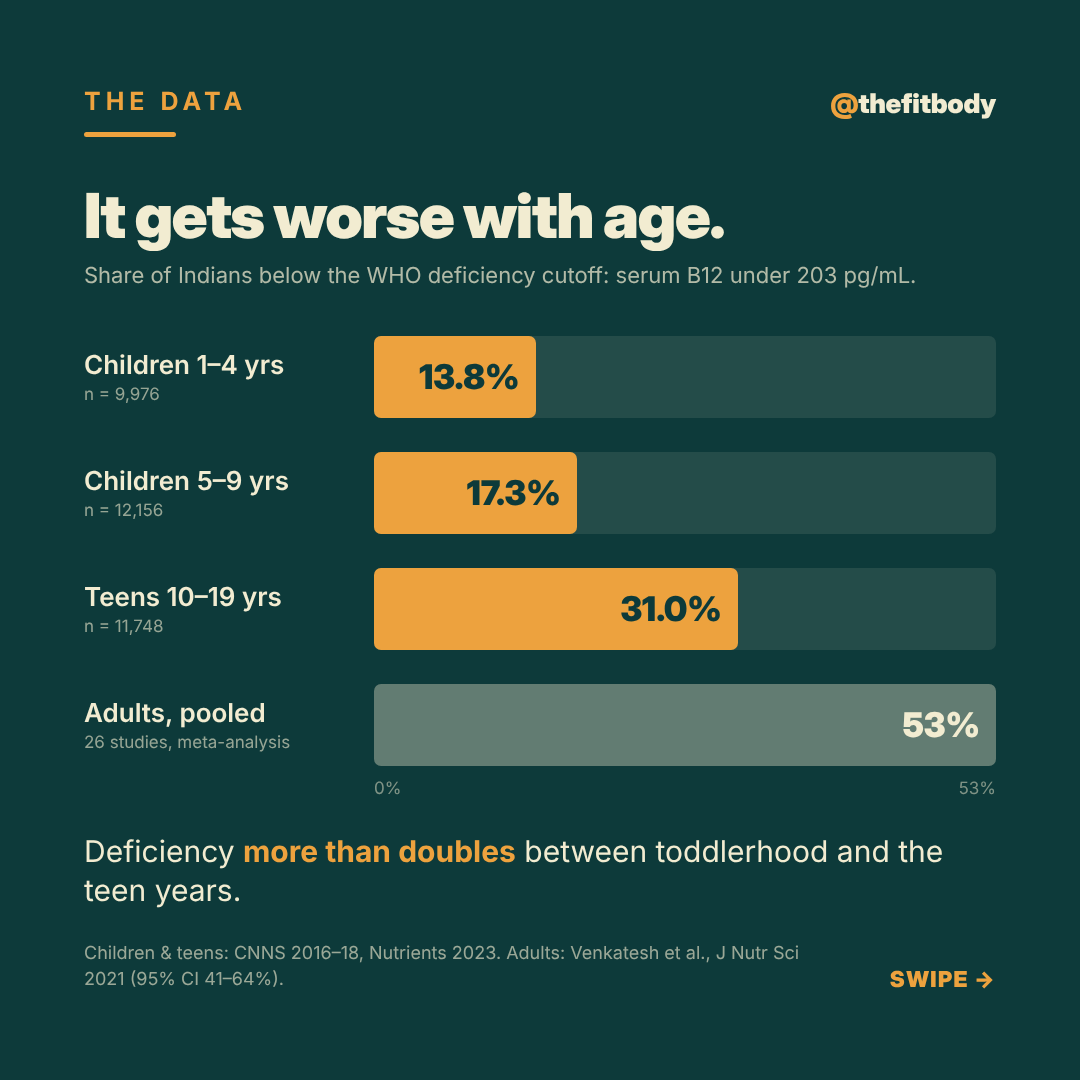
Not just teens: 13.8% of kids aged 1-4, 17.3% of kids 5-9, and 53% of adults pooled across 26 Indian studies.
Here is the uncomfortable part. B12 is made by bacteria, not plants. ICMR-NIN’s guidelines list only milk, milk products, meat, fish and eggs as sources. No plant food is on that list.
So count your plate honestly:
Dal, roti, sabzi — 0
Rice, poha, upma, paratha — 0
Achaar, namkeen, biscuits — 0
Fruit, nuts, seeds — 0
A full-veg thali with no dairy on it delivers nothing.
What actually carries it:
- 1 cup milk or curd: 0.5 mcg
- 1 boiled egg: 1.1 mcg
- 100 g paneer or cheese: 0.8 mcg
Your daily target (ICMR-NIN): 2.2 mcg. That is more than double the 1 mcg they advised back in 2010. Two cups of milk a day gets you to about 1 mcg. Still under half.
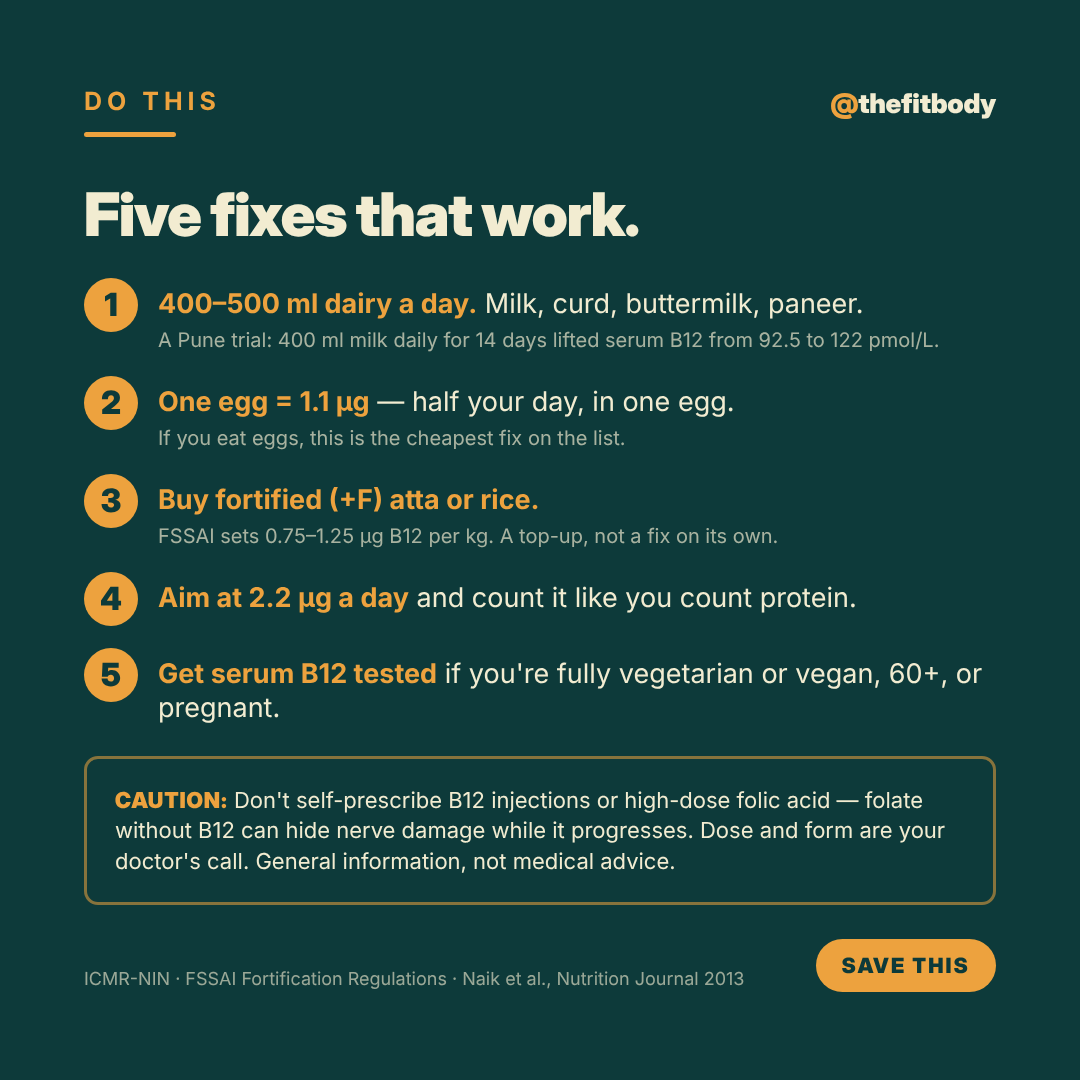
Five Fixes
- 400-500 ml dairy every day. A Pune trial gave deficient young vegetarians 400 ml milk daily for 14 days — serum B12 rose from 92.5 to 122 pmol/L.
- If you eat eggs, one egg is 1.1 mcg. Half your day, done.
- Buy fortified (+F) atta or rice. FSSAI sets B12 at 0.75-1.25 mcg per kg. A top-up, not a fix on its own.
- Aim at 2.2 mcg a day and track it the way you track protein.
- Get serum B12 tested if you are fully vegetarian or vegan, 60+, or pregnant.
Why deficiency is easy to miss
Low B12 builds up slowly — tiredness, tingling in hands and feet, memory fog — and these signs are easily blamed on stress or age. A simple blood test is the only reliable way to know. If you are fully vegetarian or vegan, aged 60+, or pregnant, ask your doctor about testing.
The carousel
The five slides from our Instagram and X post — swipe through them, save them, share them.
Sources
- Shalini et al., Nutrients 2023 — Prevalence of Vitamin B12 and Folate Deficiencies in Indian Children and Adolescents (CNNS 2016–18)31.0% of teens 10–19 (n=11,748) · 17.3% of children 5–9 (n=12,156) · 13.8% of children 1–4 (n=9,976) · 35.6% folate deficiency in teens · boys 8 points above girls · WHO cutoff <203 pg/mL.
- Venkatesh et al., Journal of Nutritional Science 2021 — Micronutrient deficiency in India: a systematic review and meta-analysis53% pooled B12 deficiency in India (95% CI 41–64%), 26 studies · 48% in adults over 18.
- ICMR-NIN — Nutrient Requirements for Indians, RDA & EAR 2020 (short summary revised 2024)Adult B12 RDA 2.2 µg/day, EAR 2.0 µg/day — up from 1 µg/day in 2010.
- ICMR-NIN — Dietary Guidelines for Indians, 2024Lists milk and milk products, meat, fish and poultry as the B12-providing foods — no plant source · advises B12-containing supplements for pregnant and lactating women.
- Naik et al., Nutrition Journal 2013 — Daily milk intake improves vitamin B-12 status in young vegetarian Indians (KEM Hospital, Pune)400 ml milk/day for 14 days raised serum B12 from 92.5 to 122 pmol/L and cut homocysteine 31.9 → 24.9 µmol/L · 57% of the 51 participants deficient at baseline.
- FSSAI — Compendium of Food Fortification RegulationsFortified atta, maida and rice: 0.75–1.25 µg vitamin B12 per kg · fortified bread, biscuits and cereals 0.08–0.16 µg per 100 g.
- Vitamin B12 and Non-vegetarianism: Myth versus Reality, Bombay Hospital Journal 2024Per-food B12 table (compiled from USDA FoodData Central): 1 cup milk 0.5 µg · 1 boiled egg 1.1 µg · 100 g cheese 0.8 µg.
General information, not medical advice. Figures are taken from the sources above; if you have a medical condition, speak to your doctor before changing your diet or activity.