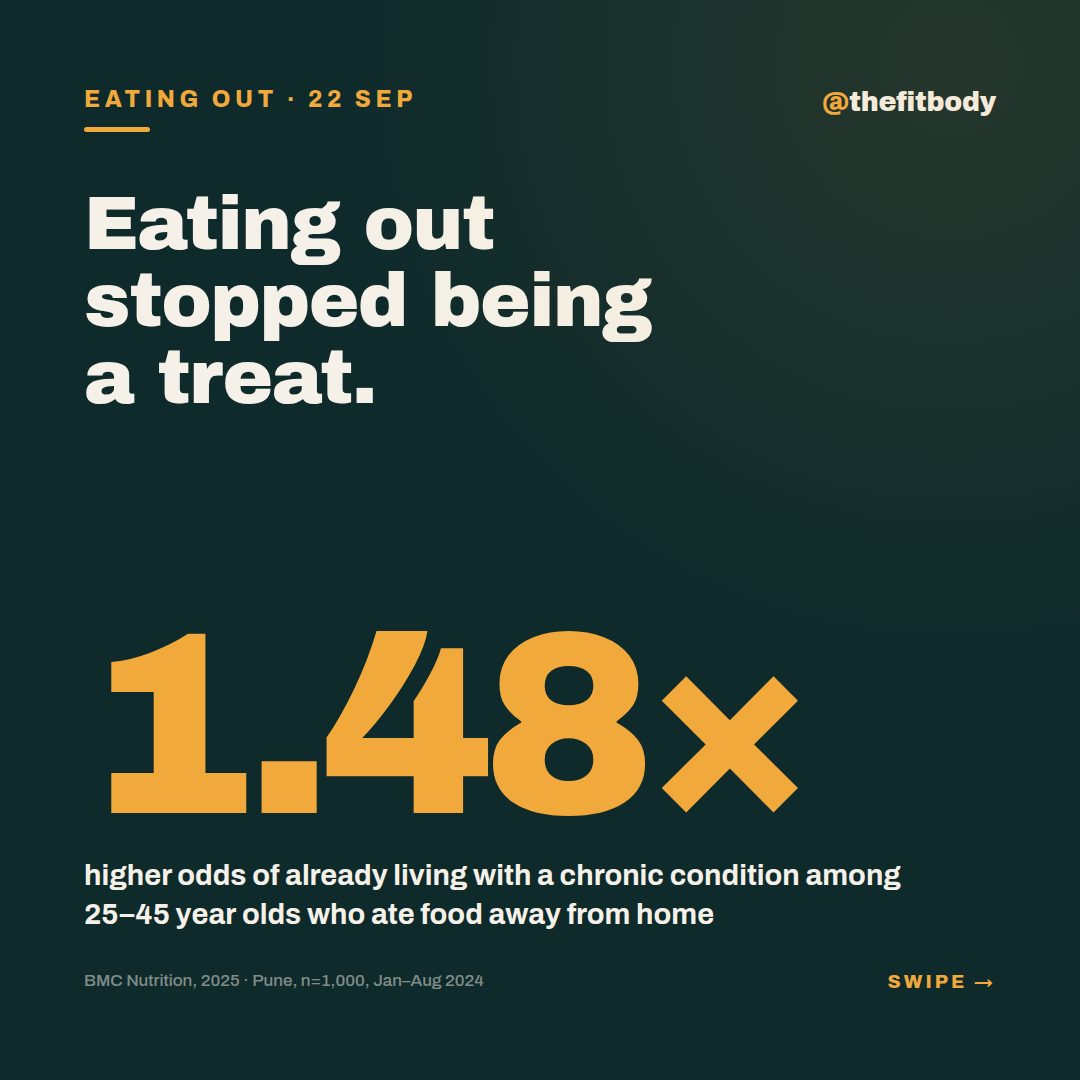

Most of us after 40 settle into a morning walk and call it a day. Walking is wonderful for the heart — but it is aerobic exercise. The World Health Organization asks for something extra that rarely makes it into our routines: muscle-strengthening work on at least two days a week.
The good news? You don’t need a gym membership, heavy weights or a personal trainer. Two short sessions at home, plus a few tweaks to the thali, can go a long way.
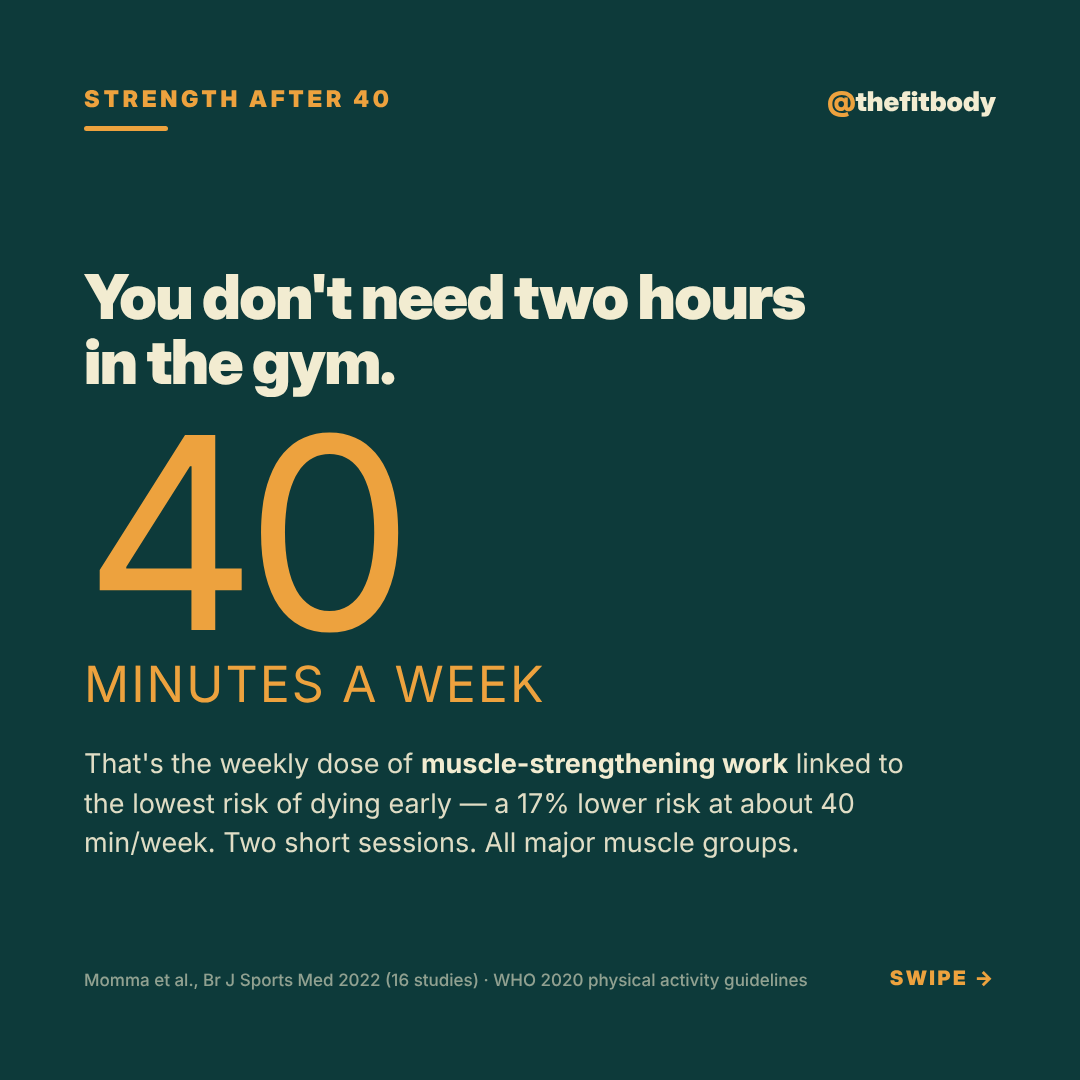
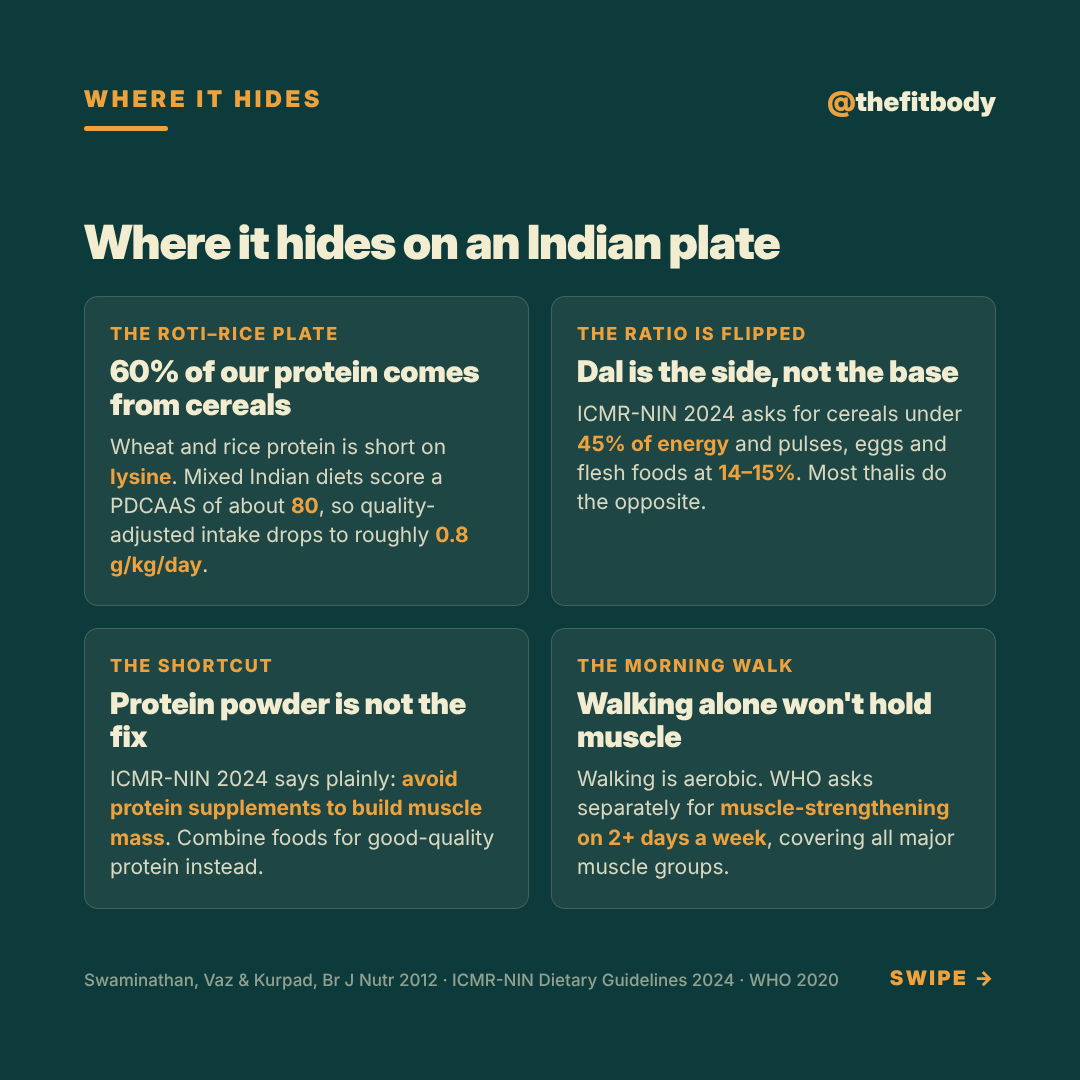
Most of us after 40 do the morning walk and call it done. Walking is brilliant. It is also aerobic. WHO asks separately for muscle-strengthening on 2+ days a week, all major muscle groups.
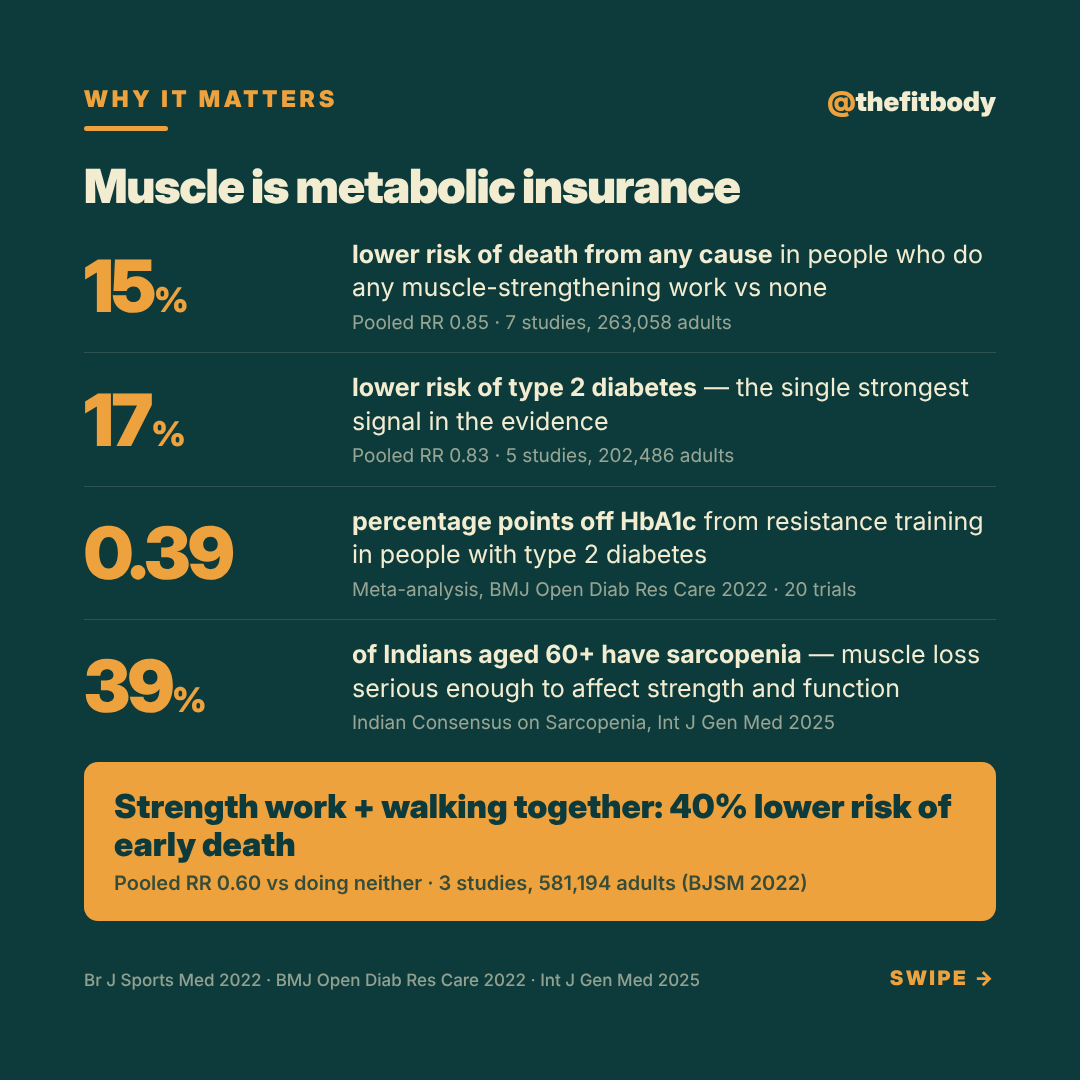
Why It Matters
- 15% lower risk of death from any cause — any strength work vs none (RR 0.85)
- 17% lower risk of type 2 diabetes (RR 0.83)
- 0.39 points off HbA1c in T2D (BMJ Open Diab Res Care 2022)
- 39% of Indians aged 60+ have sarcopenia (Int J Gen Med 2025)
- Strength + walking together: 40% lower risk of early death (RR 0.60)
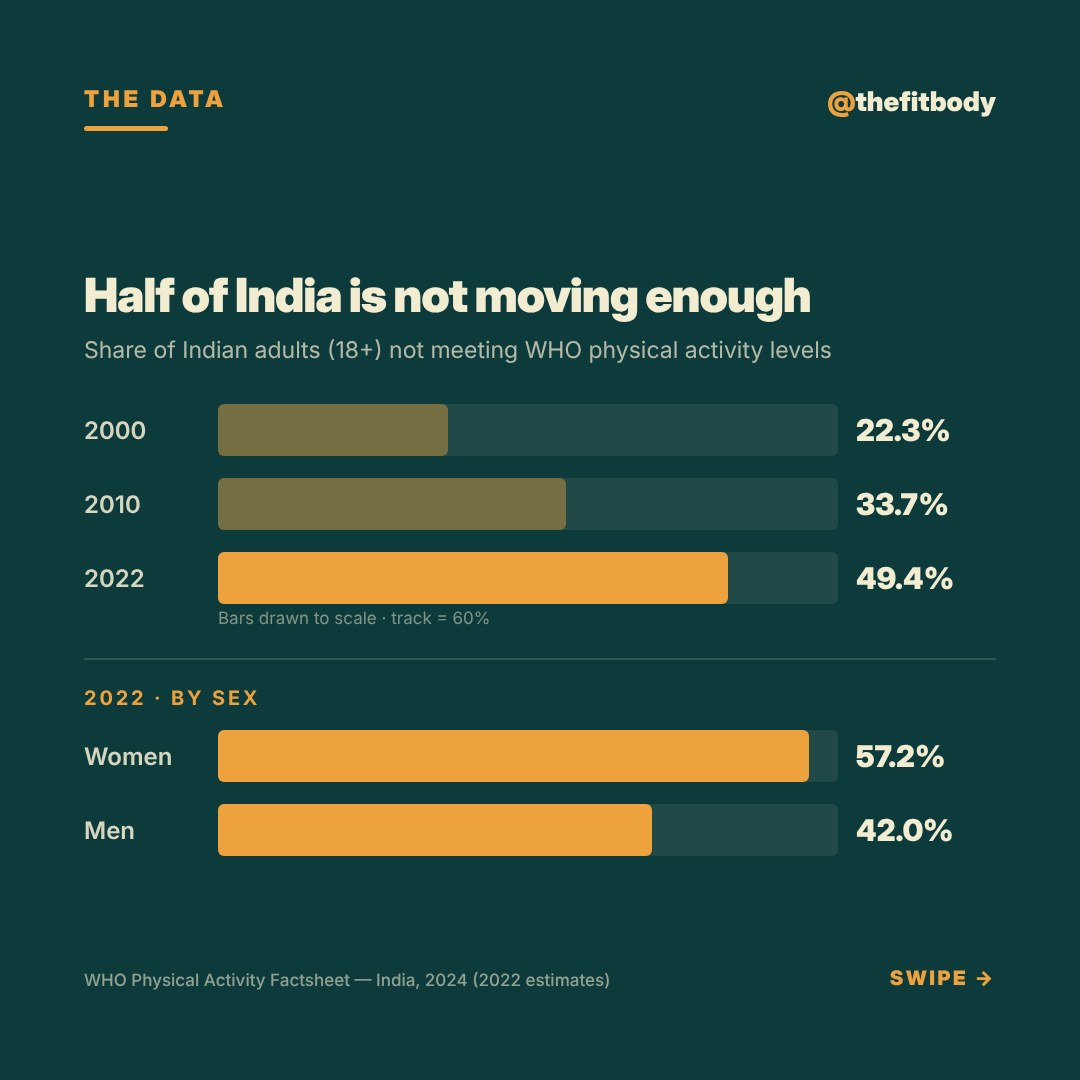
Backdrop: 49.4% of Indian adults miss WHO activity levels — 57.2% of women, 42% of men. In 2000: 22.3%.
Where It Hides
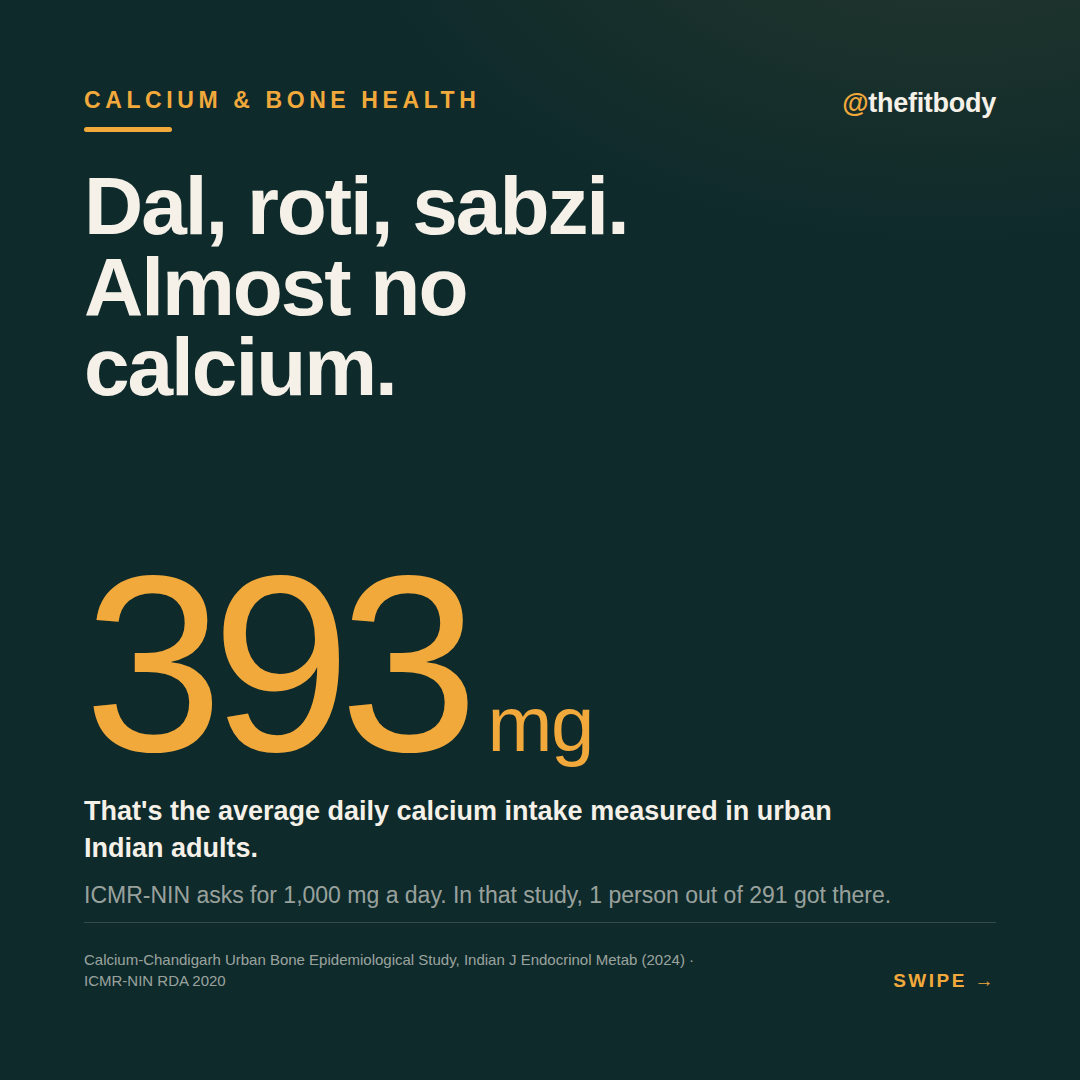
Almost 60% of our protein comes from cereals — roti, chawal. Cereal protein is short on lysine, so quality-adjusted intake falls to roughly 0.8 g/kg/day (Br J Nutr 2012). ICMR-NIN 2024 wants cereals under 45% of energy, pulses/eggs/flesh foods at 14-15%. Most thalis do the opposite.
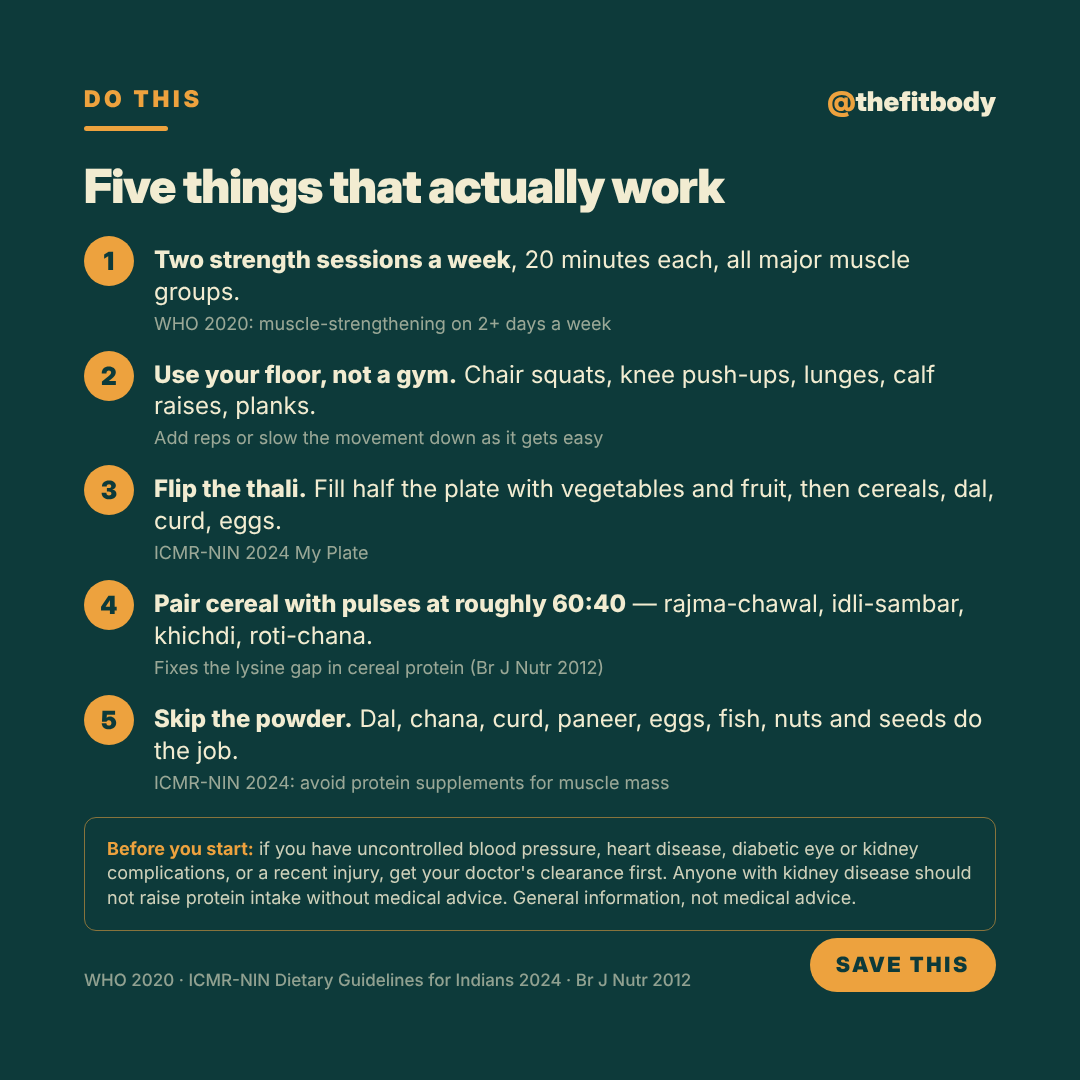
Do This
- Two strength sessions a week, 20 min each.
- No gym needed — chair squats, knee push-ups, lunges, calf raises, planks.
- Flip the thali: half vegetables and fruit, then cereals, dal, curd, eggs.
- Pair cereal with pulses ~60:40 — rajma-chawal, idli-sambar, khichdi, roti-chana.
- Skip the powder. ICMR-NIN 2024: avoid protein supplements to build muscle mass. Dal, chana, curd, paneer, eggs, fish, nuts and seeds do the job.
What a home strength session can look like
Twenty minutes, twice a week, is a realistic starting point. Pick five or six moves that use big muscle groups and do each for two or three rounds:
- Chair squats — sit down and stand up slowly, without using your hands.
- Knee or wall push-ups — start at an angle you can control.
- Lunges or step-ups — the bottom stair at home works perfectly.
- Calf raises — hold the kitchen counter for balance.
- Planks — begin with 15–20 seconds and add a few seconds every week.
The carousel
The five slides from our Instagram and X post — swipe through them, save them, share them.
Sources
- WHO Physical Activity Factsheet — India (2024)49.4% of adults not meeting activity levels (2022); women 57.2%, men 42.0%; the 2000–2022 trend (22.3% → 33.7% → 49.4%) on slide 2.
- WHO 2020 guidelines on physical activity and sedentary behaviour — Br J Sports MedMuscle-strengthening at moderate or greater intensity, all major muscle groups, on 2 or more days a week; 150–300 min moderate aerobic activity; 65+ add balance and strength work on 3+ days.
- Momma H, et al. Muscle-strengthening activities and risk of non-communicable diseases and mortality. Br J Sports Med 2022;56:755The 40 min/week headline (lowest RR 0.83 at ~40 min/week); 15% lower all-cause mortality (RR 0.85, 263,058 adults); 17% lower type 2 diabetes (RR 0.83, 202,486 adults); 17% lower CVD (RR 0.83); 40% lower mortality for strength + aerobic combined (RR 0.60, 581,194 adults).
- Jansson AK, et al. Resistance training and HbA1c in type 2 diabetes. BMJ Open Diabetes Res Care 2022HbA1c falls 0.39 percentage points with resistance training (WMD −0.39, 95% CI −0.60 to −0.18); 20 trials, 1,172 participants; bigger strength gains tracked bigger HbA1c drops.
- An Indian Consensus on Sarcopenia. Int J Gen Med 202539.2% primary sarcopenia among Indians aged 60+; 28% in a 2024 study of adults aged 35–70; protein 1–1.2 g/kg body weight in sarcopenia management.
- Kaviprawin M, et al. Prevalence and diagnostic variability of sarcopenia in India: systematic review and meta-analysis. Indian J Med Res 2026;164:423Context for the sarcopenia figure: pooled confirmed prevalence 35.4% across 38 studies, but 18.3% in community settings versus 42.2% in hospital settings.
- ICMR-NIN, Dietary Guidelines for Indians (2024)Cereals under 45% of energy; pulses, eggs and flesh foods at 14–15%; half the plate vegetables and fruit (My Plate); “avoid protein supplements to build muscle mass”; reference protein 72 g/day for a sedentary man (65 kg), 57 g/day for a sedentary woman (55 kg).
- Swaminathan S, Vaz M, Kurpad AV. Protein intakes in India. Br J Nutr 2012;108:S50–S58Indian diets derive almost 60% of protein from cereals; mixed-diet PDCAAS about 80; quality-adjusted protein about 0.8 g/kg/day; a roughly 60:40 cereal-to-legume ratio meets lysine needs.
General information, not medical advice. Figures are taken from the sources above; if you have a medical condition, speak to your doctor before changing your diet or activity.