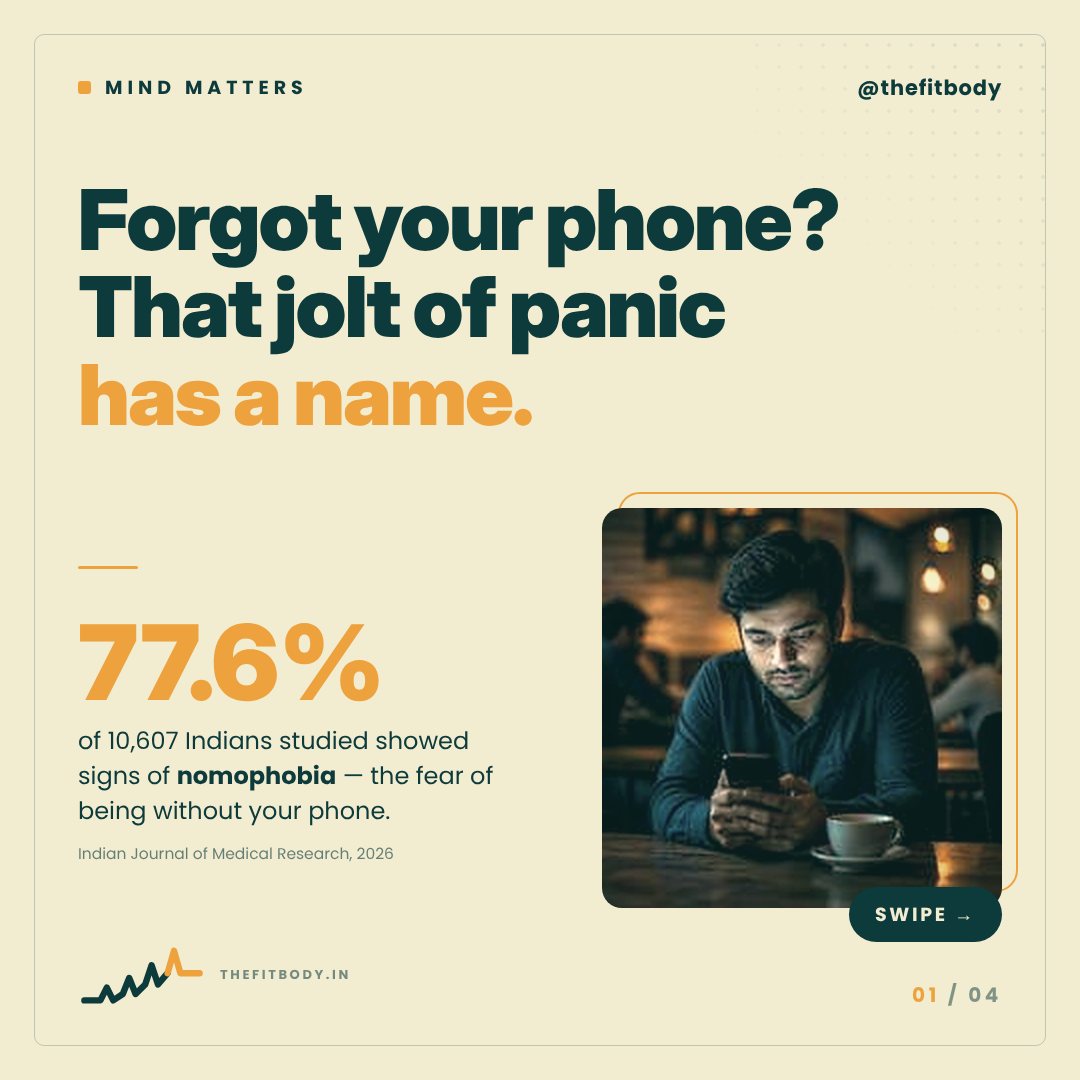

You open your phone for ten seconds. Twenty minutes later you are still not quite back. Research on workplace attention shows why: your focus does not have an on/off switch. It leaves a trail.
Your brain does not multitask. It switches
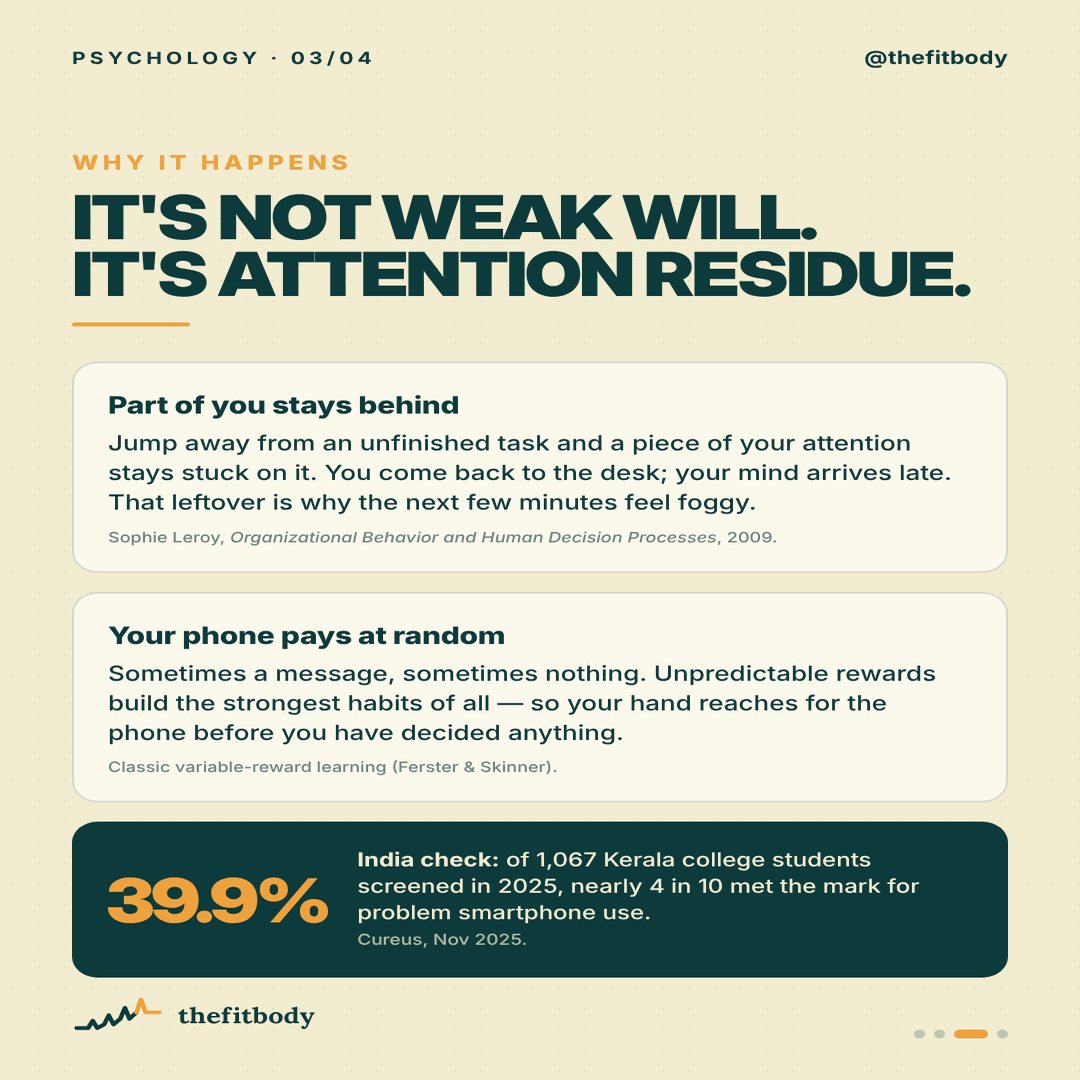
When you jump from one unfinished task to another, a part of your attention stays stuck on the old one. Psychologist Sophie Leroy named this attention residue. It is heaviest when you leave something half-done, so the next task gets a thinner version of you.
Classic lab work found that switching between tasks can eat up to 40% of productive time. The numbers are averages from workplace studies, not a fixed law, but the direction is consistent: every switch has a price, paid quietly.
Why it is not weak willpower
Your phone pays out at random: sometimes a message, sometimes nothing. Unpredictable rewards build the strongest habits of all, so your hand reaches for the phone before you have decided anything.
India has a big stake here. Indians logged about 1.1 trillion hours on digital platforms in 2024, and a 2025 screening of 1,067 Kerala college students found nearly 4 in 10 (39.9%) met the mark for problematic smartphone use.
The hidden cost of interruptions
In a controlled experiment, interrupted people finished the same work faster than those left alone, but they reported 34% more stress, 39% more frustration and 19% more effort. They did not slow down. They wore out.
Four moves that protect your focus
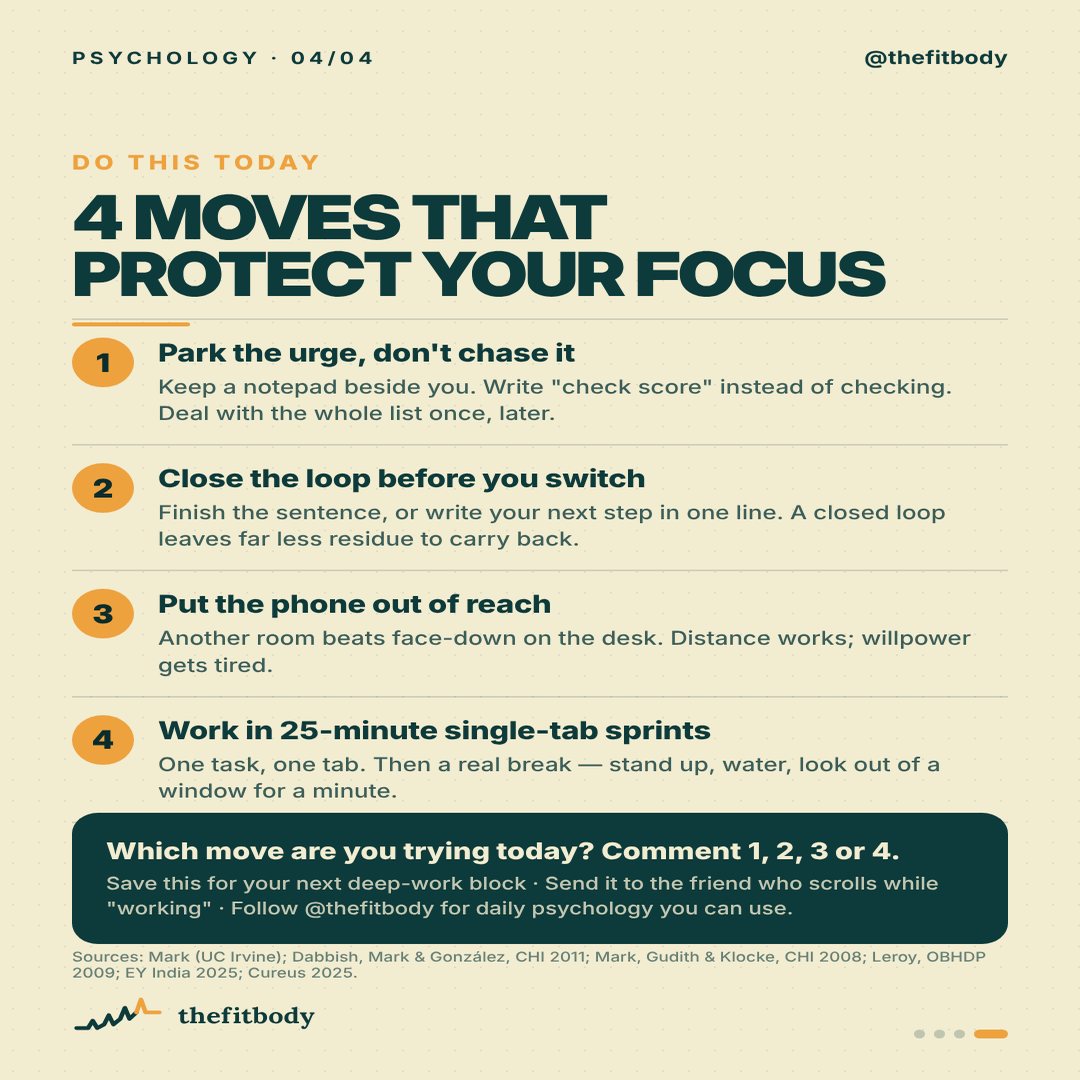
- Park the urge, do not chase it. Keep a notepad beside you. Write “check score” instead of checking. Deal with the whole list once, later.
- Close the loop before you switch. Finish the sentence, or write your next step in one line. In studies, a ready-to-resume note cut attention residue.
- Put the phone out of reach. Another room beats face-down on the desk. Distance works; willpower gets tired.
- Batch your checking. Two or three fixed windows, say 11 am, 2 pm and 6 pm, beat an all-day drip.
The carousel
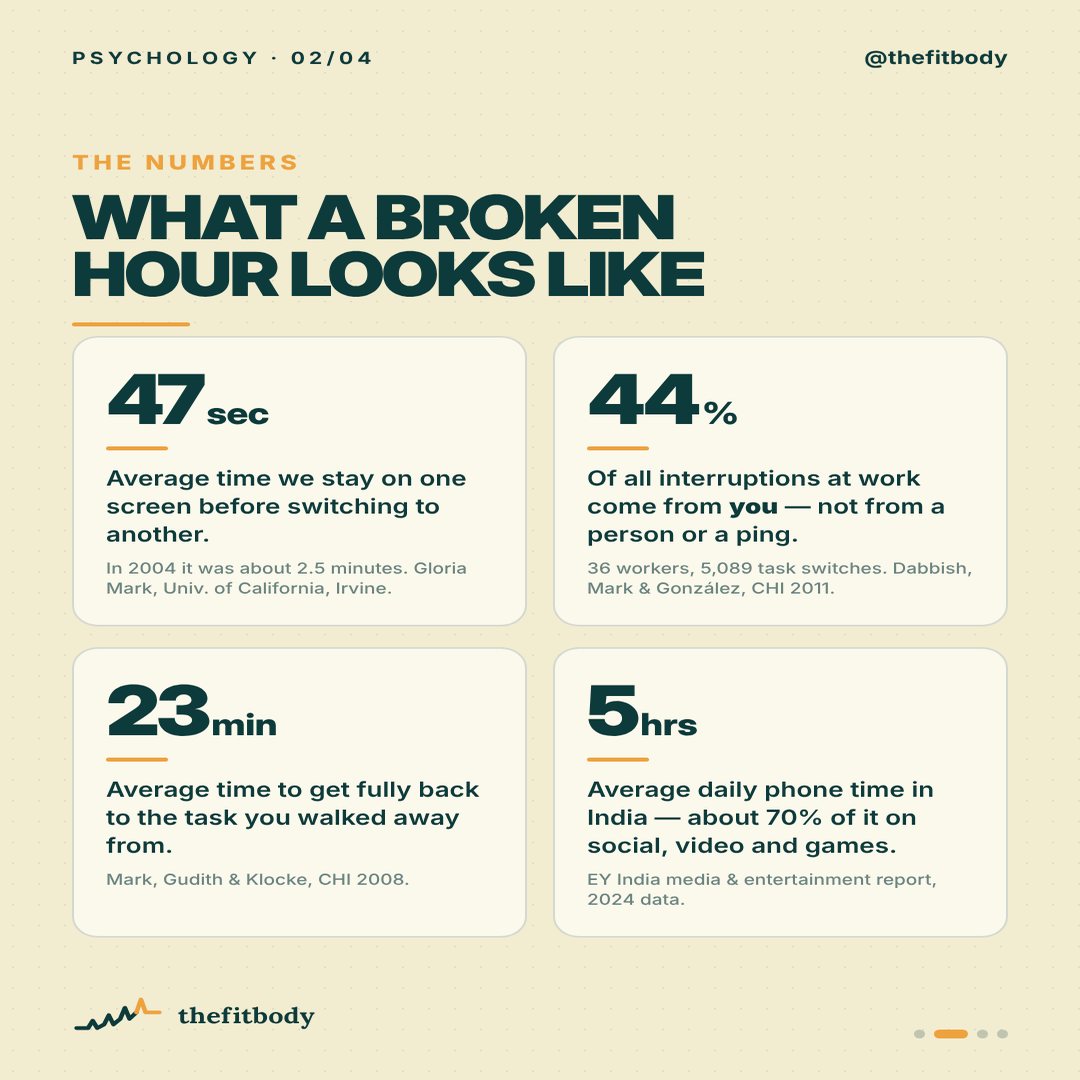
The four slides from our Instagram and X post. Swipe through them, save them, share them.

Watch the video
Sources
- Mark, Gudith and Klocke, CHI (2008): The cost of interrupted workInterruptions, stress, frustration and effort.
- Leroy, Organizational Behavior and Human Decision Processes (2009)Attention residue after task switching.
- Rubinstein, Evans and Meyer, J. Exp. Psychology: HPP (2001)Executive control of task switching; time costs.
- EY-FICCI India Media and Entertainment Report (2025)About 5 hours a day on phones; 1.1 trillion hours online in 2024.
- Cureus (Nov 2025): problematic smartphone use in Kerala college students1,067 students screened; 39.9% met the screening mark.
General information for education, not medical or psychological advice. Figures are taken from the sources above; if you are struggling, please speak to a qualified professional.