
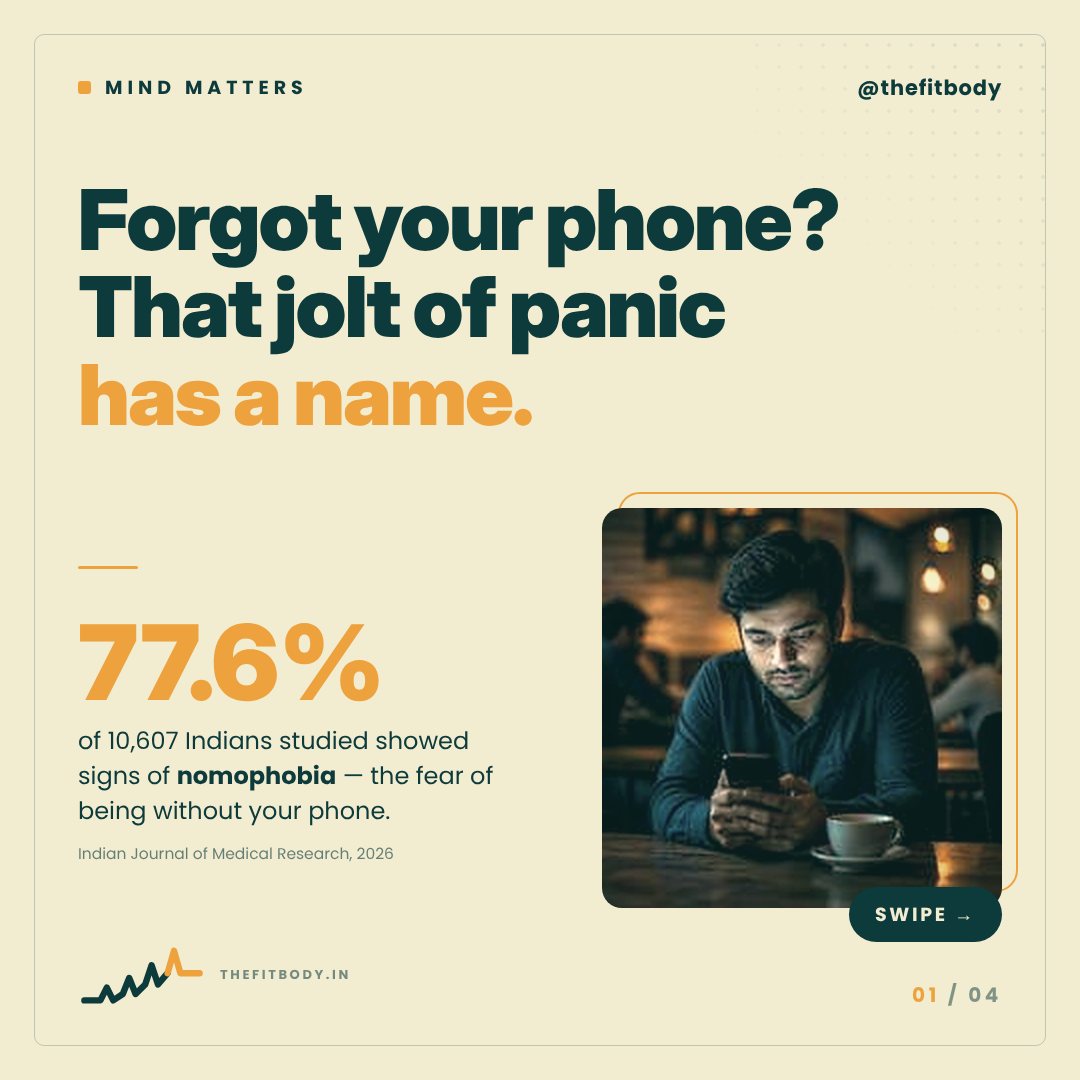
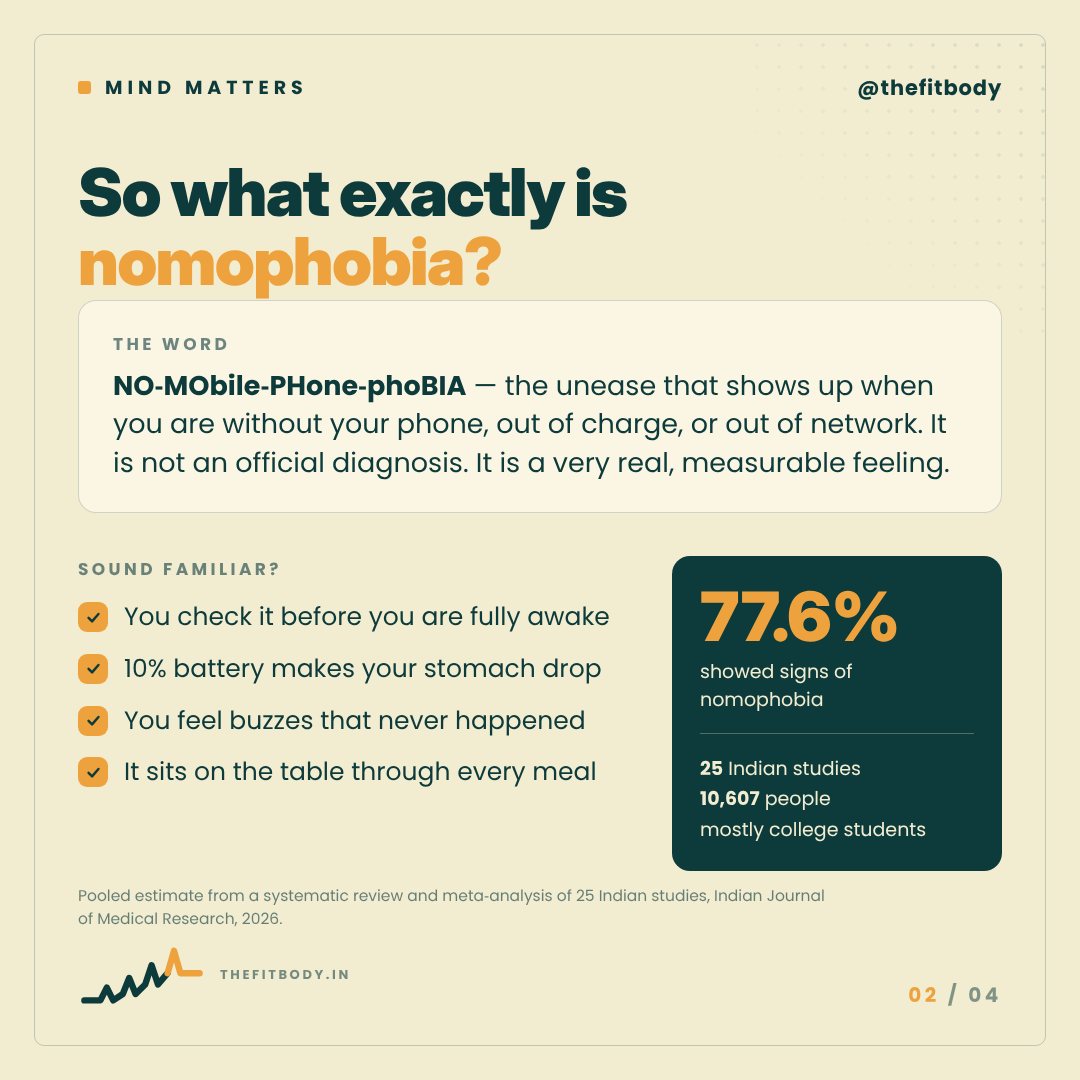
Forgot your phone at home? That jolt of panic has a name: nomophobia (no-mobile-phone phobia). It is not an official diagnosis, but it is a real, measurable feeling, and it is only half the story. Even when your phone is silent, it quietly costs you focus.
Sound familiar?
You check it before you are fully awake. A 10% battery makes your stomach drop. You feel buzzes that never happened. It sits on the table through every meal. A systematic review and meta-analysis of 25 Indian studies covering 10,607 people, published in the Indian Journal of Medical Research in 2026, estimated that about 77.6% showed signs of nomophobia.
The “Brain Drain” study
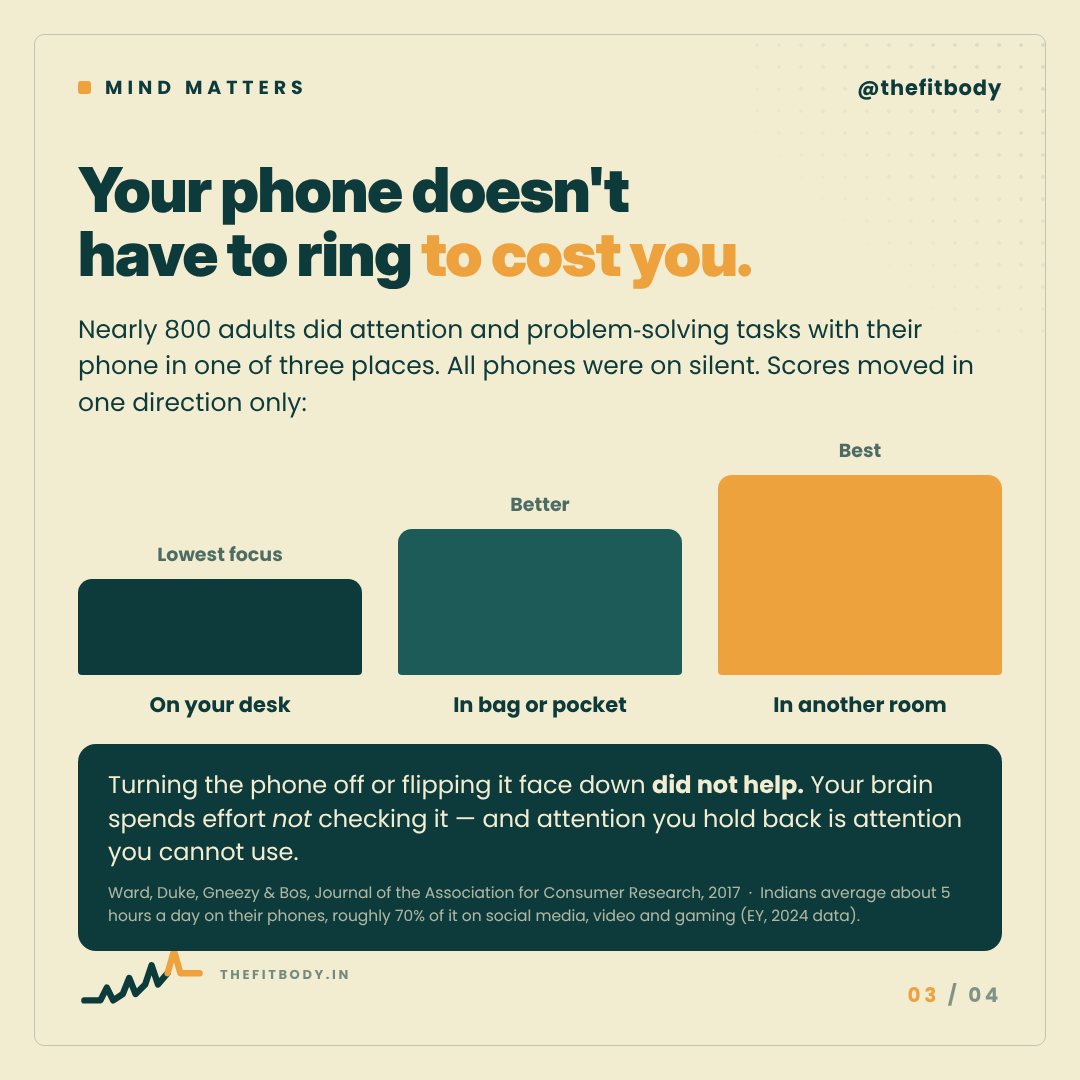
Nearly 800 adults at the University of Texas at Austin took the same memory and attention tests with their phone in one of three places: on the desk, in a bag or pocket, or in another room. Every phone was on silent. Only one thing changed, and scores moved in one direction.
People with the phone in another room scored best, those with it in a pocket or bag came next, and those with it on the desk scored lowest. The twist: turning the phone completely off changed nothing. Its presence was enough.
Ignoring your phone is not free
A part of your attention stays busy not reaching for it. That effort comes from the same limited pool you use to read, think and remember, so less is left for the task in front of you. India ranks third in the world for daily app time, after Indonesia and Brazil, with about 69% of it going to social media, video, music and games.
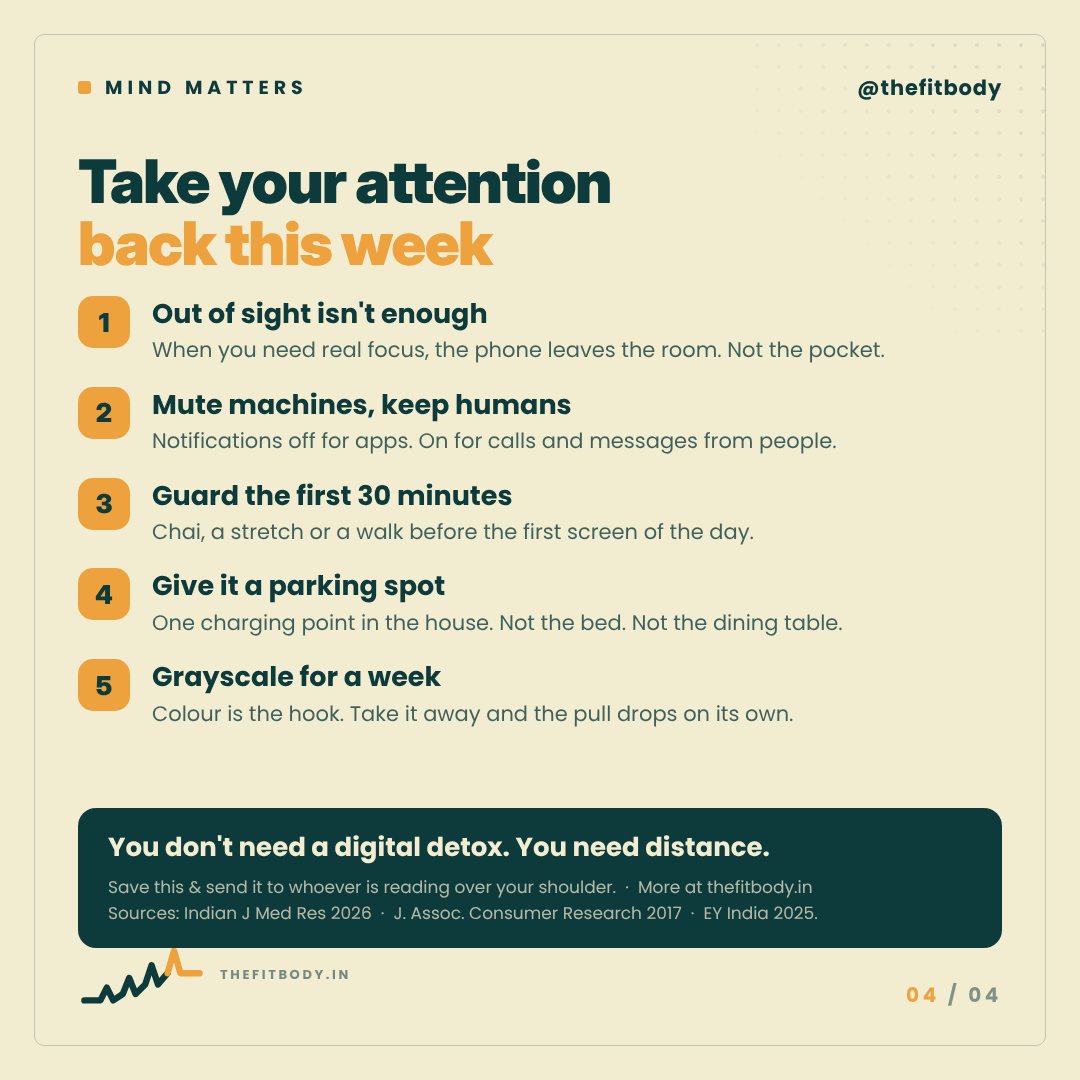
Five fixes that actually work
- Distance beats silence. For study or deep work, put the phone in another room, not your pocket.
- Start with one 50-minute block. A single phone-free block a day beats a full “digital detox” you will quit by Tuesday.
- Cut the pull, not just the sound. Turn off non-essential notifications; keep calls on.
- Keep it out of the bedroom. A cheap alarm clock buys back the first and last hour of your day.
- Try grayscale for a week. Colour is part of the hook; removing it can lower the pull.
The carousel
The four slides from our Instagram and X post. Swipe through them, save them, share them.
Watch the video
Sources
- Ward, Duke, Gneezy and Bos, J. Assoc. for Consumer Research (2017): Brain DrainPresence of a smartphone reduces available cognitive capacity.
- Indian Journal of Medical Research (2026): systematic review and meta-analysis of nomophobia in India25 studies, 10,607 participants, pooled prevalence about 77.6%.
- EY-FICCI India Media and Entertainment Report (2025)App time and share spent on social media, video and gaming.
- Mark et al., University of California, IrvineTime to resume work after interruption.
General information for education, not medical or psychological advice. Figures are taken from the sources above; if you are struggling, please speak to a qualified professional.