
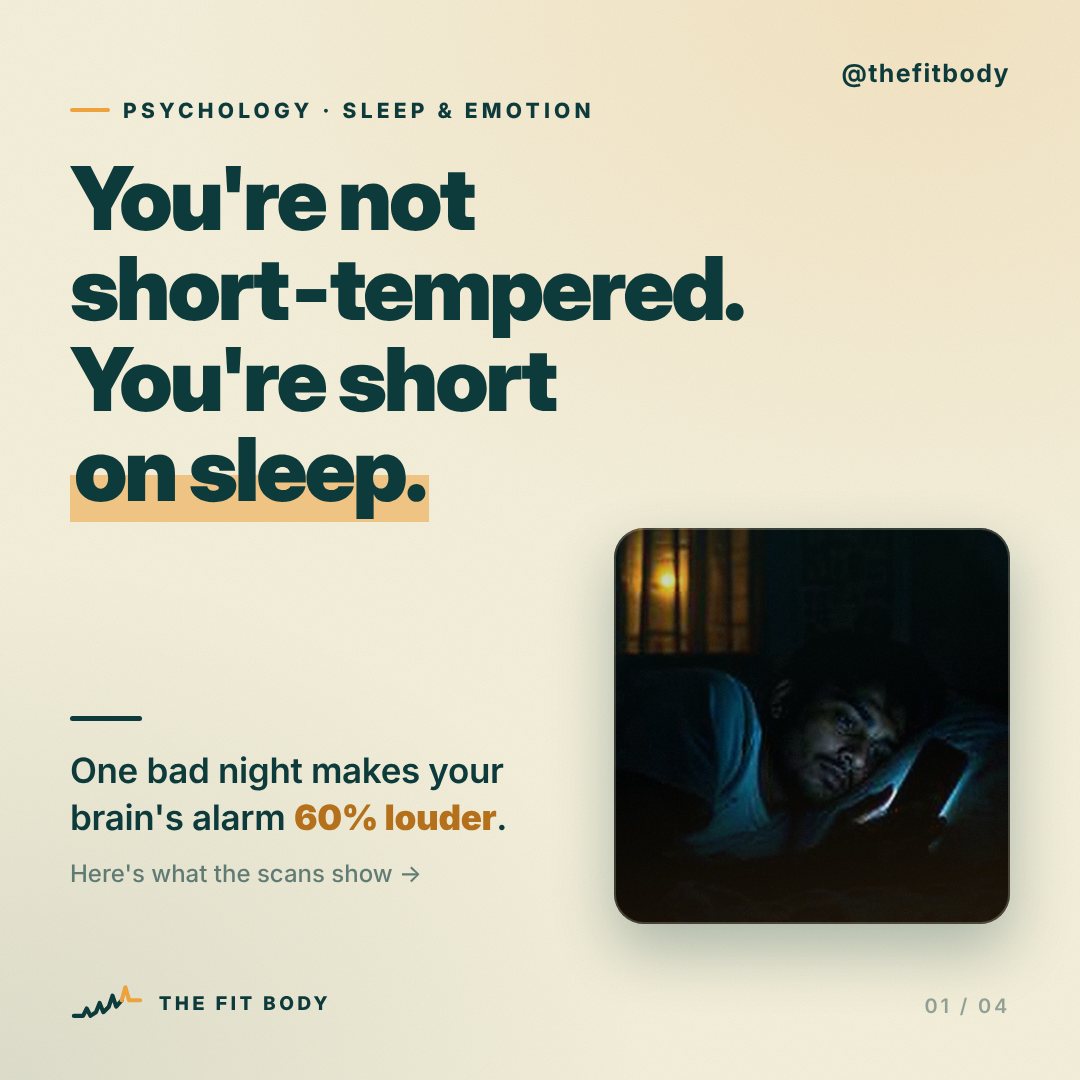
You snapped at someone you love, and you could not say why. Before you blame your temperament, check how you slept. Brain scans show that one bad night changes how your brain handles emotion.
Alarm up, brakes off
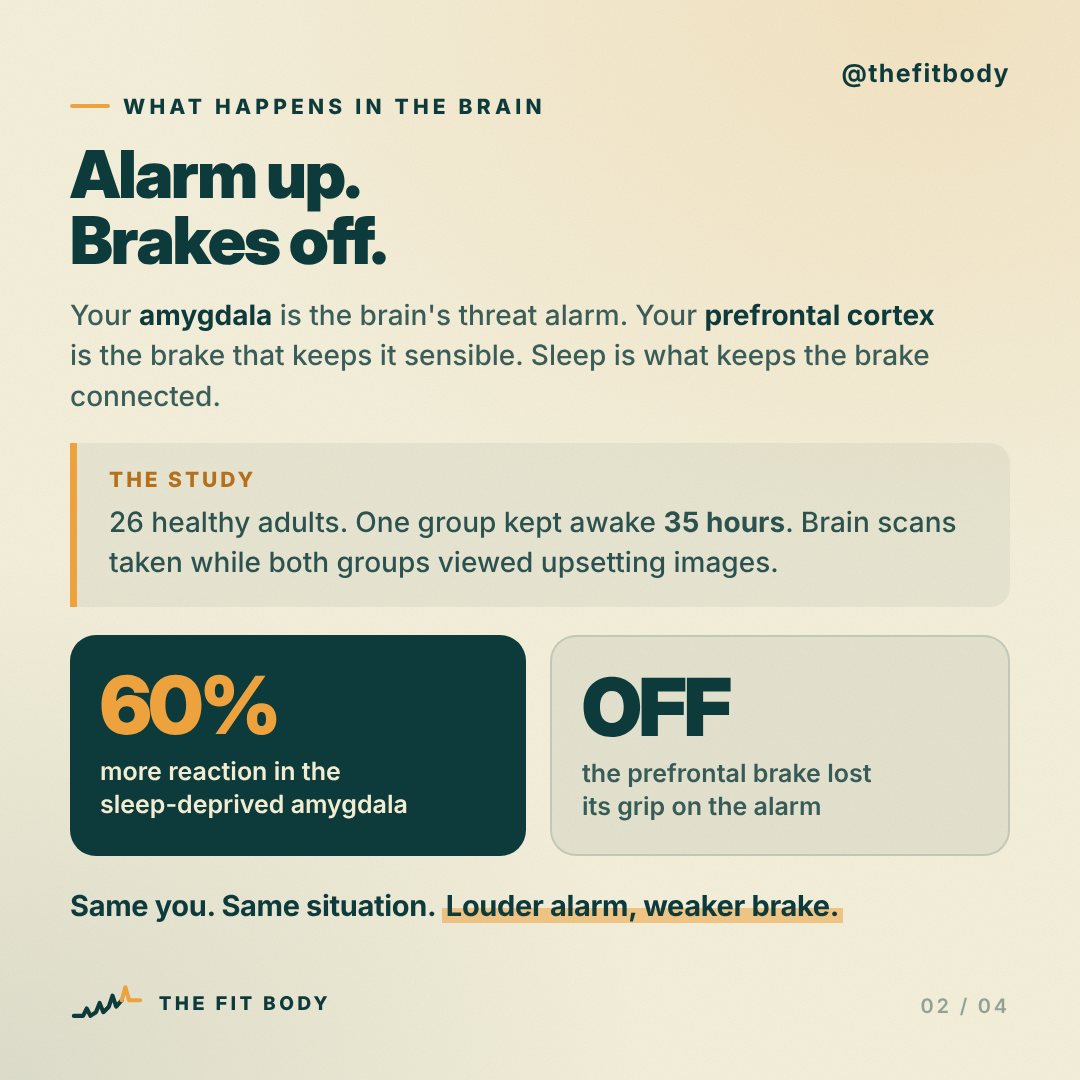
Your amygdala is the brain’s threat alarm. Your prefrontal cortex is the brake that keeps it sensible. In a well-known study, 26 healthy adults either kept awake for 35 hours or slept normally, then viewed upsetting images in a brain scanner.
The sleep-deprived group showed about 60% more reaction in the amygdala, and the prefrontal brake lost its grip on the alarm. Same person, same situation: a louder alarm and a weaker brake.
India is sleeping badly
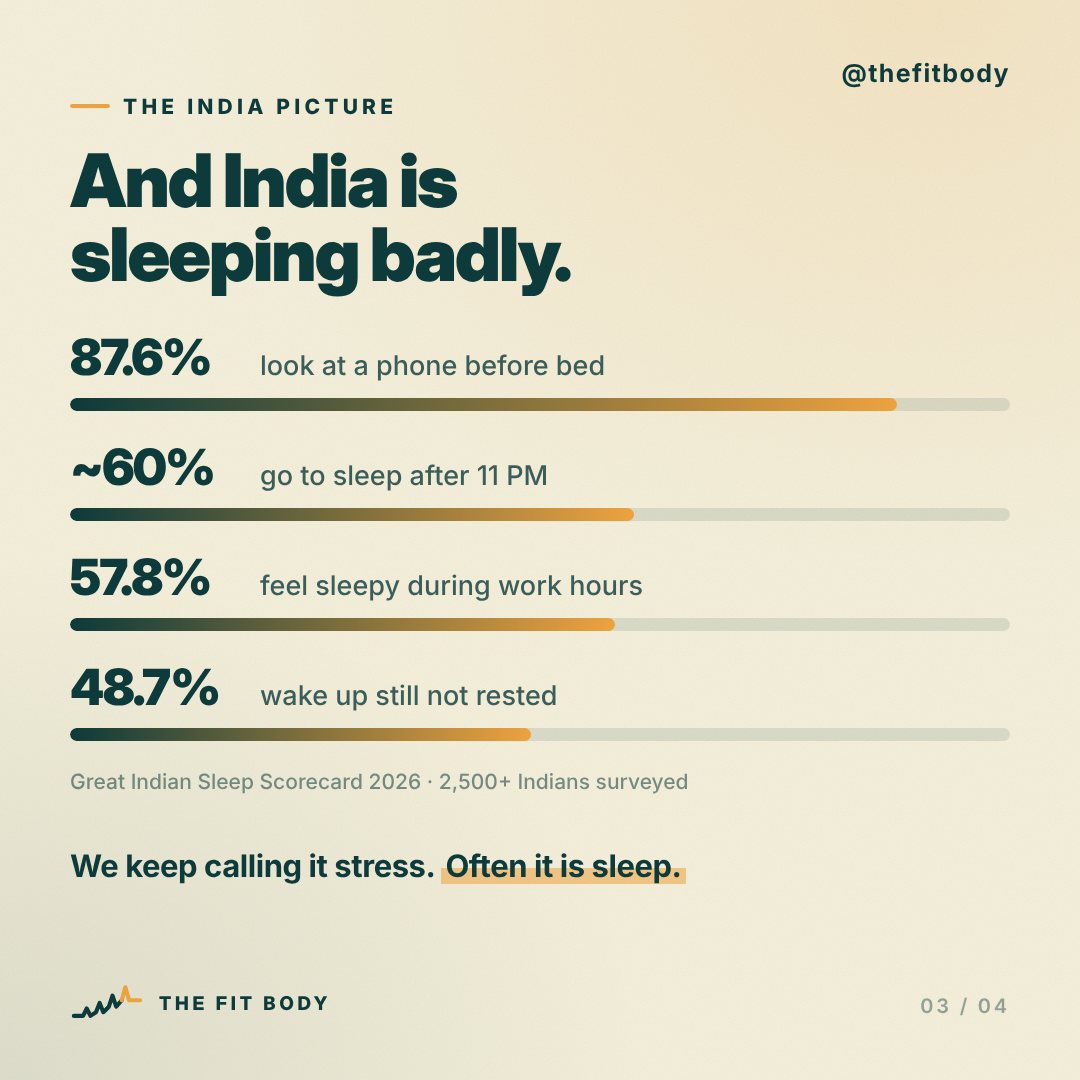
In the Wakefit Great Indian Sleep Scorecard 2026, a survey of 2,500+ Indians, 87.6% looked at a phone before bed, about 60% went to sleep after 11 pm, 57.8% felt sleepy during work hours and 48.7% woke up not rested. It is a brand survey, so treat it as a snapshot rather than a national census, but it matches what most of us see around us.
We keep calling it stress. Often it is sleep.
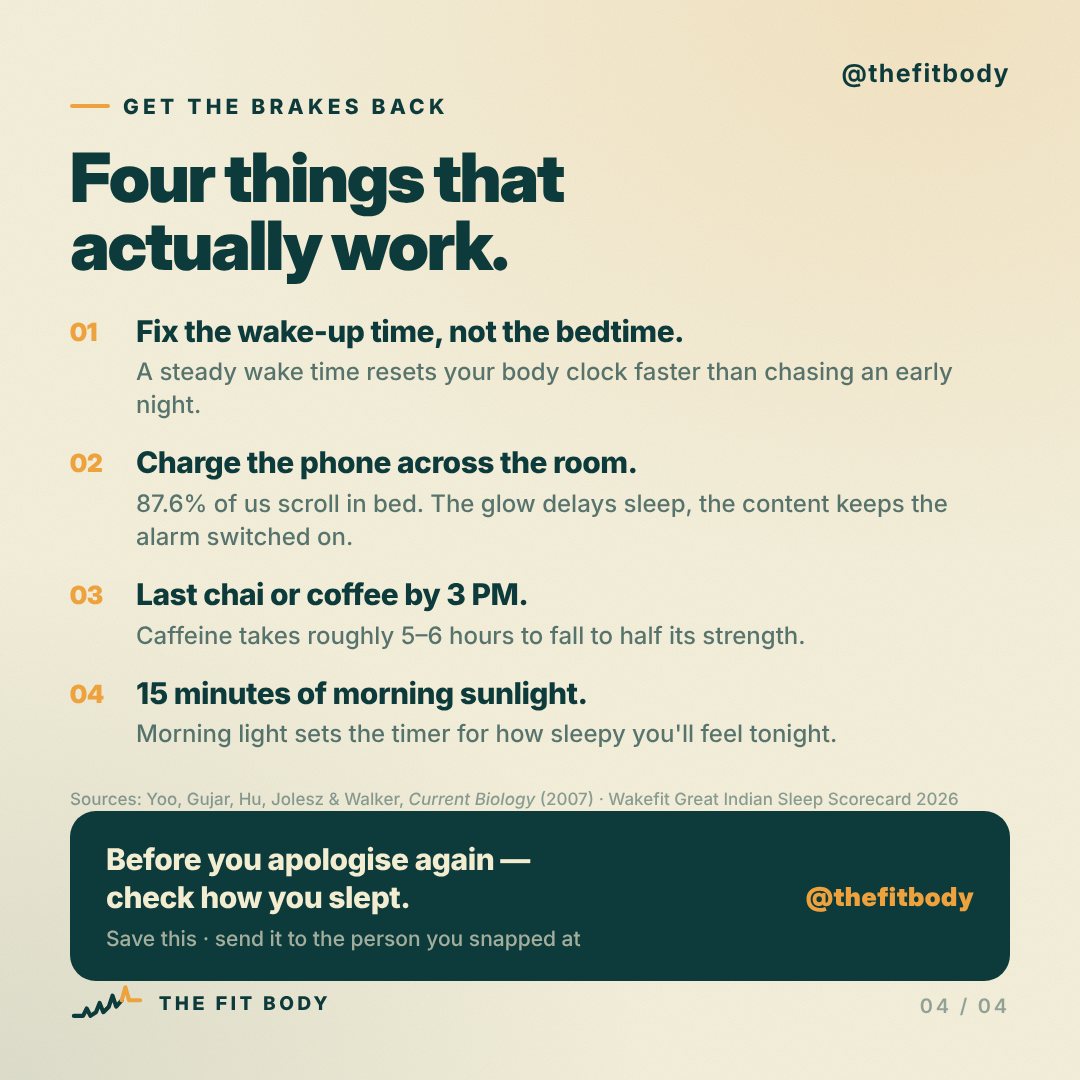
Four things that actually work
- Fix the wake-up time, not the bedtime. A steady wake time resets your body clock faster than chasing an early night.
- Charge the phone across the room. The glow delays sleep; the content keeps your alarm switched on.
- Last chai or coffee by 3 pm. Caffeine takes roughly 5-6 hours to fall to half its strength.
- Get 15 minutes of morning sunlight. Morning light sets the timer for how sleepy you will feel tonight.
The carousel
The four slides from our Instagram and X post. Swipe through them, save them, share them.
Watch the video
Sources
- Yoo, Gujar, Hu, Jolesz and Walker, Current Biology (2007): The human emotional brain without sleep35 hours awake; amygdala reactivity and prefrontal connectivity.
- Wakefit Great Indian Sleep Scorecard 2026Survey of 2,500+ Indians on bedtime, phone use and tiredness.
General information for education, not medical or psychological advice. Figures are taken from the sources above; if you are struggling, please speak to a qualified professional.