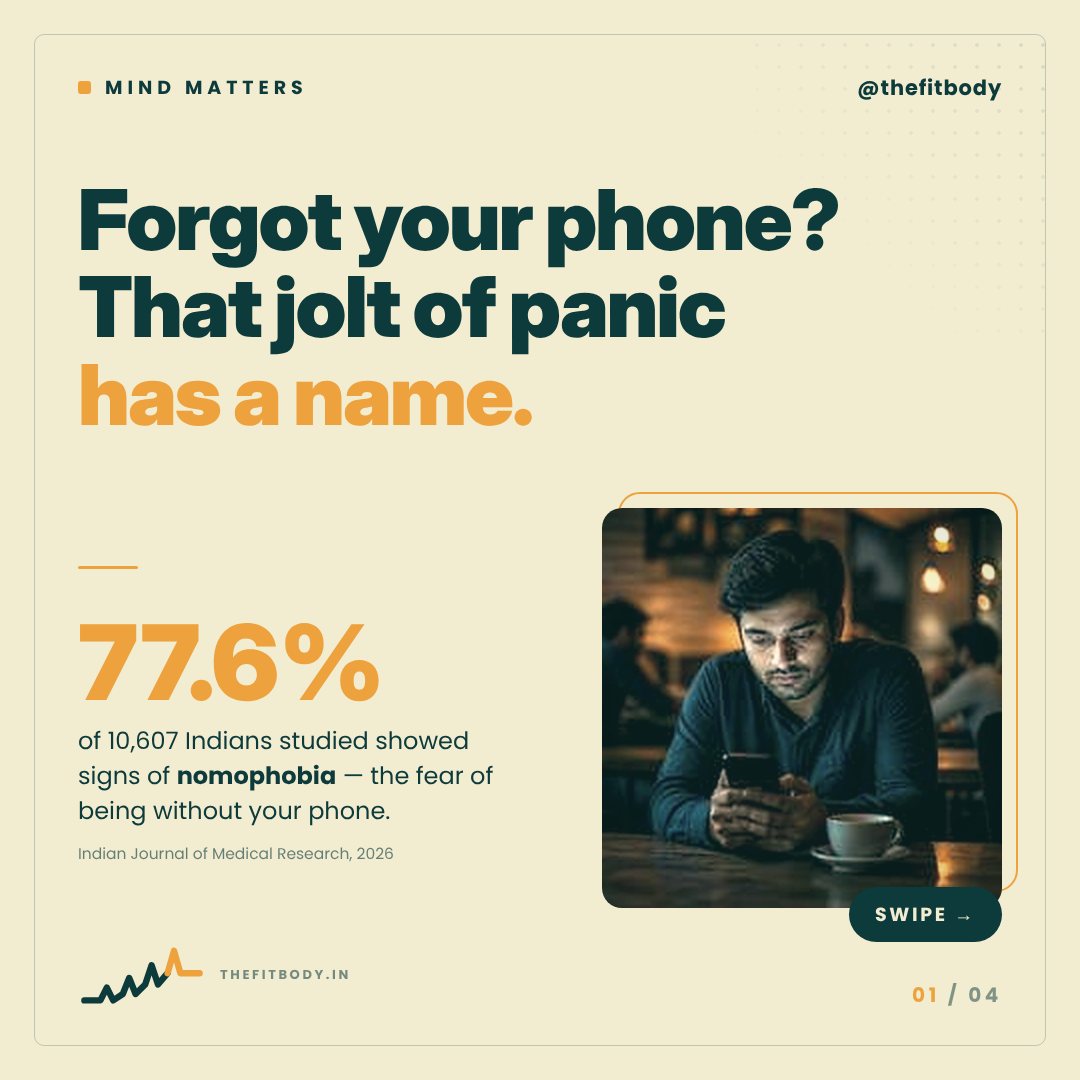

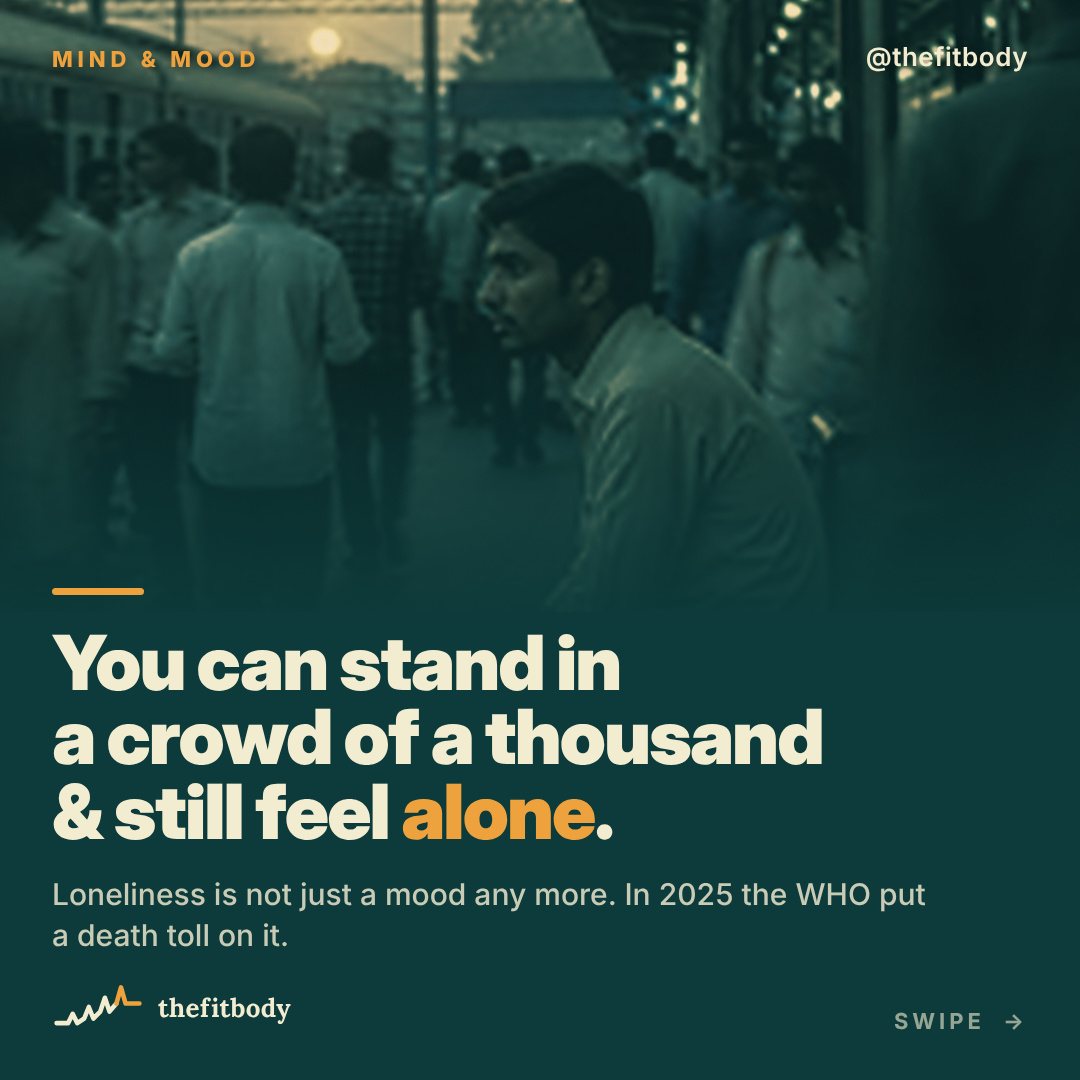
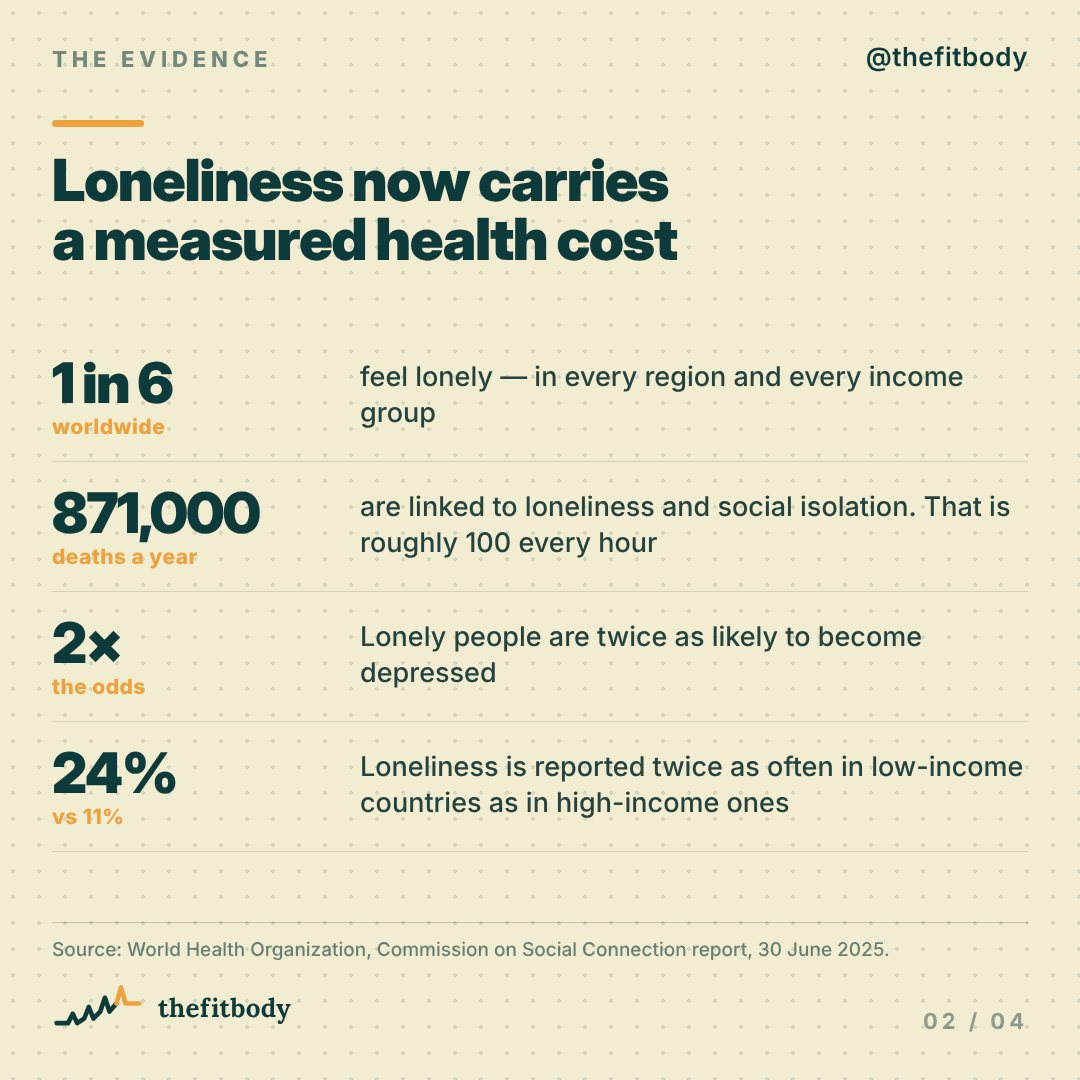
You can stand in a packed Mumbai local and still feel completely alone. Psychologists have long known that loneliness is not simply a mood. In June 2025, the World Health Organization put it in the language of public health: about 871,000 deaths a year are linked to loneliness and social isolation.
Your brain treats loneliness like a wound
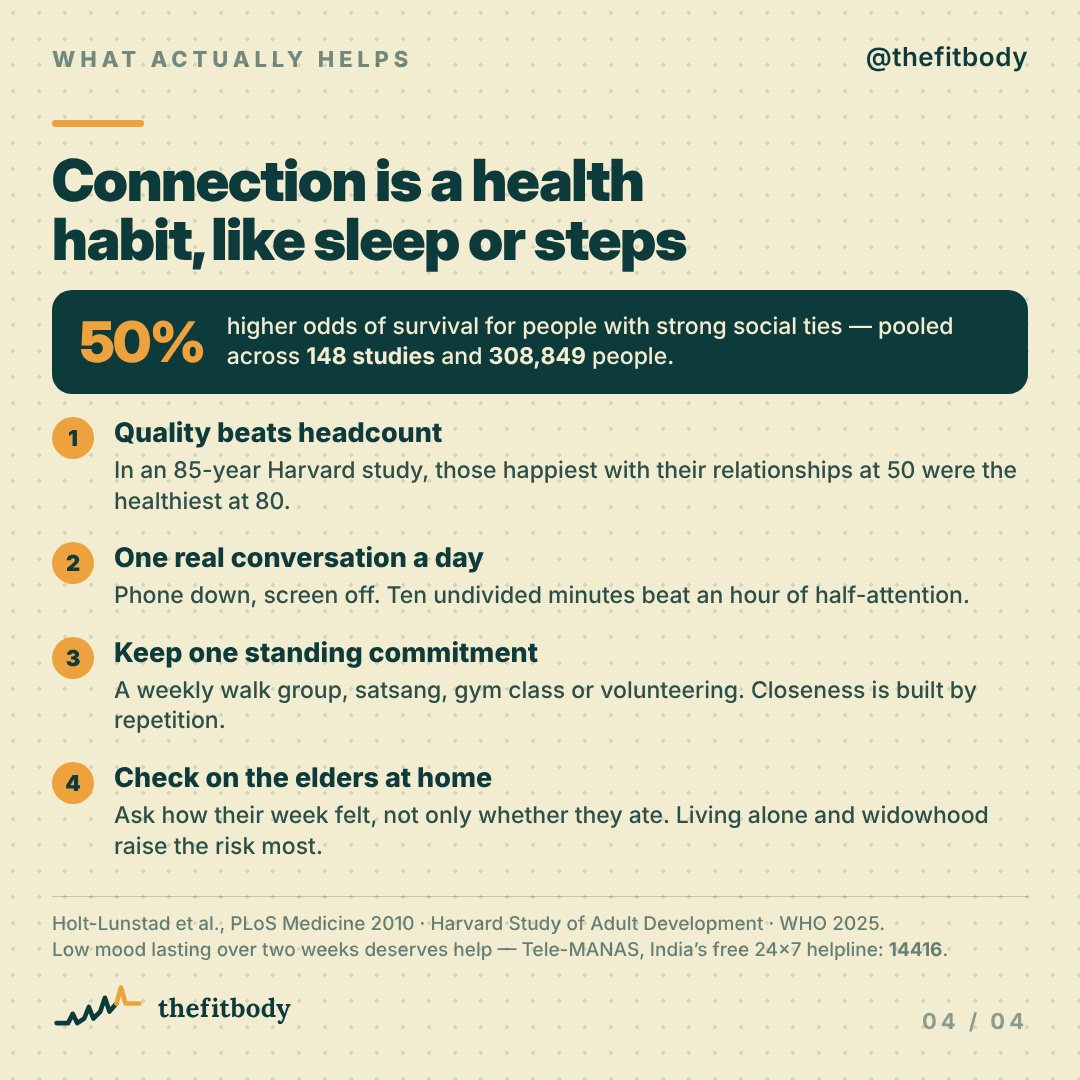
Social connection works like hunger or thirst: an alarm designed to push you back towards people. When the alarm never switches off, the body pays. A large analysis of 148 studies covering about 3 lakh people found that strong social ties were linked to roughly 50% better odds of survival, an effect comparable to well-known lifestyle risks.
Loneliness is also tied to a higher risk of heart disease and stroke, and lonely people are about twice as likely to become depressed.
The loop that keeps you lonely
A lonely brain stays on high alert for rejection. A neutral face looks cold; a late reply feels like a snub. So you pull back, have fewer real moments with people, and feel lonelier. The feeling builds the very distance it warns you about.
Heavy phone use can feed the loop. Indians spend about five hours a day on their phones, around 70% of it on social media, gaming and video. Scrolling feels like contact, but the brain does not count it as connection.
Who feels it most? Not who you think
The loneliest group is not the elderly. Worldwide, 17-21% of 13 to 29 year olds feel lonely, the highest rate of any age group. Loneliness is also reported about twice as often in low-income countries (24%) as in high-income ones (11%).
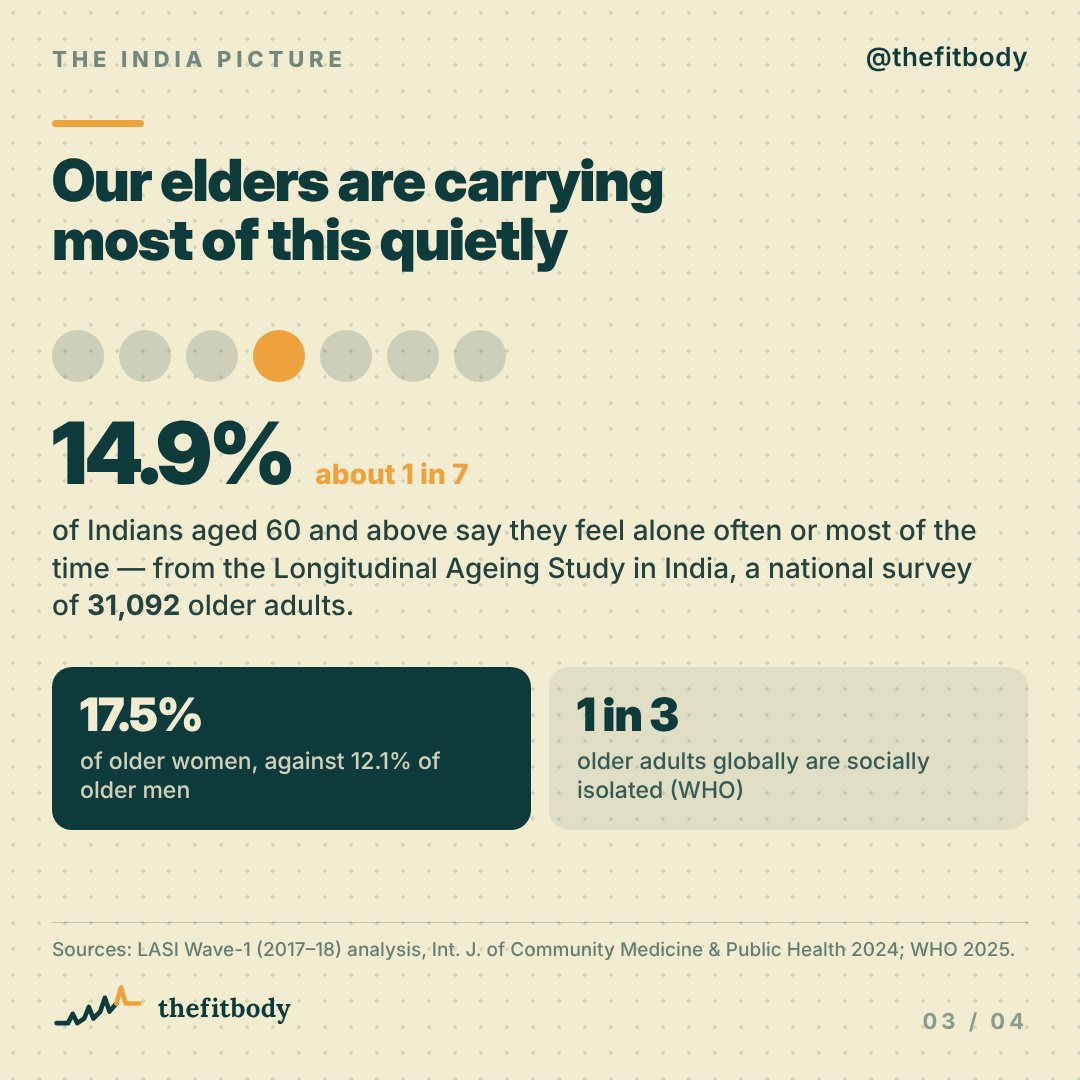
In India, a national survey of 31,092 older adults found about 1 in 7 (14.9%) feel alone often or most of the time, with higher rates among women (17.5% vs 12.1% of men). With the share of Indians aged 60+ projected to rise from 10.5% to 20.8% by 2050, the problem will grow.
What actually helps
- Fix the read, not just the calendar. Meta-analyses show that retraining how you interpret social moments works better than simply meeting more people.
- Talk to one stranger a day. In nine experiments on commuter trains and buses, people told to chat with a stranger had the most positive commute, even though they predicted the opposite beforehand. You will overestimate the awkwardness every time.
- Go deep, not wide. In the 85-year Harvard study, those happiest in their relationships at 50 were the healthiest at 80. Quality beats headcount.
- Keep one standing commitment. A weekly walk group, satsang, gym class or volunteering. Closeness is built by repetition.
- Make the 8-minute call. One person you have not spoken to in a month. Voice, not a text.
- Check on the elders at home. Ask how their week felt, not only whether they ate.
The carousel
The four slides from our Instagram and X post. Swipe through them, save them, share them.
Watch the video
Sources
- WHO Commission on Social Connection (2025)1 in 6 people lonely; 871,000 deaths a year; regional and age data.
- Holt-Lunstad et al., PLoS Medicine (2010)148 studies, about 3.08 lakh people; social ties and survival.
- Epley and Schroeder, J. Exp. Psychology: General (2014)Mistakenly seeking solitude: commuter experiments.
- Harvard Study of Adult DevelopmentRelationships and health across 85 years.
- Longitudinal Ageing Study in India (LASI Wave 1) analysis, Int. J. Community Med. Public Health (2024)Loneliness among Indians aged 60+.
- Tele-MANAS, Government of IndiaFree 24×7 mental health helpline, 14416.
General information for education, not medical or psychological advice. Figures are taken from the sources above; if you are struggling, please speak to a qualified professional.