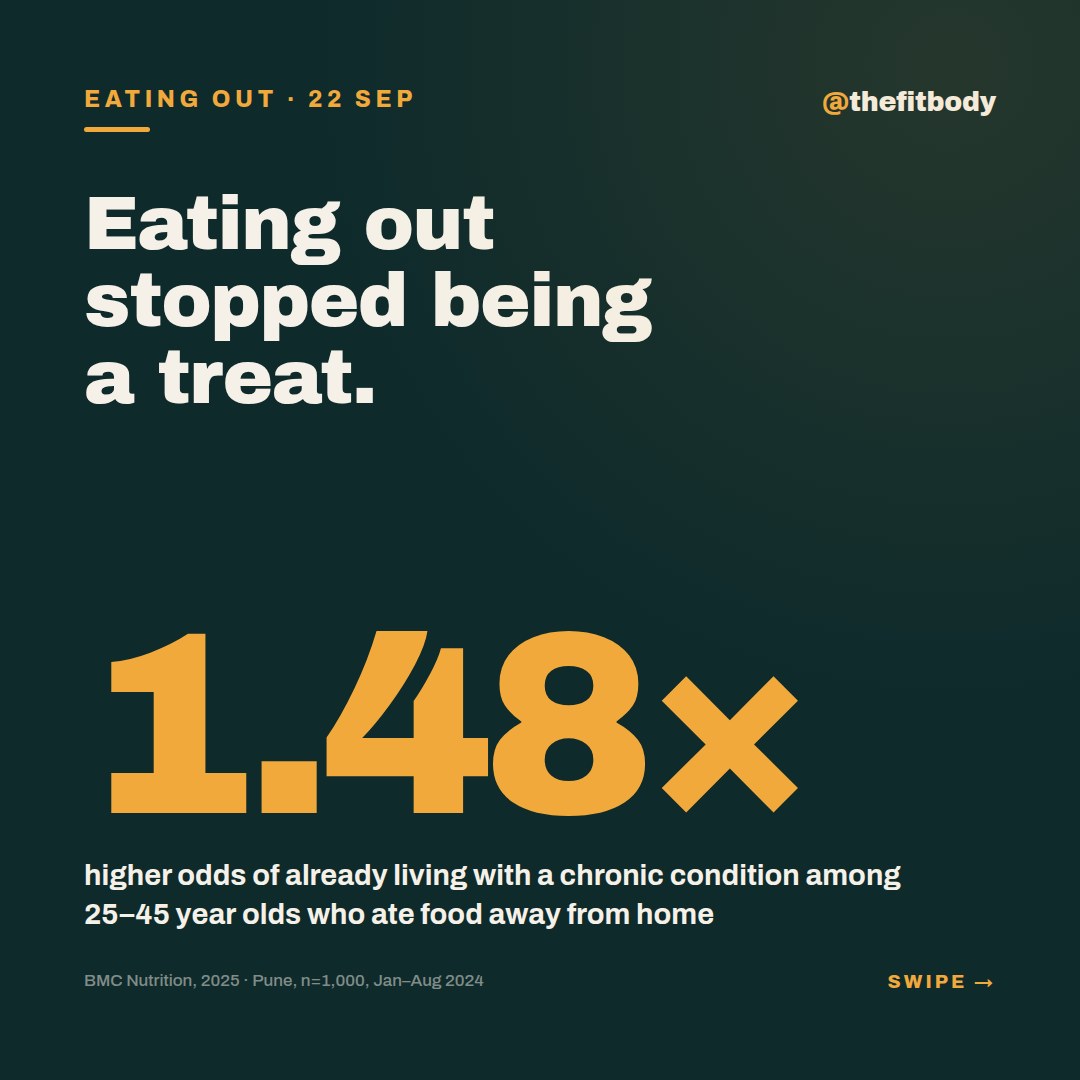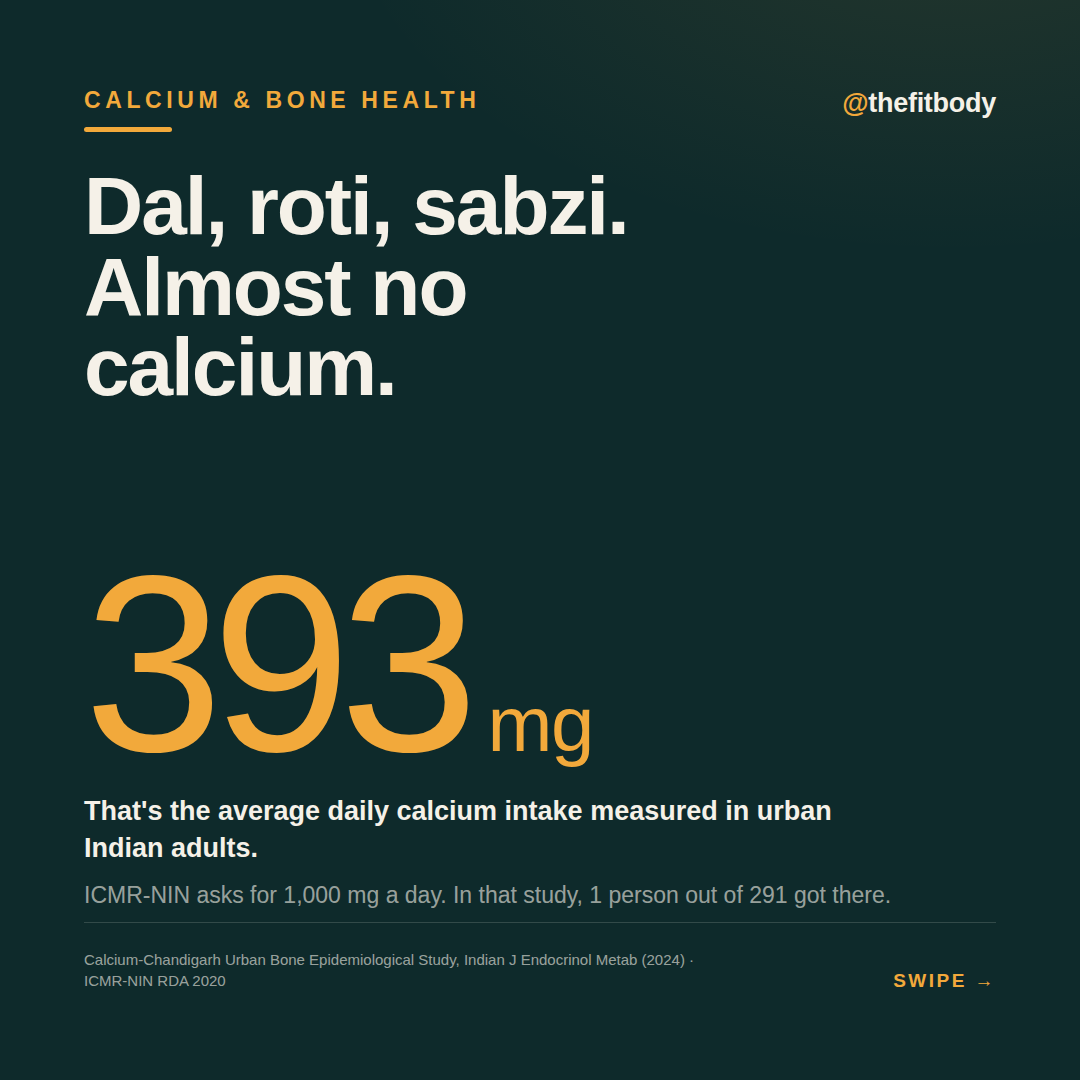


A balanced thali is easy to build. Fill the plate in four parts and you cover most of what your body needs.
Why it matters
Most Indian thalis are generous with rice and roti but light on vegetables and protein. ICMR-NIN’s 2024 dietary guidelines say cereals should not supply more than about 45% of daily energy, yet in many homes they supply much more. The result is a plate that fills you up but leaves gaps in protein, fibre, vitamins and minerals.
You do not need to give up your favourite food. A balanced thali is mostly about proportion: the same dishes, served in a different ratio.
What each part does
- Vegetables and greens bring fibre, vitamins, minerals and colour for very few calories. Fibre keeps you full and helps blood sugar rise more slowly.
- Protein repairs muscle and keeps you satisfied for longer. Pairing dal with rice or roti improves the protein quality of a vegetarian meal.
- Grains are your main energy. Swap part of the white rice or maida for millets, brown rice or whole-wheat roti.
- A little fat such as ghee or oil helps you absorb vitamins A, D, E and K. One small spoon is enough.
A balanced thali in real life
North Indian: 2 phulkas, a katori of dal, a big serving of lauki or palak sabzi, curd and salad.
South Indian: a moderate scoop of rice, sambar with plenty of vegetables, a poriyal, rasam and curd.
Non-vegetarian: rice or roti, a fish or chicken curry with less gravy, a vegetable side and a salad.
Try this
- Fill half the plate with vegetables or salad: sabzi, a leafy green dish, kachumber.
- Give a quarter to protein: dal, rajma, chole, curd, paneer, egg, fish or chicken.
- Give a quarter to roti, rice or millet.
- Add one small spoon of ghee or oil for taste and fat-soluble vitamins.
- Finish with a bowl of curd or buttermilk, and keep fruit for snack time.
Quick answers
Can I eat rice every day on a balanced thali?
Yes. Rice is not the problem; the portion is. Keep it to about a quarter of the plate, pair it with dal or another protein and plenty of vegetables, and try mixing in brown rice or millets a few times a week.
Is ghee bad for health?
A small amount is fine. ICMR-NIN advises keeping total visible fat moderate. One small spoon of ghee or oil per meal adds taste and helps absorb fat-soluble vitamins.
Sources
- ICMR-NIN: Dietary Guidelines for Indians (2024)India’s official guide to a balanced plate, portions, salt, sugar and oil.
General information, not medical advice.