
The problem on the Indian plate is not grain itself — it is which grain, and how much. Polished rice and refined wheat dominate our meals, leaving little room for the dal, vegetables, curd and nuts that balance them.
Millets — bajra, jowar, ragi and foxtail millet — are traditional Indian grains that digest more slowly, and swapping them in for part of your rice or maida is one of the easiest changes you can make.
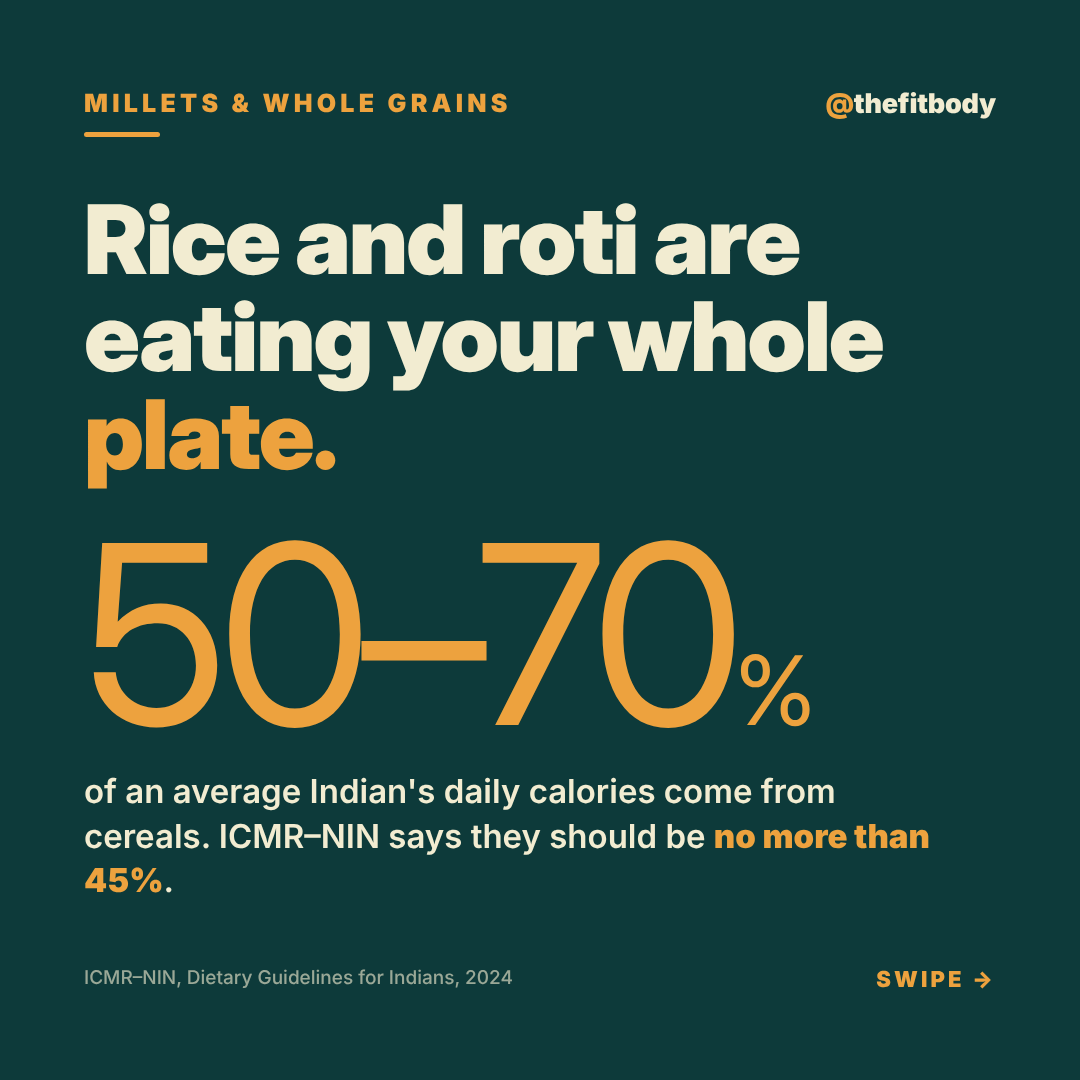
50–70% of an average Indian’s daily calories come from cereals.
ICMR–NIN’s ceiling: 45%.
The problem isn’t grain. It’s which grain.
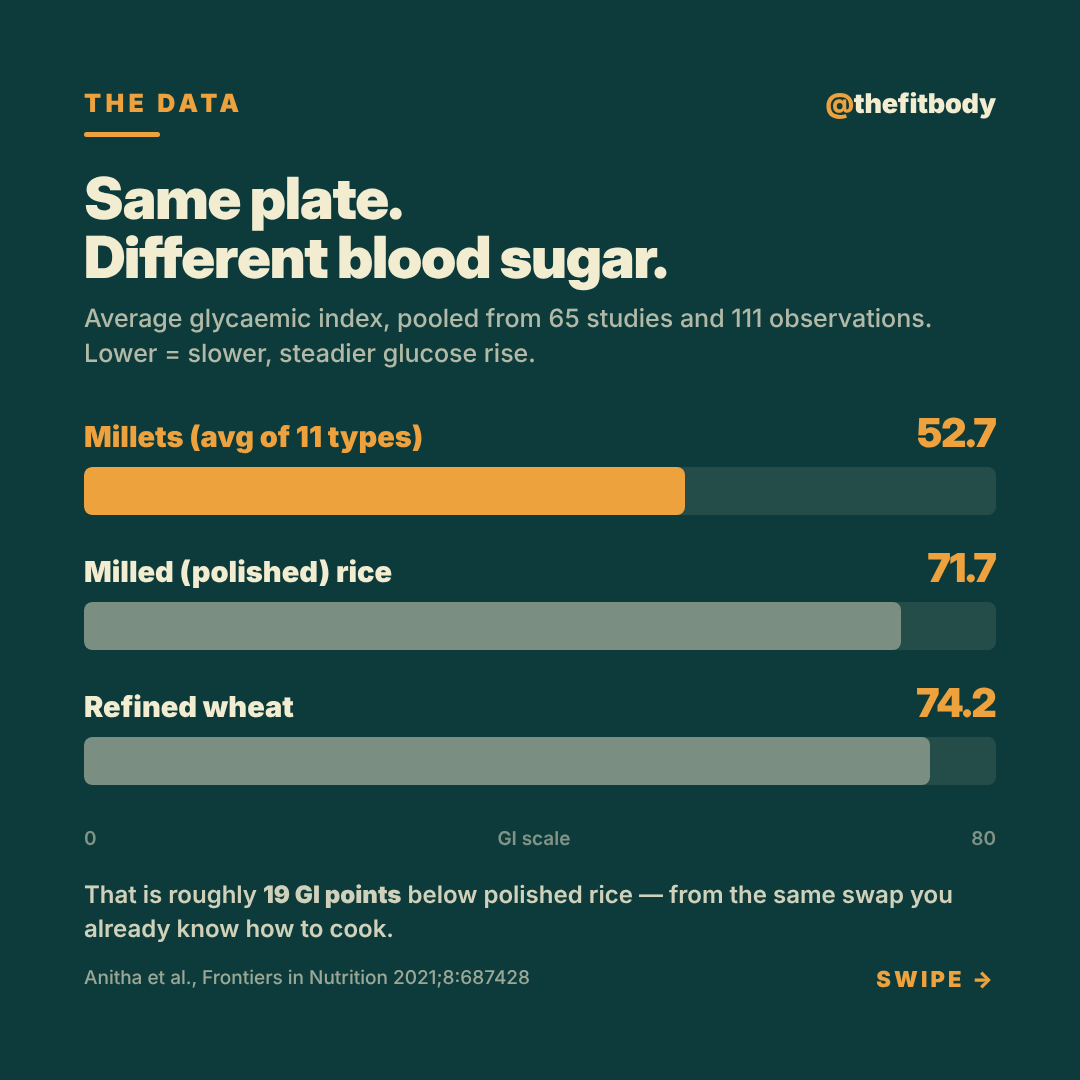
THE DATA — average glycaemic index, pooled from 65 studies
Millets · 52.7
Polished rice · 71.7
Refined wheat · 74.2
That’s ~19 GI points lower, from a swap you already know how to cook.
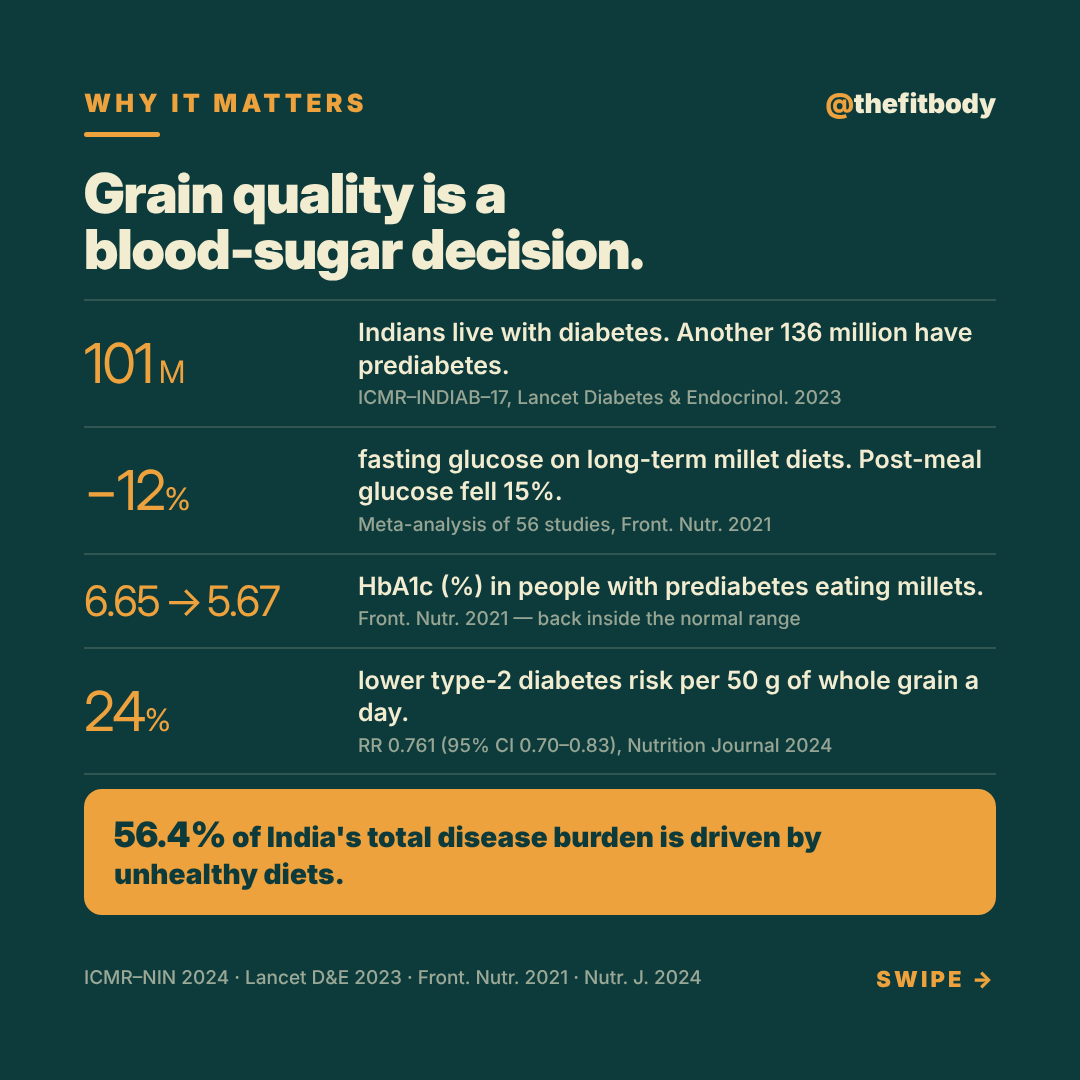
Why It Matters
- 101 million Indians live with diabetes. 136 million more have prediabetes.
- Long-term millet eating: fasting glucose down 12%, post-meal down 15%.
- HbA1c in prediabetes: 6.65% → 5.67%.
- Every 50 g of whole grain a day = 24% lower type-2 diabetes risk.
- 56.4% of India’s total disease burden is driven by unhealthy diets.
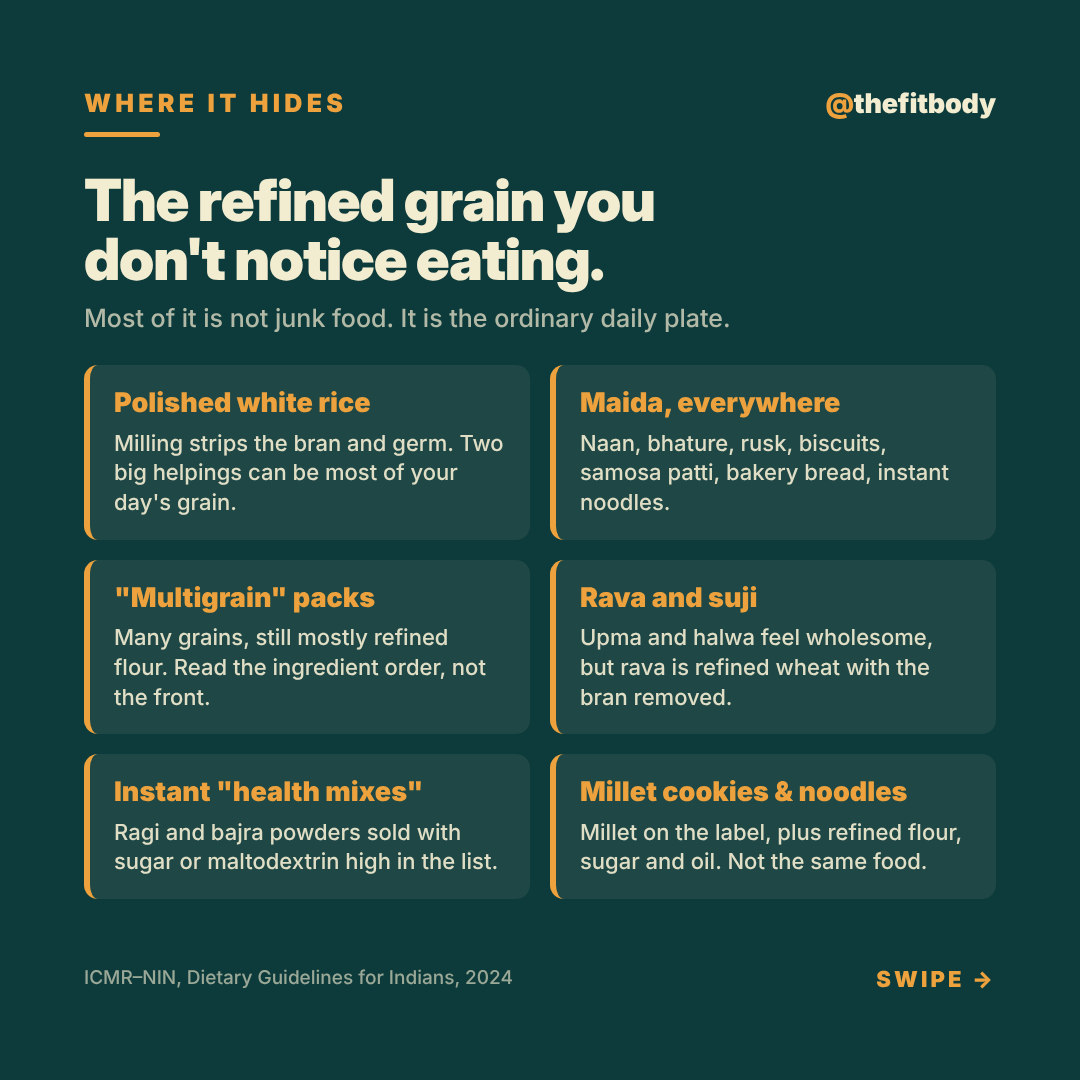
Where It Hides
Polished rice. Maida in naan, rusk, biscuits, samosa patti. “Multigrain” packs that are still mostly refined flour. Rava upma. Ragi mixes sweetened with sugar. Millet cookies and millet noodles.
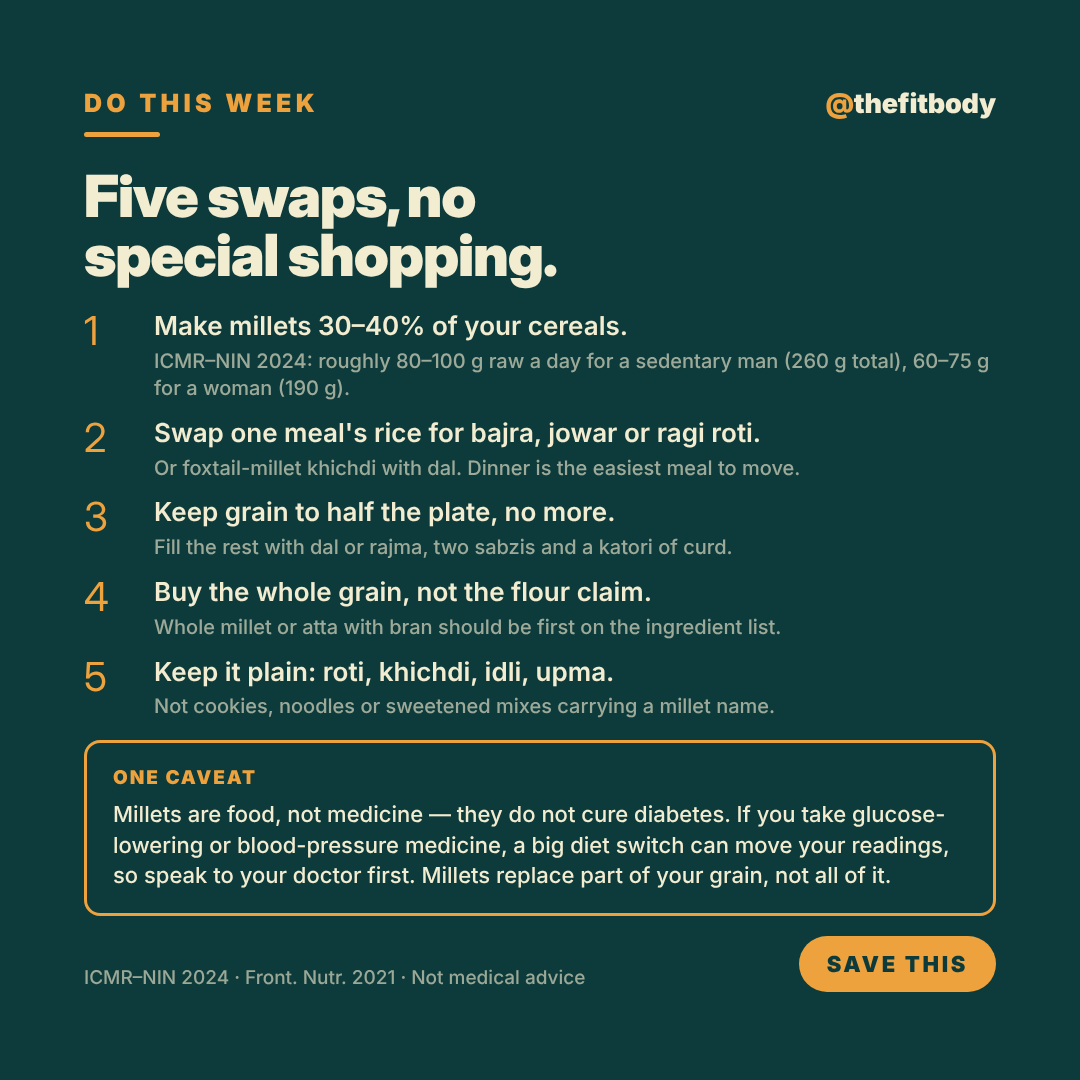
Five Swaps
- Make millets 30–40% of your cereals — roughly 80–100 g raw a day for a sedentary man, 60–75 g for a woman.
- Swap one meal’s rice for bajra, jowar or ragi roti. Or foxtail-millet khichdi.
- Grain = half the plate, no more. Rest is dal or rajma, two sabzis, a katori of curd.
- Whole millet or atta with bran should be FIRST on the ingredient list. “Multigrain” is not whole grain.
- Keep it plain — roti, khichdi, idli, upma. Not cookies and noodles with a millet name.
One Caveat
Millets are food, not medicine — they don’t cure diabetes. If you take glucose-lowering or BP medicine, a big diet switch can move your readings, so talk to your doctor first. Millets replace part of your grain, not all of it.
Start with one meal
You do not need to overhaul the kitchen. Swap the rice at one meal for a bajra, jowar or ragi roti, or cook a foxtail-millet khichdi. Keep it plain — roti, khichdi, idli, upma — rather than reaching for cookies and noodles that merely carry a millet name.
The carousel
The five slides from our Instagram and X post — swipe through them, save them, share them.
Sources
- ICMR–NIN, Dietary Guidelines for Indians, 2024Cereals supply 50–70% of daily energy against a recommended ceiling of 45% · 56.4% of India’s total disease burden is due to unhealthy diets · millets to make up 30–40% of total recommended cereals (raw weight) · at least half of cereals should be whole grains · 260 g cereals/millets a day for a sedentary man, 190 g for a sedentary woman.
- Anitha et al., “A systematic review and meta-analysis of the potential of millets for managing and reducing the risk of developing diabetes mellitus”, Frontiers in Nutrition 2021;8:687428Mean glycaemic index: millets 52.7 ± 10.3, milled rice 71.7 ± 14.4, refined wheat 74.2 ± 14.9 (65 studies, 111 observations) · fasting glucose −12% and post-prandial glucose −15% in people with diabetes · HbA1c 6.65% → 5.67% in pre-diabetic individuals.
- Anjana et al., “Metabolic non-communicable disease health report of India: the ICMR–INDIAB national cross-sectional study (ICMR–INDIAB-17)”, Lancet Diabetes & Endocrinology 2023;11:474–89Diabetes 11.4% (101 million Indians) · prediabetes 15.3% (136 million) · from 113,043 adults surveyed across India.
- “Effects of whole grains on glycemic control: a systematic review and dose-response meta-analysis”, Nutrition Journal 2024;23:00952-2Each 50 g/day of whole grain is associated with a 24% lower risk of type 2 diabetes (summary RR 0.761, 95% CI 0.700–0.828).
General information, not medical advice. Figures are taken from the sources above; if you have a medical condition, speak to your doctor before changing your diet or activity.