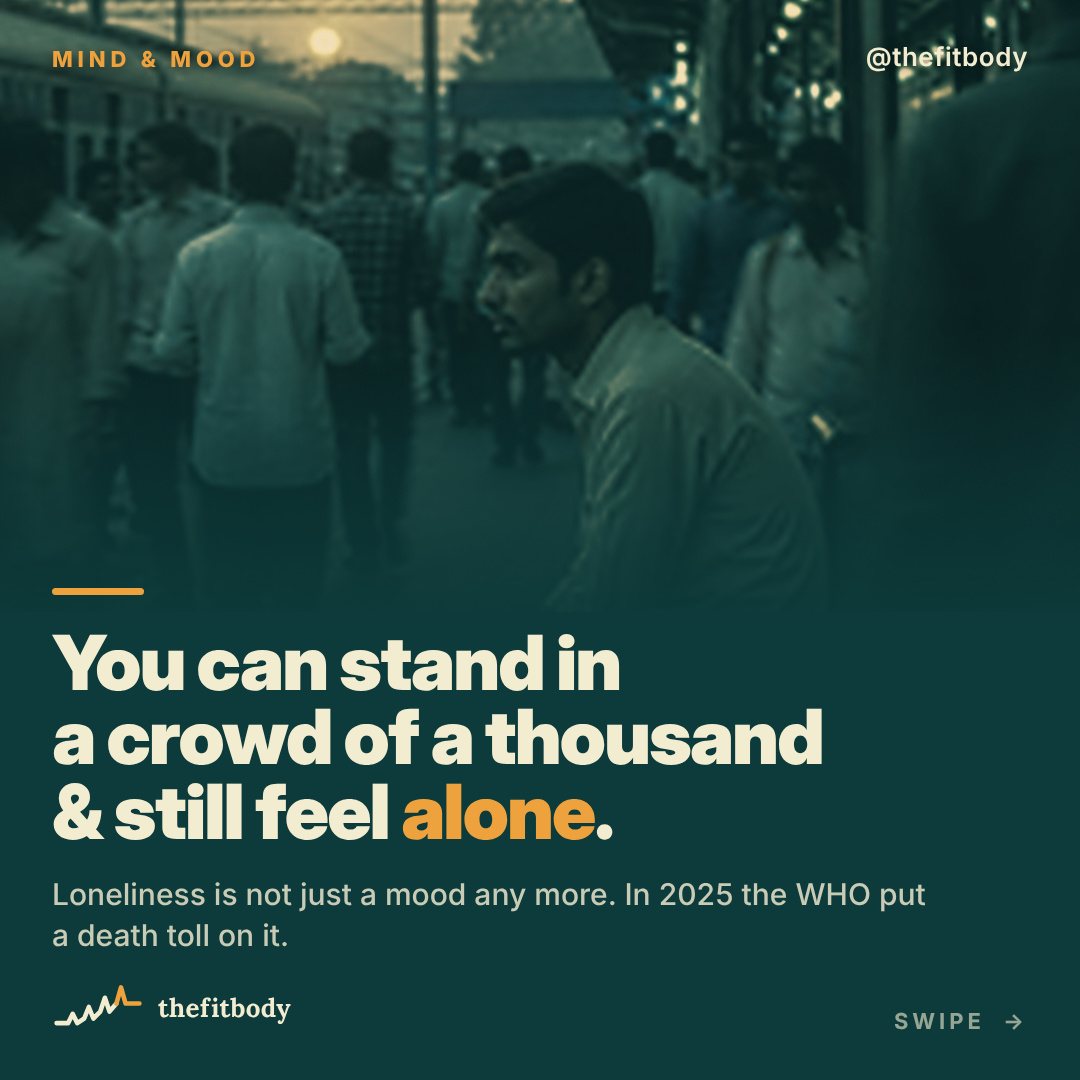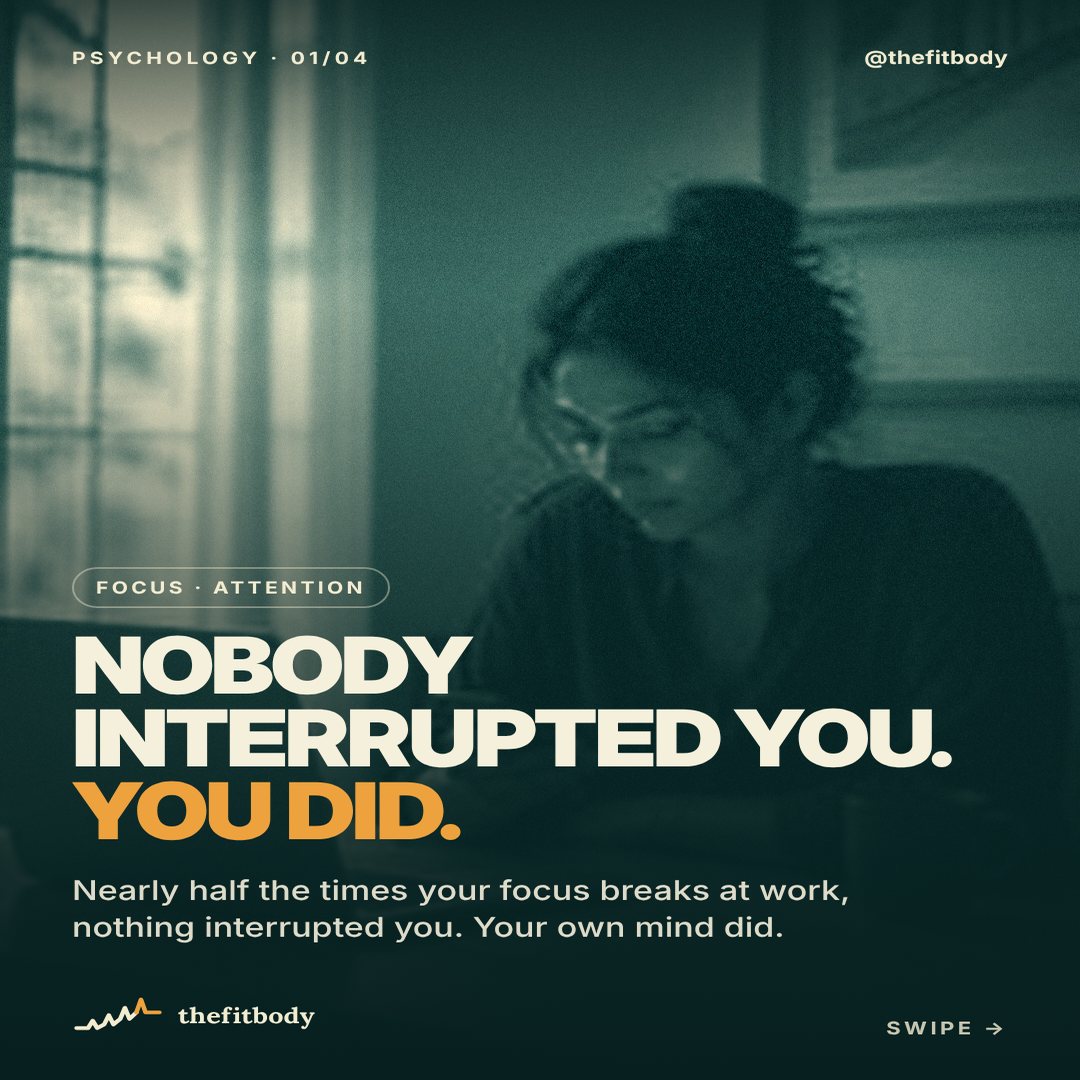

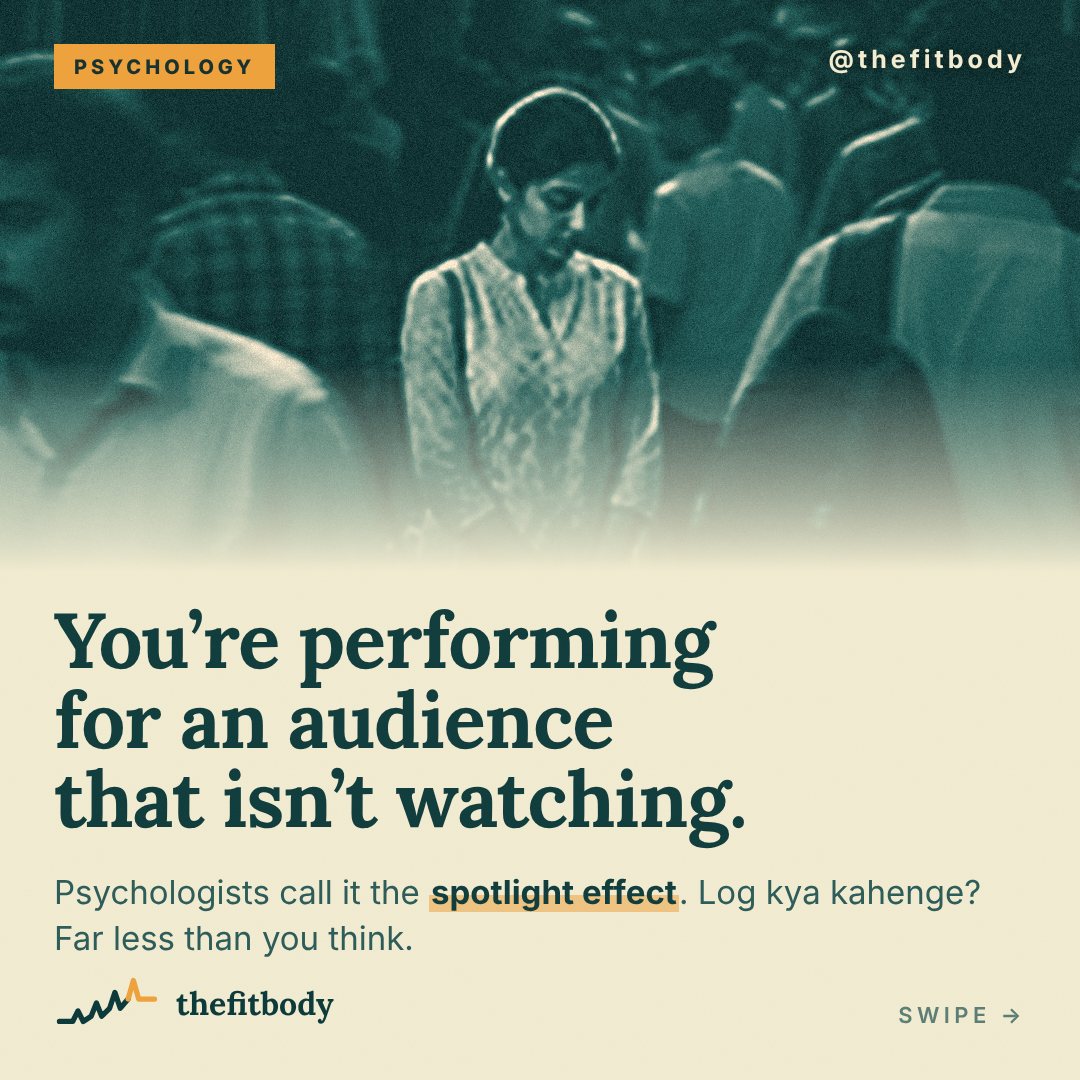
You tripped on a word in a meeting and replayed it fifty times that evening. Chances are, nobody else gave it a second thought. Psychologists call this the spotlight effect: we overestimate how much others notice us.
Three experiments, one reality check
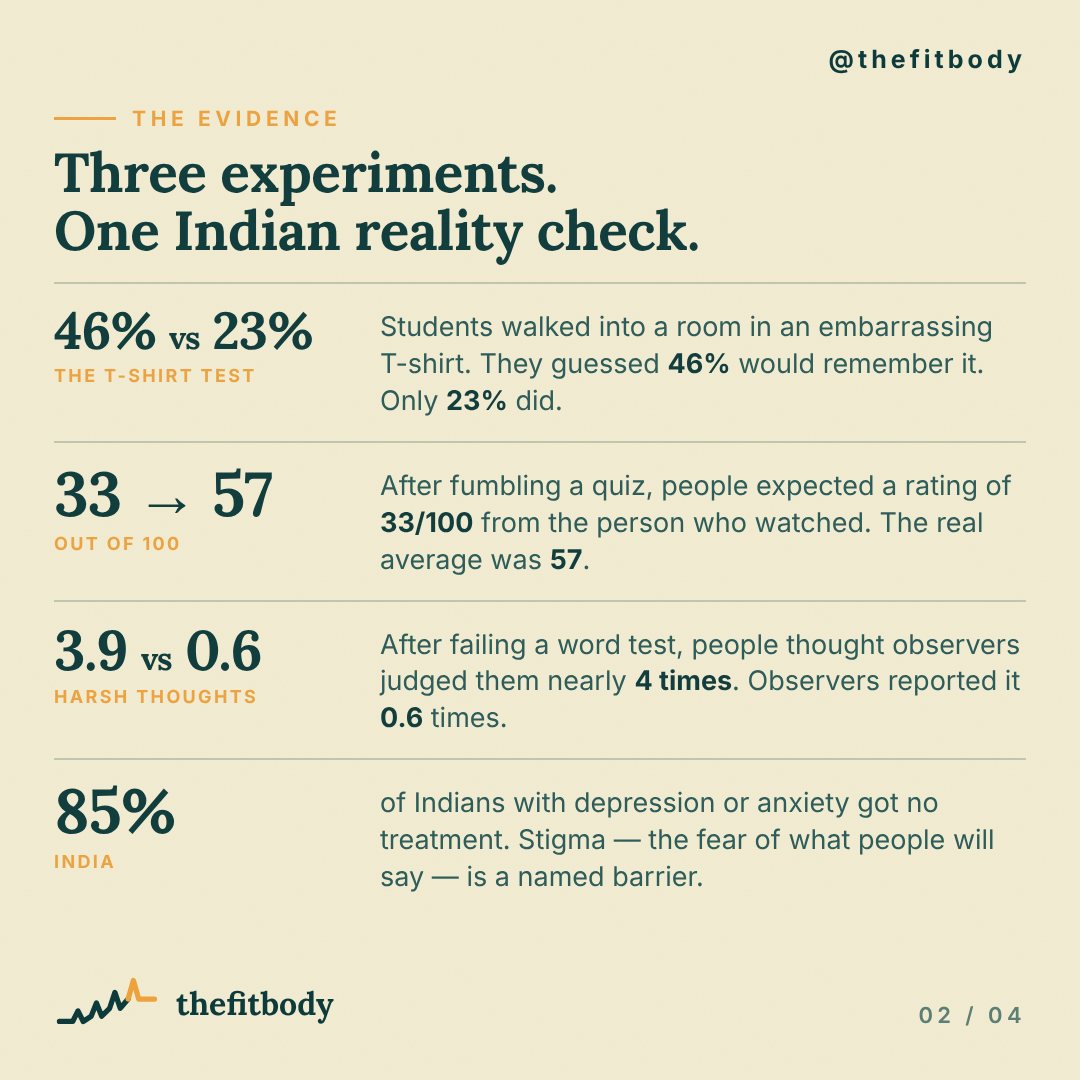
In the classic T-shirt study, students walked into a room wearing an embarrassing T-shirt. They guessed 46% of people would remember it. Only 23% did. In another, after fumbling a quiz, people expected the watcher to rate them 33 out of 100; the real average was 57. After failing a word test, they thought observers judged them harshly nearly four times; observers reported 0.6 such thoughts.
Why the brain does it
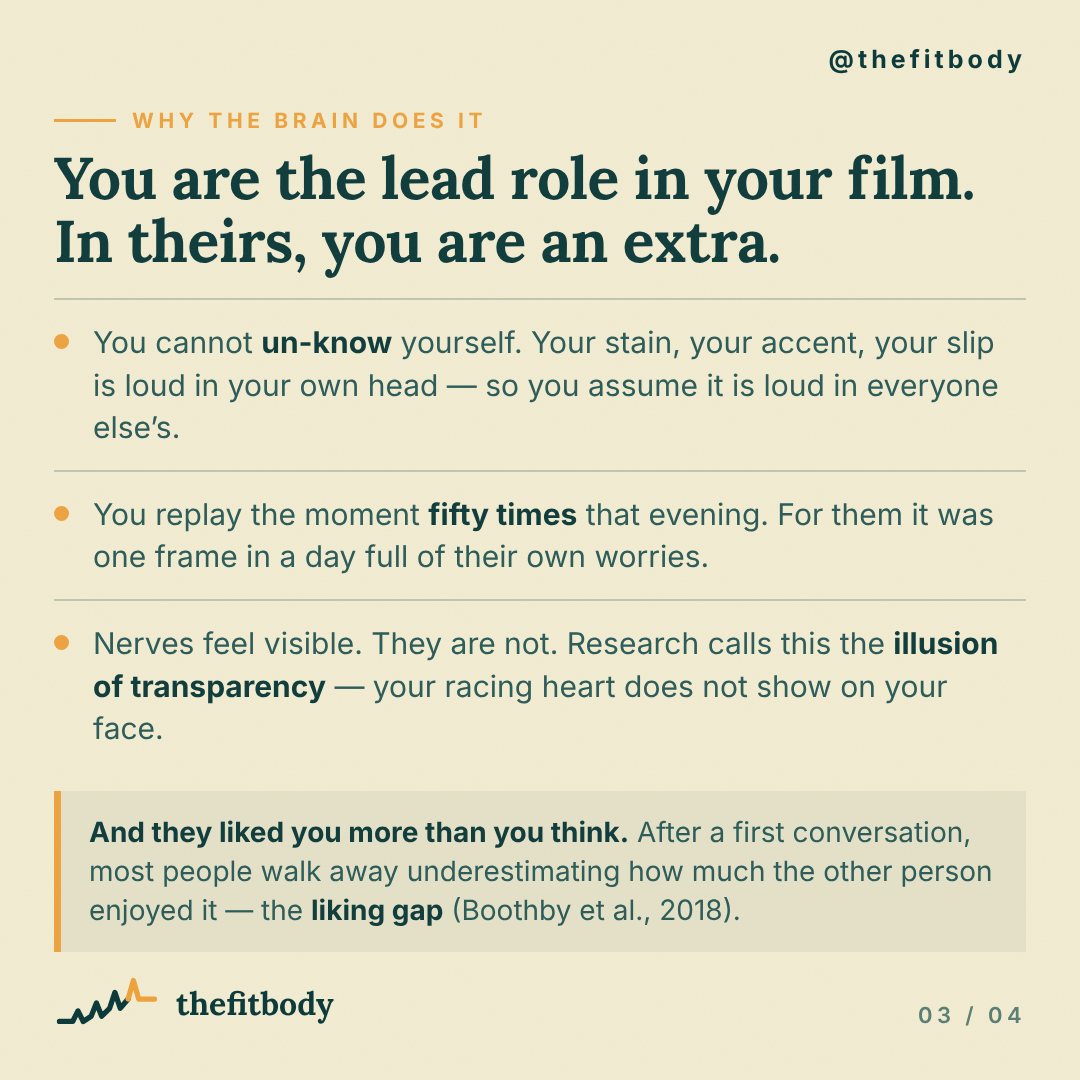
You cannot un-know yourself. Your stain, your accent, your slip is loud in your own head, so you assume it is loud in everyone else’s. You replay the moment fifty times; for them, it was one frame in a day full of their own worries.
Nerves feel visible, but they are not. Researchers call this the illusion of transparency: your racing heart does not show on your face.
And people liked you more than you think. After a first conversation, most people underestimate how much the other person enjoyed it. This is called the liking gap.
Four corrections, straight from the studies
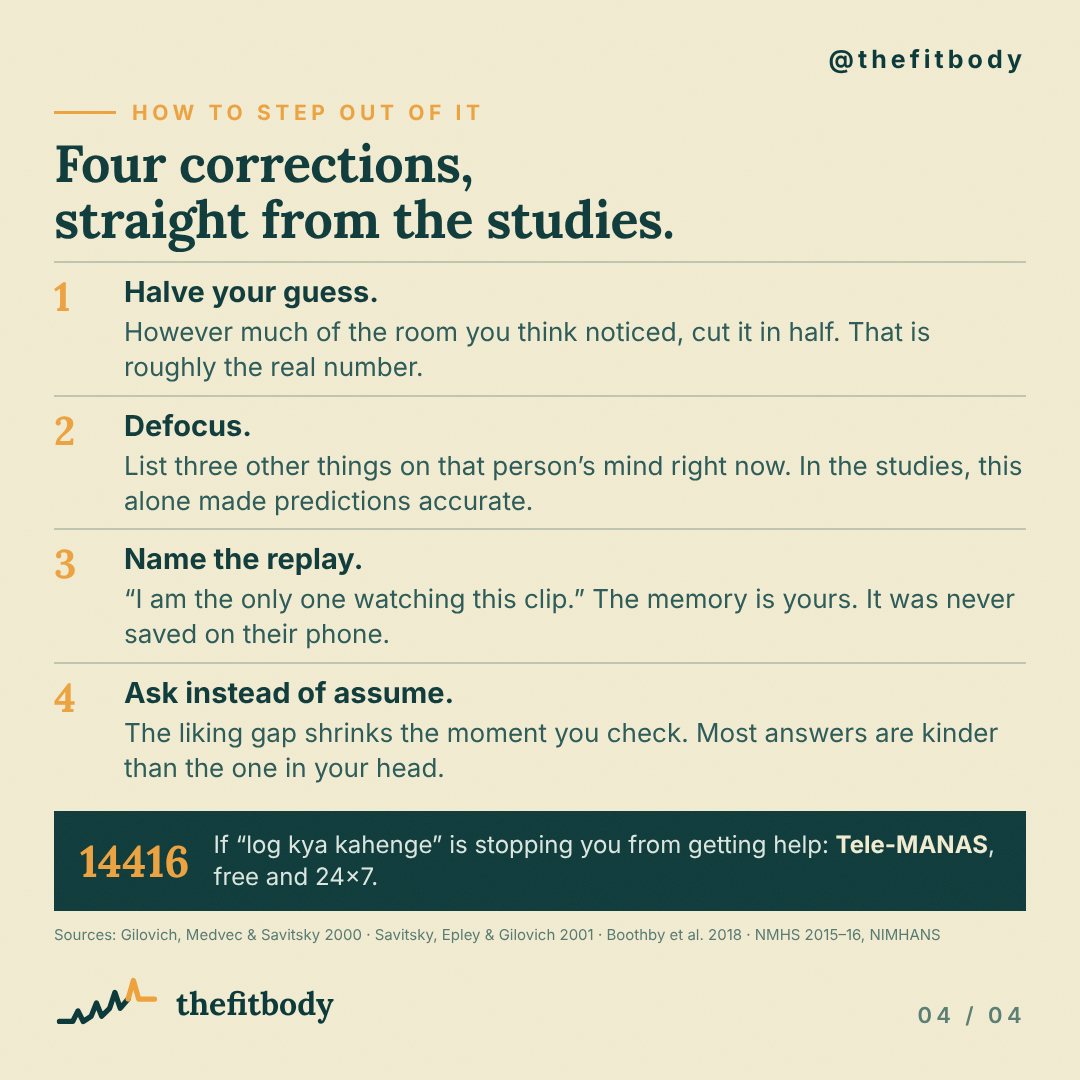
- Halve your guess. However much of the room you think noticed, cut it in half. That is roughly the real number.
- Defocus. List three other things on that person’s mind right now. In the studies, this alone made predictions accurate.
- Name the replay. “I am the only one watching this clip.” The memory is yours. It was never saved on their phone.
- Ask instead of assume. The liking gap shrinks the moment you check. Most answers are kinder than the one in your head.
The carousel
The four slides from our Instagram and X post. Swipe through them, save them, share them.
Sources
- Gilovich, Medvec and Savitsky, J. Personality and Social Psychology (2000): The spotlight effectT-shirt experiments and overestimated notice.
- Savitsky, Epley and Gilovich (2001): Do others judge us as harshly as we think?Overestimated negative evaluation after mistakes.
- Boothby, Cooney, Sandstrom and Clark, Psychological Science (2018): The liking gapPeople underestimate how much others like them after conversation.
- National Mental Health Survey of India 2015-16, NIMHANSTreatment gap for depression and anxiety.
General information for education, not medical or psychological advice. Figures are taken from the sources above; if you are struggling, please speak to a qualified professional.