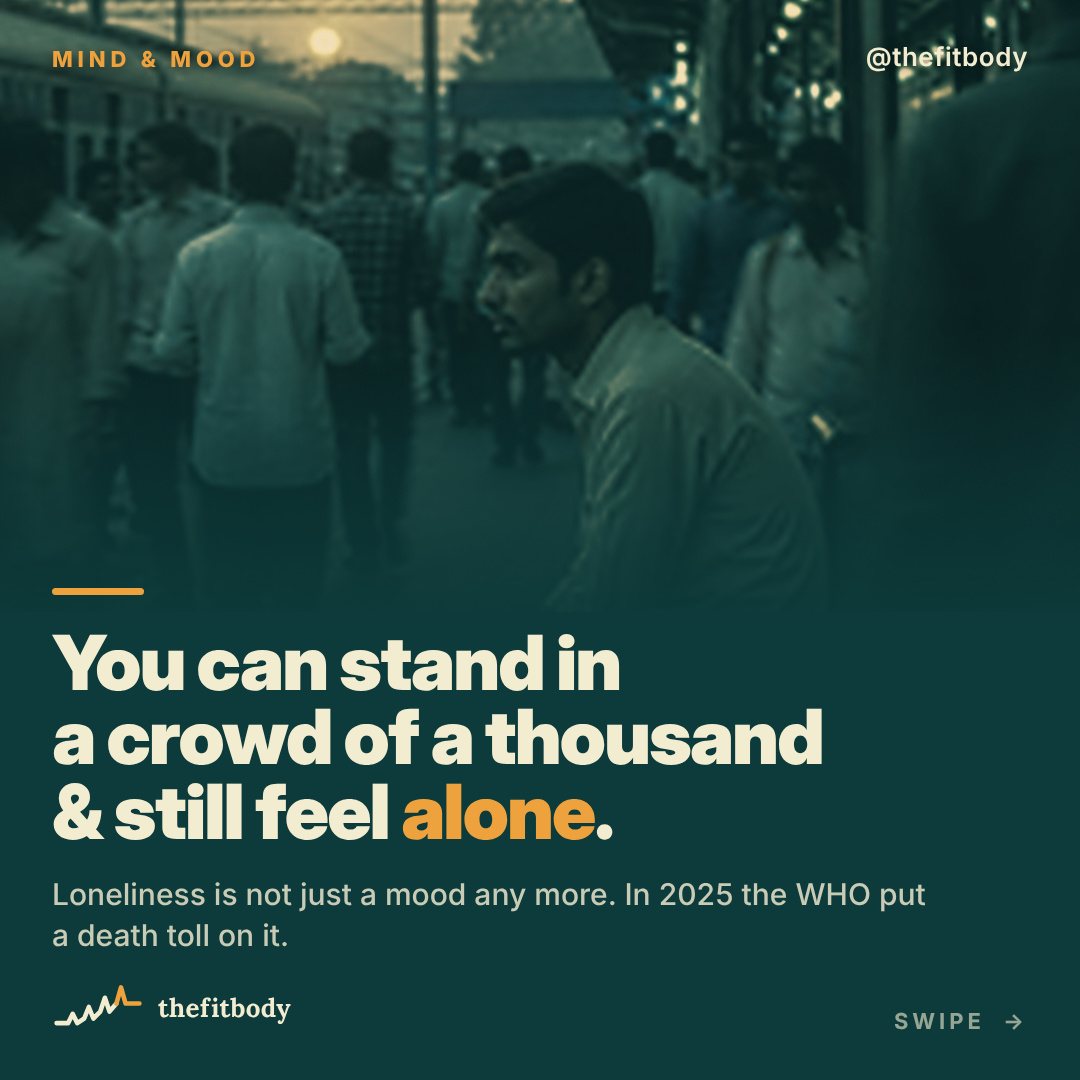

Everyone has heard that it takes 21 days to build a habit. It is one of the most repeated numbers in self-help and it did not come from a habit study at all.
Where 21 came from
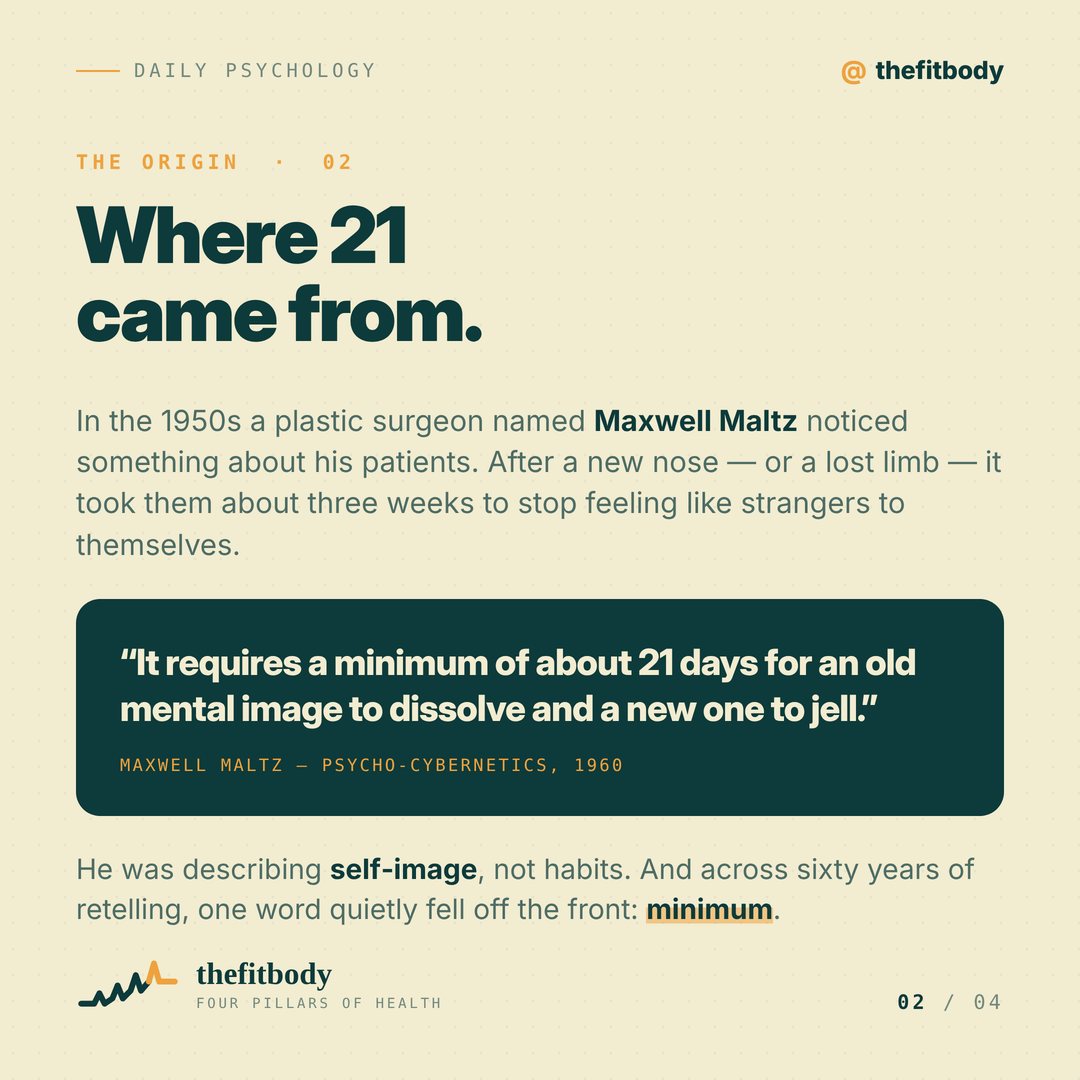
In the 1950s, plastic surgeon Maxwell Maltz noticed that patients took about three weeks to stop feeling like strangers to themselves after a new nose or a lost limb. In his 1960 book Psycho-Cybernetics he wrote that it takes “a minimum of about 21 days” for an old mental image to dissolve and a new one to form.
He was describing self-image, not habits, and across sixty years of retelling the word “minimum” quietly fell off.
What the research actually found
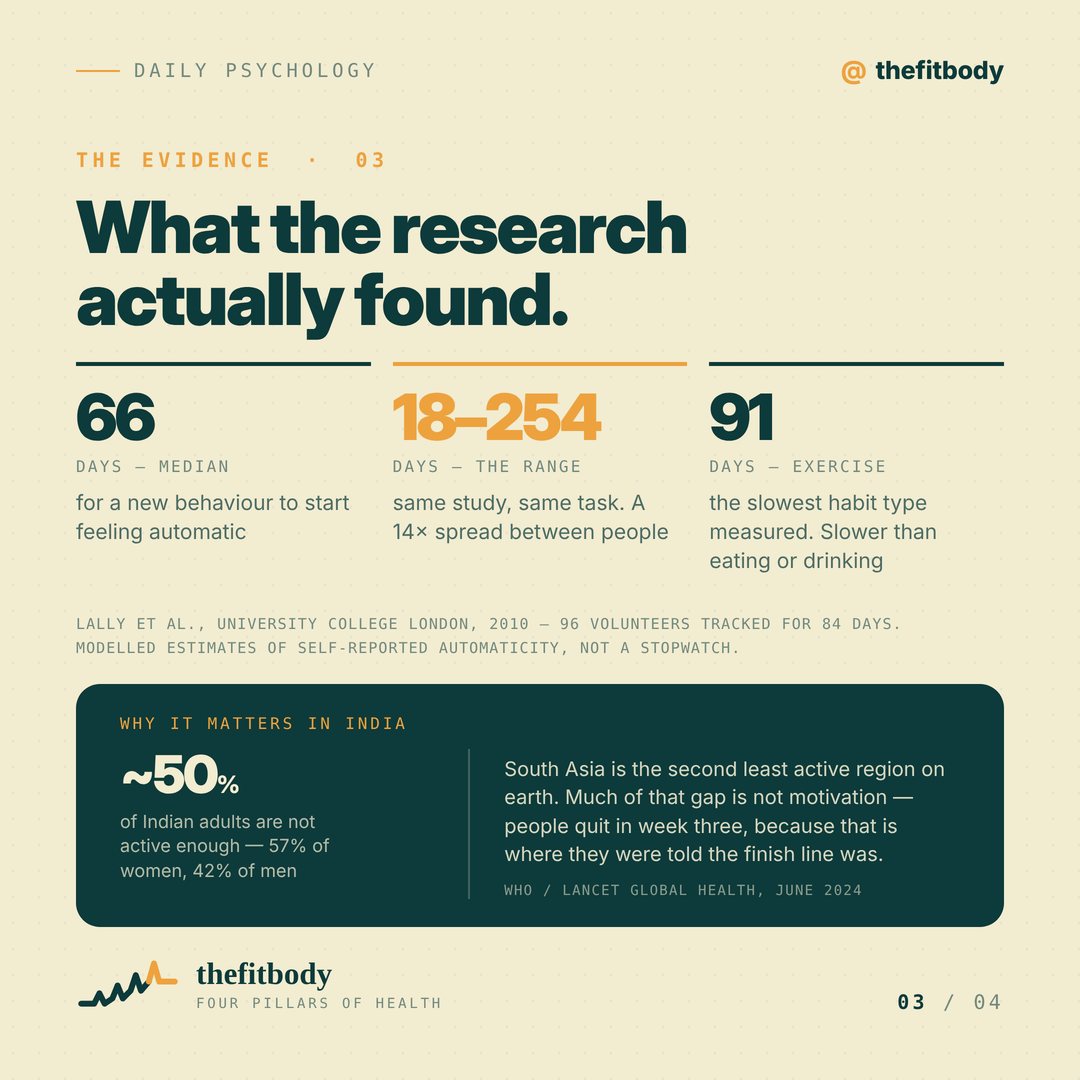
In 2010, Phillippa Lally and colleagues at University College London tracked 96 volunteers for 84 days as they tried to make a new eating, drinking or exercise behaviour automatic. The median time was 66 days, but individuals ranged from 18 to 254 days. Exercise habits took longer than drinking or eating habits. These are modelled estimates of self-reported automaticity, not a stopwatch.
One missed day barely moved how automatic the behaviour felt. What breaks a habit is quitting after the miss, not the miss itself.
Why this matters in India
Roughly half of Indian adults are not active enough, 57% of women and 42% of men. A lot of that gap may not be a lack of motivation: people quit in week three, because that is where they were told the finish line was.
Move the finish line
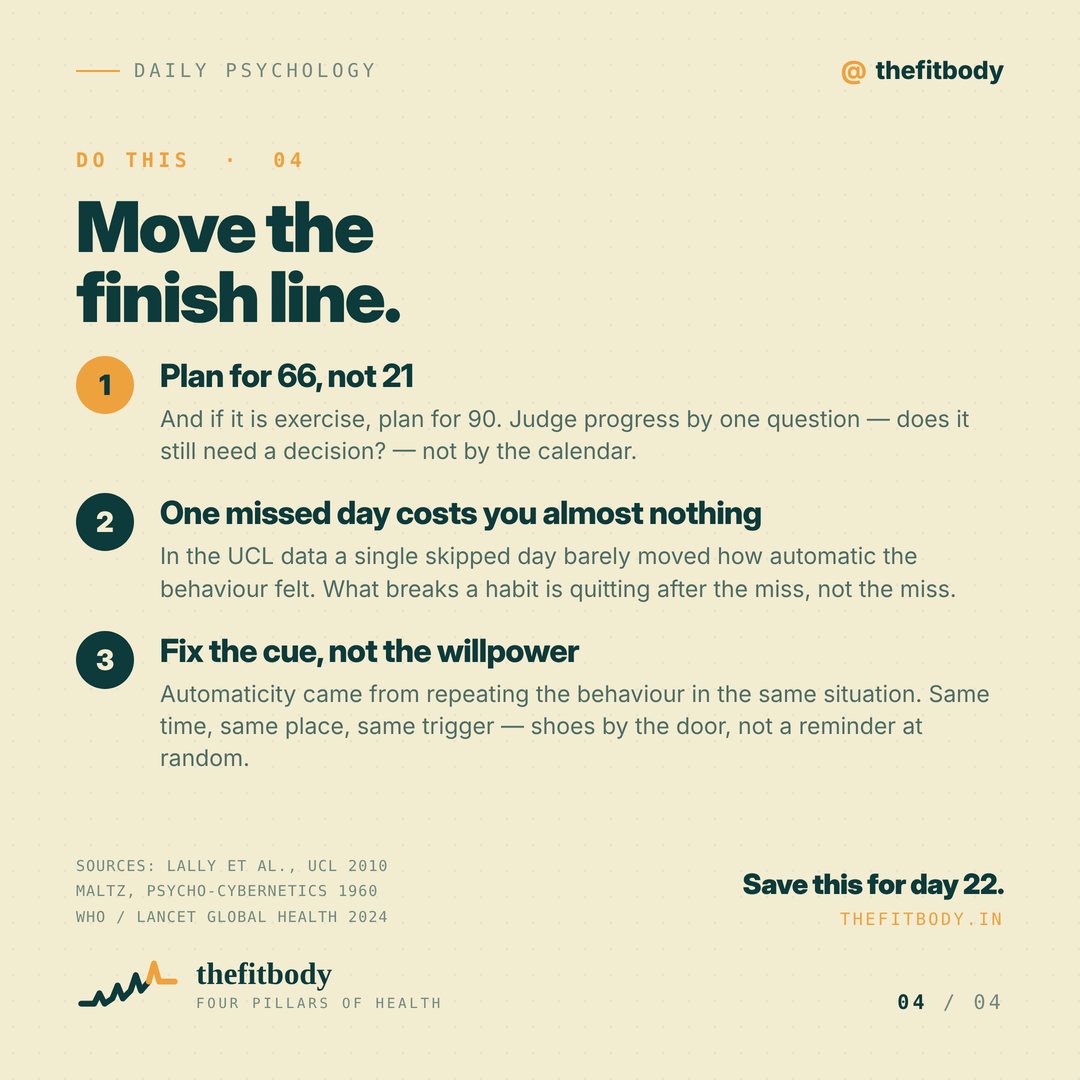
- Plan for 66, not 21. If it is exercise, plan for 90. Judge progress by one question: does it still need a decision?
- One missed day costs you almost nothing. Never skip twice if you can help it, but do not abandon the habit over one slip.
- Fix the cue, not the willpower. Automaticity comes from repeating the behaviour in the same situation: same time, same place, same trigger. Shoes by the door beat a random reminder.
The carousel
The four slides from our Instagram and X post. Swipe through them, save them, share them.

Watch the video
Sources
- Lally, van Jaarsveld, Potts and Wardle, European Journal of Social Psychology (2010): How are habits formed96 volunteers, median 66 days, range 18-254.
- Maltz, Psycho-Cybernetics (1960)Origin of the “minimum of about 21 days” idea.
- WHO / Lancet Global Health (2024): global physical inactivity estimatesAbout half of Indian adults insufficiently active; 57% of women, 42% of men.
General information for education, not medical or psychological advice. Figures are taken from the sources above; if you are struggling, please speak to a qualified professional.