
“Go for a walk” can sound like a dismissal. The evidence says otherwise. In 2024, researchers published the biggest review yet of exercise for depression, in the BMJ, and the results put movement alongside the treatments people trust.
What the review found
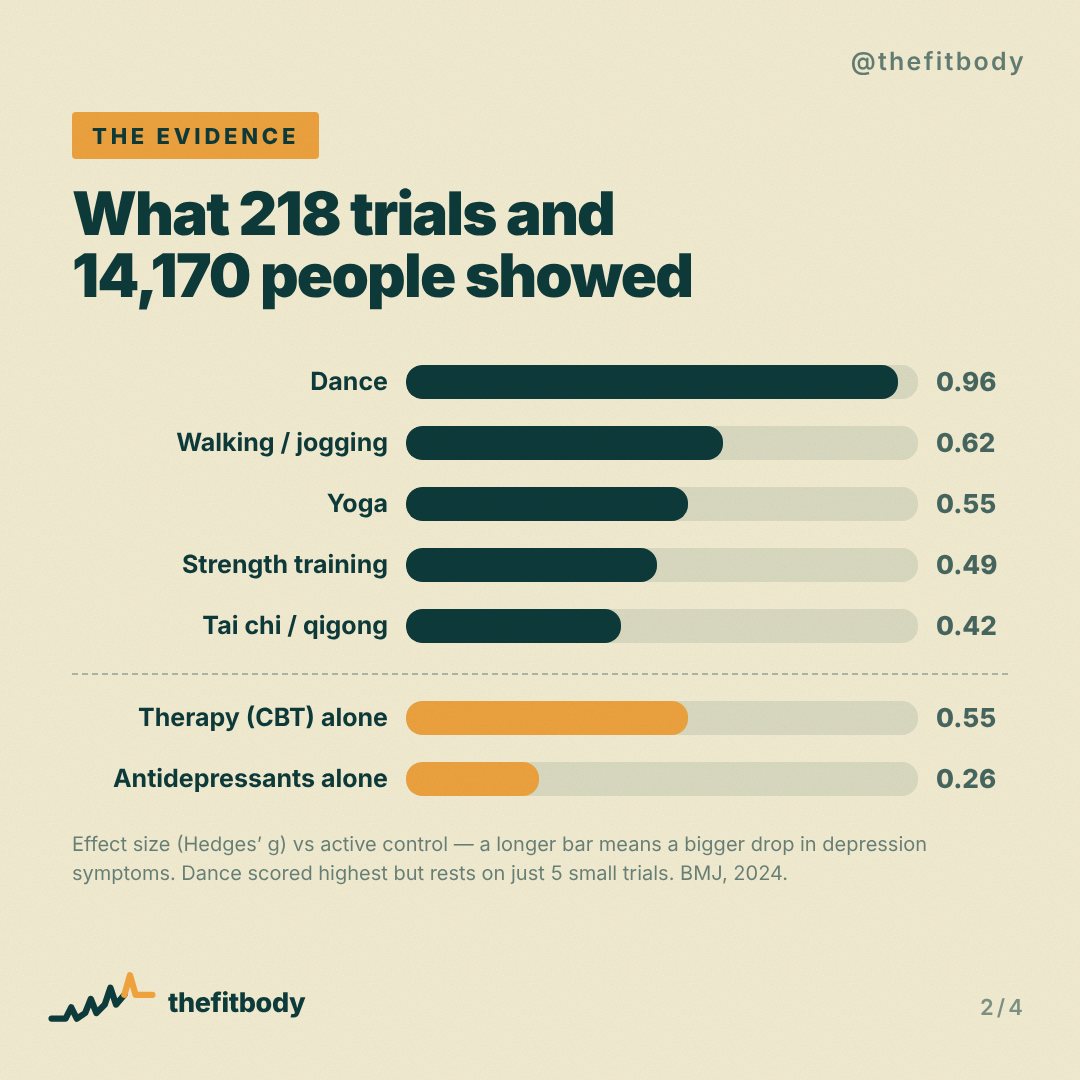
Across the trials, exercise reduced depression symptoms compared with active controls. By effect size, dance (0.96, but resting on just five small trials), walking or jogging (0.62), yoga (0.55), strength training (0.49) and tai chi or qigong (0.42) all helped. For context, CBT therapy alone scored 0.55 and antidepressants alone 0.26 in comparable analyses. Higher-intensity effort worked better, but even light activity such as walking or hatha yoga helped.
Women leaned towards strength training, men towards yoga or qigong, and both effects were larger in those groups.
Why it matters in India
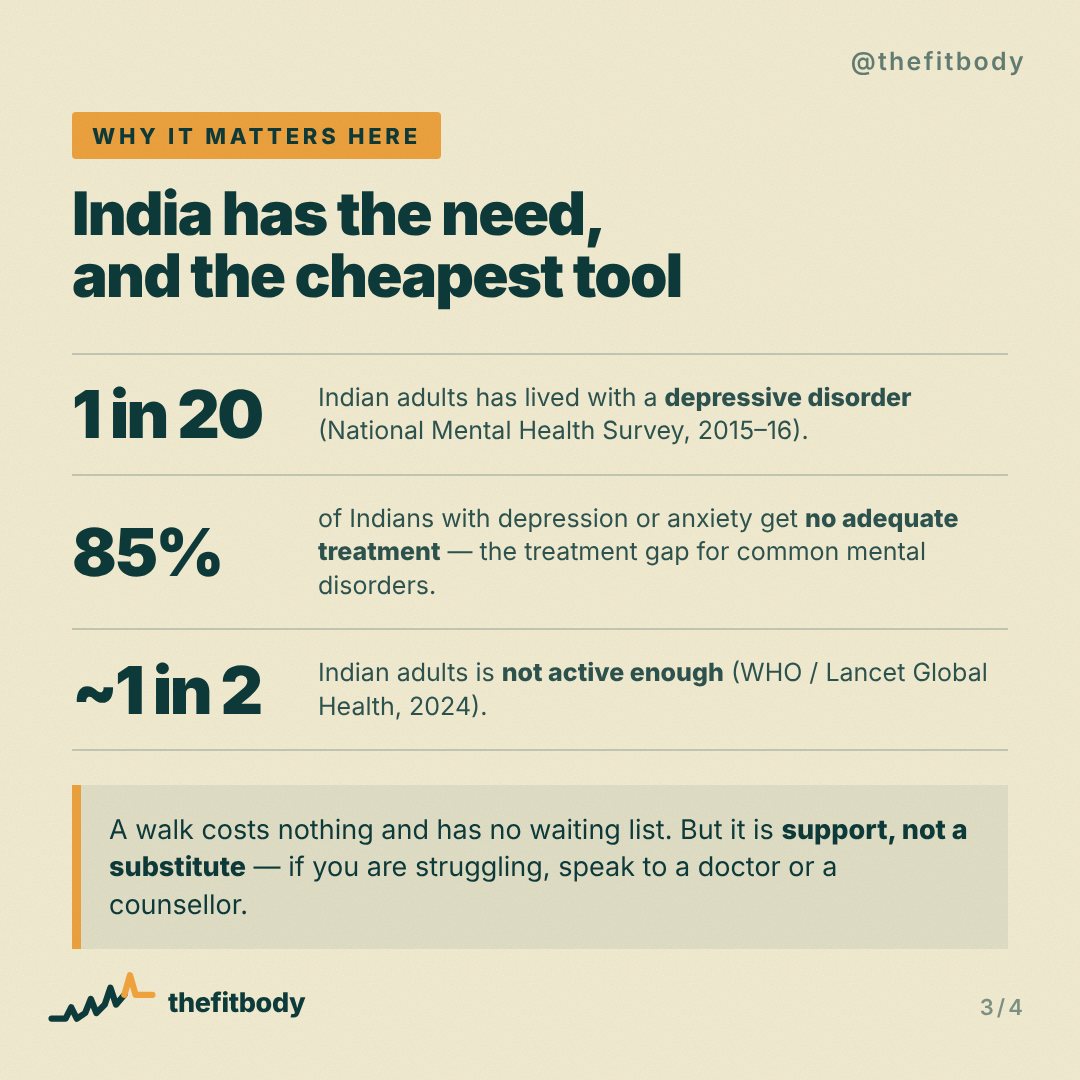
One in 20 Indian adults has lived with a depressive disorder, and about 85% of people with common mental disorders do not get adequate treatment. About 1 in 2 Indian adults is not active enough. A walk costs nothing and has no waiting list.
But it is support, not a substitute: if you are struggling, speak to a doctor or counsellor.
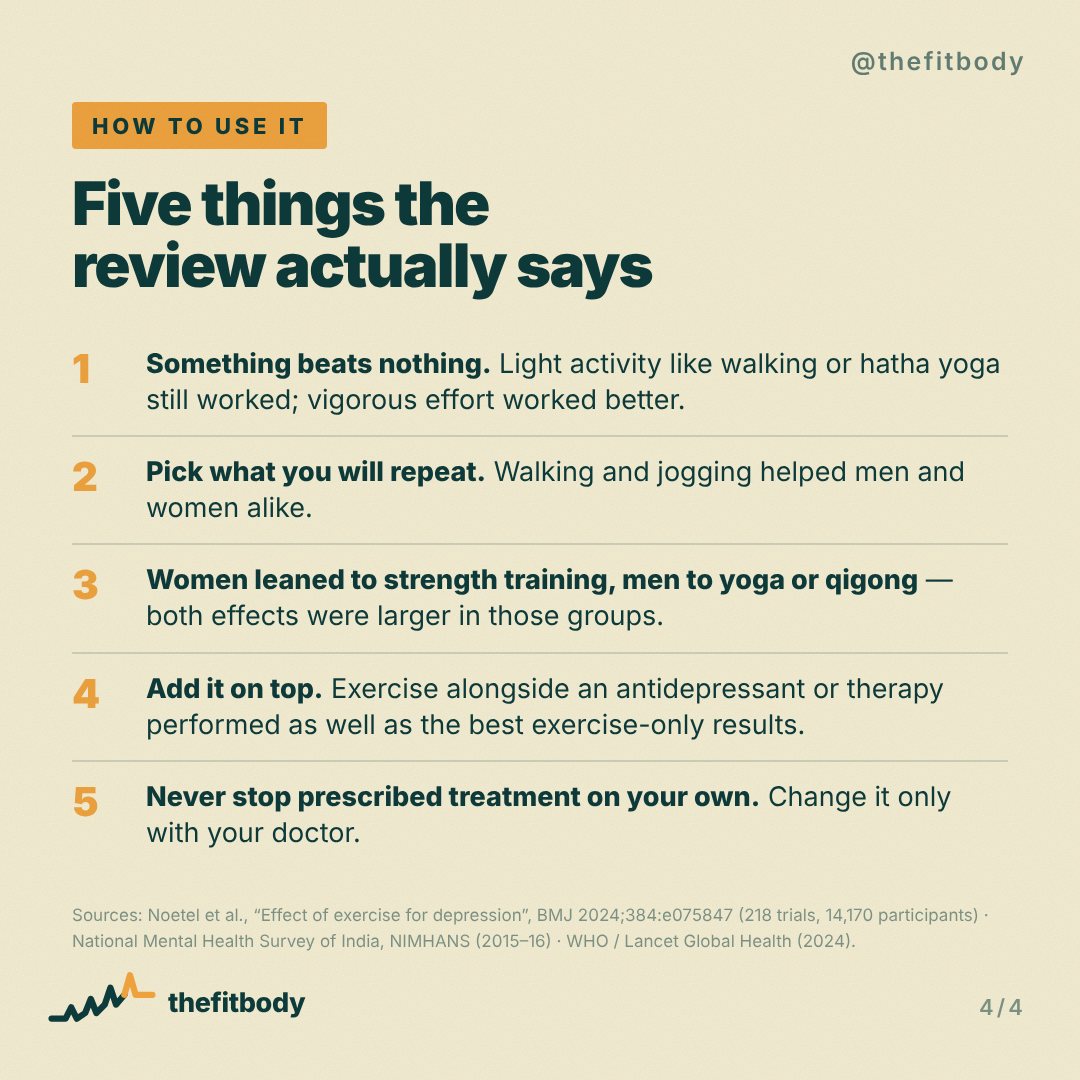
Five things the review actually says
- Something beats nothing. Light activity like walking or hatha yoga still worked; vigorous effort worked better.
- Pick what you will repeat. Walking and jogging helped men and women alike.
- Match it to you. Women leaned to strength training, men to yoga or qigong.
- Add it on top. Exercise alongside an antidepressant or therapy performed as well as the best exercise-only results.
- Never stop prescribed treatment on your own. Change it only with your doctor.
The carousel
The four slides from our Instagram and X post. Swipe through them, save them, share them.
Watch the video
Sources
- Noetel et al., BMJ (2024): Effect of exercise for depression, systematic review and network meta-analysis218 trials, 14,170 participants; effect sizes by exercise type.
- National Mental Health Survey of India 2015-16, NIMHANSPrevalence of depressive disorders; treatment gap.
- WHO / Lancet Global Health (2024)Physical inactivity among Indian adults.
- Tele-MANAS, Government of IndiaFree 24×7 mental health helpline, 14416.
General information for education, not medical or psychological advice. Figures are taken from the sources above; if you are struggling, please speak to a qualified professional.