
For decades the Indian food conversation was about having enough to eat. Today it is just as much about what we are eating: the fastest-growing part of our plate is no longer rice or roti — it is the packet.
Ultra-processed foods (UPF) are industrial formulations made with ingredients you would not find in a home kitchen — flavourings, emulsifiers, sweeteners and more. They are cheap, convenient, hyper-palatable and now everywhere.
The Data (Who, 2023)
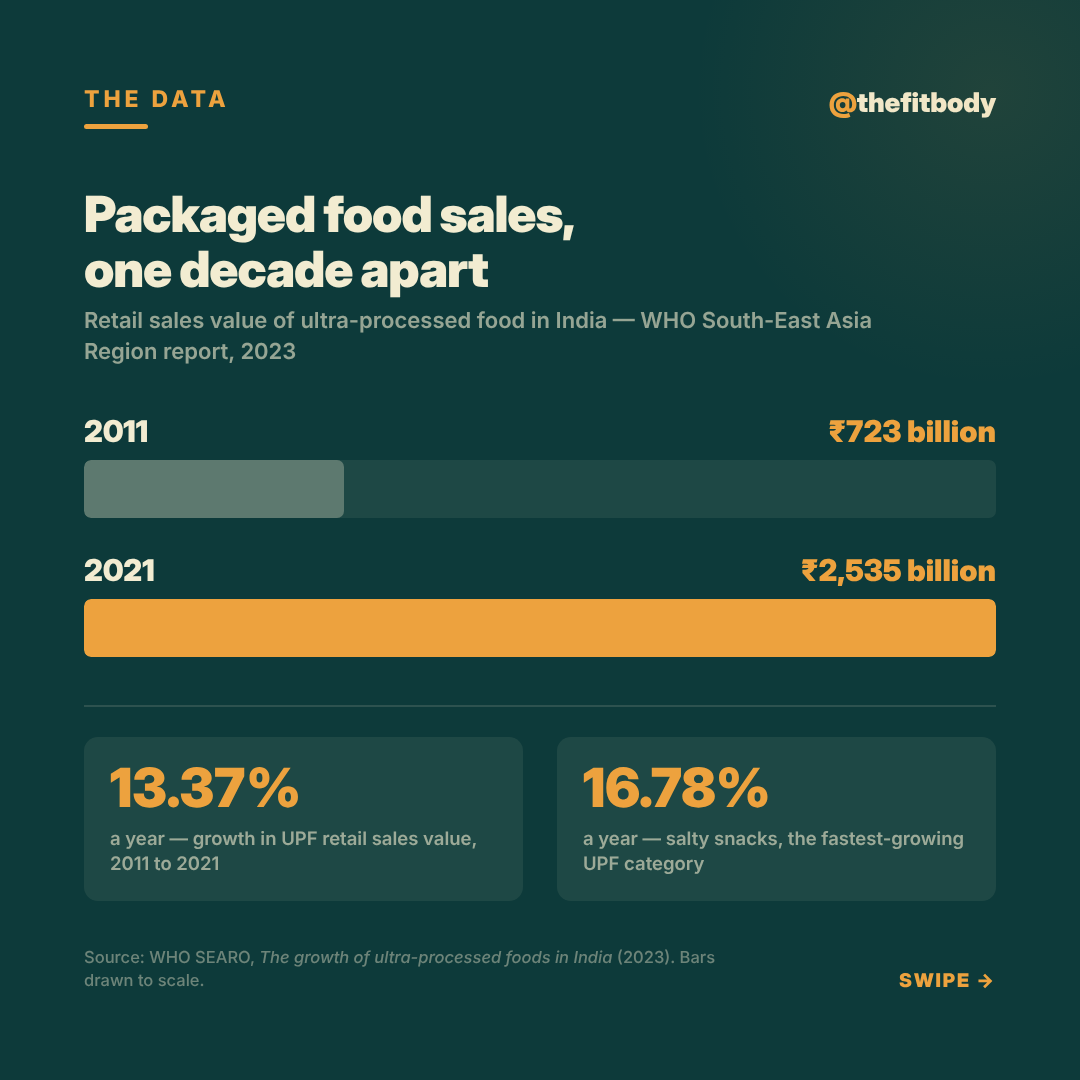
Ultra-processed food retail sales in India:
₹723 billion (2011) → ₹2,535 billion (2021).
13.37% growth a year, every year, for a decade.
Salty snacks grew fastest: 16.78% a year.
Why It Matters
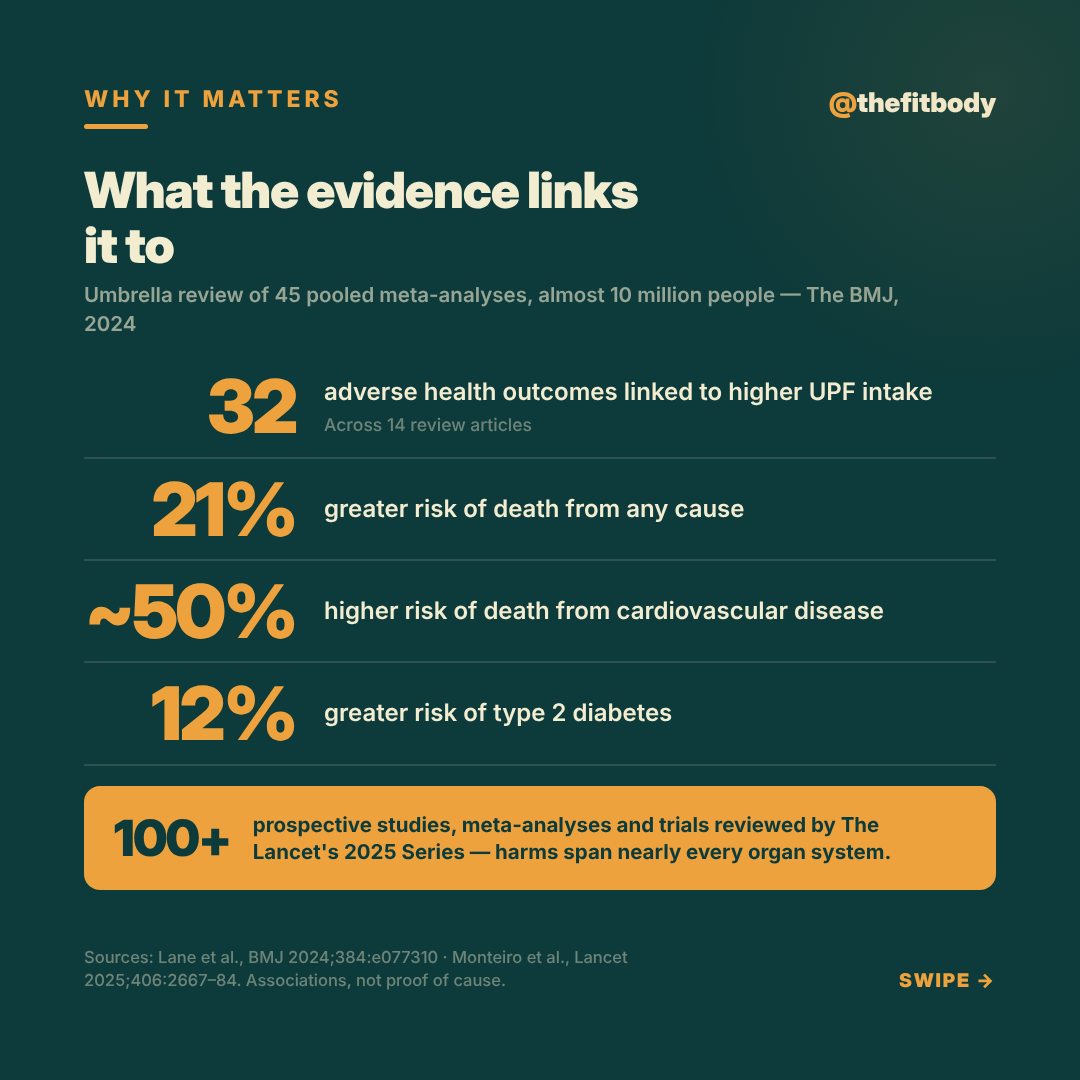
A BMJ umbrella review — 45 meta-analyses, almost 10 million people — linked higher UPF intake to 32 adverse health outcomes:
- 21% greater risk of death from any cause
- ~50% higher risk of cardiovascular death
- 12% greater risk of type 2 diabetes
Where It Hides
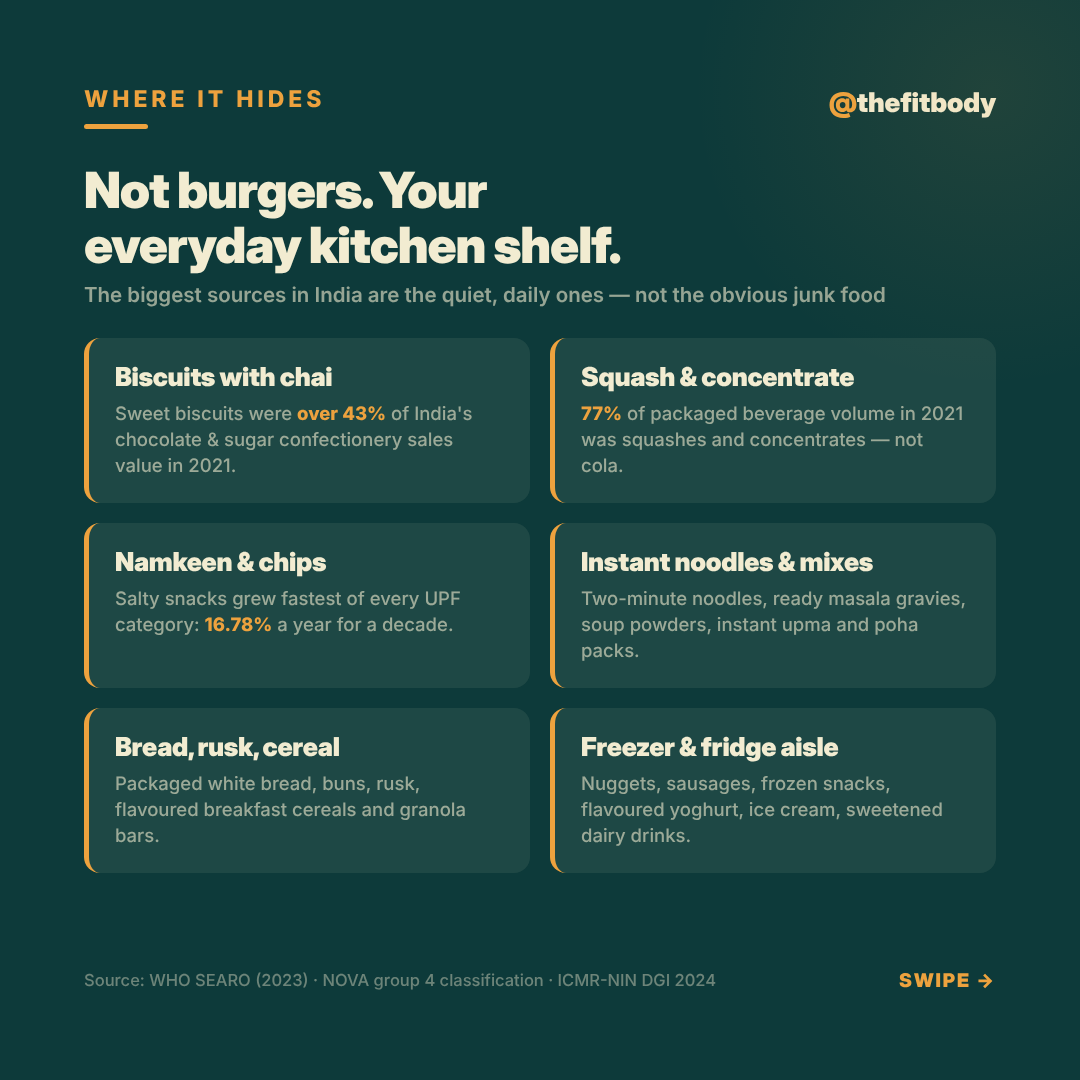
Not burgers. Your kitchen shelf.
- Sweet biscuits were over 43% of India’s chocolate & confectionery sales value in 2021. The chai-time biscuit is the one we eat most.
- 77% of packaged beverage volume was squash and concentrate — not cola.
- Namkeen, chips, two-minute noodles, ready masala gravies, rusk, flavoured cereal, nuggets, flavoured yoghurt.
Five Changes, Starting Tonight
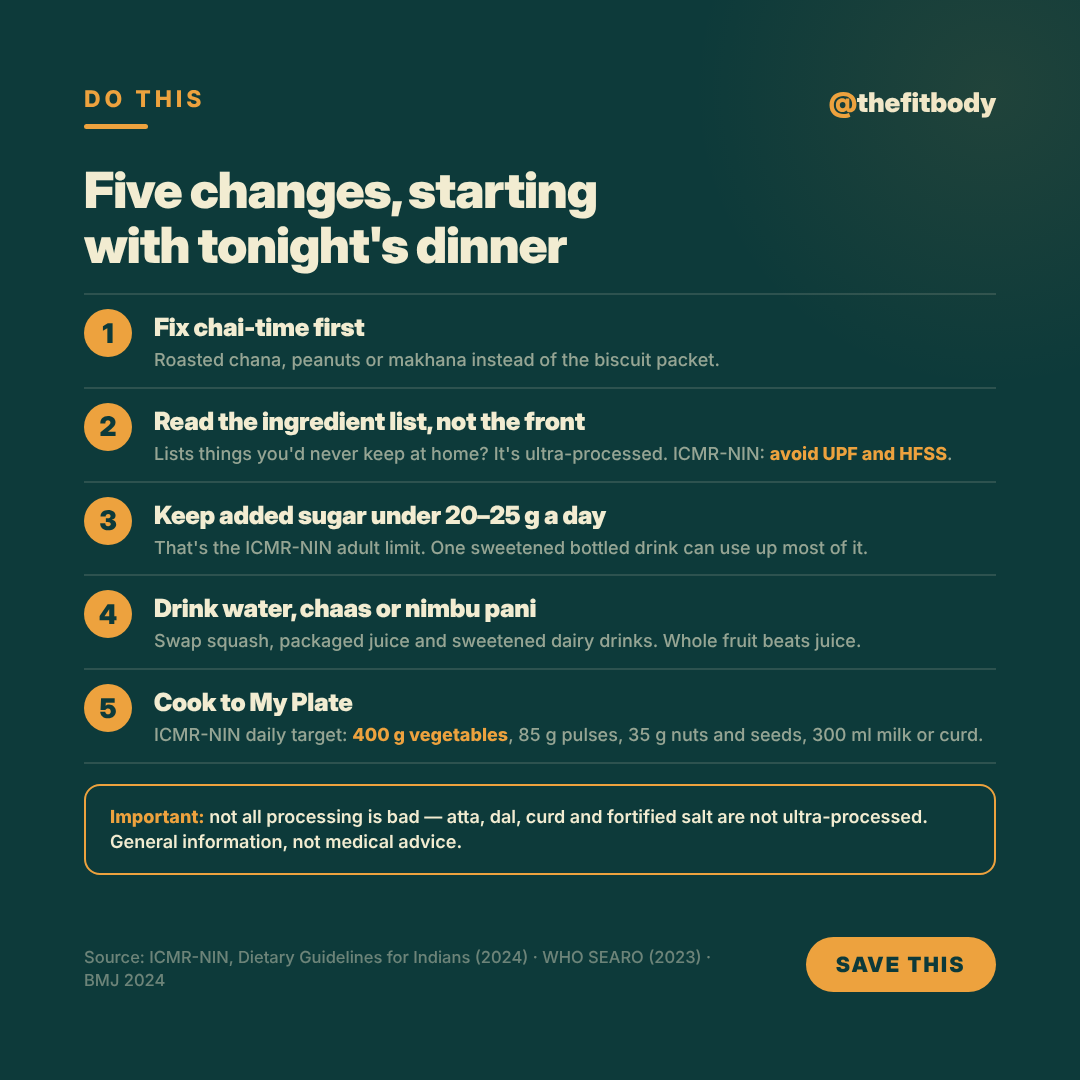
- Fix chai-time. Roasted chana, peanuts or makhana instead of the biscuit packet.
- Read the ingredient list, not the front. Things you’d never keep at home = ultra-processed. ICMR-NIN says avoid UPF and HFSS.
- Keep added sugar under 20–25 g a day — the ICMR-NIN adult limit. One sweetened bottled drink uses up most of it.
- Water, chaas or nimbu pani instead of squash and packaged juice. Whole fruit beats juice.
- Cook to My Plate: 400 g vegetables, 85 g pulses, 35 g nuts and seeds, 300 ml milk or curd daily.
Not all processing is bad. Atta, dal, curd and fortified salt are NOT ultra-processed. Dal-roti-sabzi-curd is still the answer.
Not all processing is bad
Atta, dal, curd and fortified salt are processed in the everyday sense, but they are not ultra-processed. The aim is not to fear every packet — it is to notice when the ingredient list is full of things you would never keep at home. Dal-roti-sabzi-curd is still the answer.
The carousel
The five slides from our Instagram and X post — swipe through them, save them, share them.
Sources
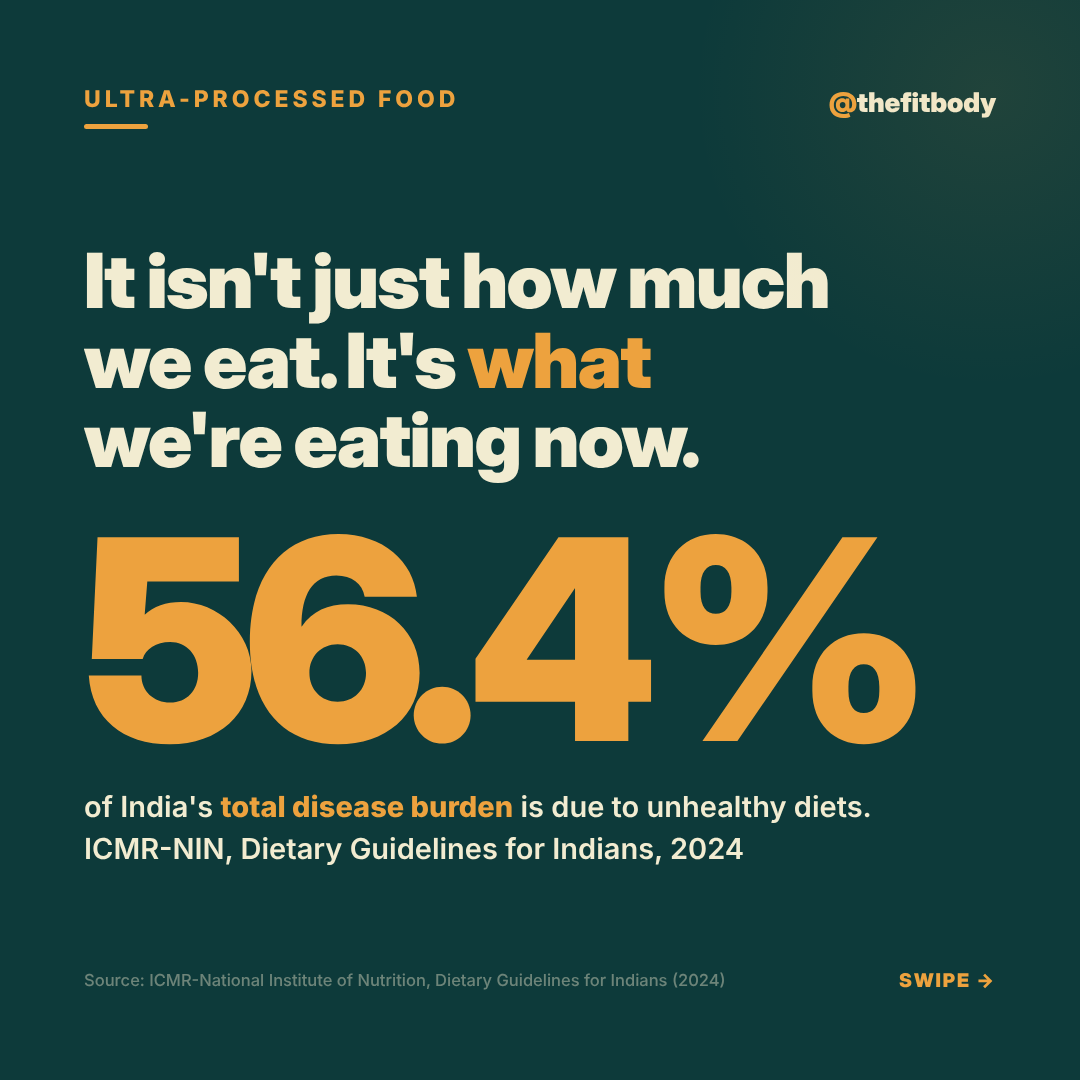
- ICMR-NIN — Dietary Guidelines for Indians (2024)56.4% of India’s total disease burden from unhealthy diets · added sugar limit of 20–25 g/day for adults · the instruction to avoid UPF and HFSS foods · My Plate daily targets (400 g vegetables, 85 g pulses, 35 g nuts and seeds, 300 ml milk or curd).
- WHO South-East Asia — The growth of ultra-processed foods in India (2023)UPF retail sales of ₹723 billion (2011) rising to ₹2,535 billion (2021) · 13.37% CAGR · salty snacks at 16.78% CAGR · sweet biscuits at over 43% of chocolate and sugar confectionery sales value in 2021 · 77% of beverage volume as concentrates and squashes.
- Lane MM et al. — Ultra-processed food exposure and adverse health outcomes: umbrella review. BMJ 2024;384:e07731032 adverse health outcomes · 45 pooled meta-analyses across 14 reviews, almost 10 million participants · 21% greater all-cause mortality risk · ~50% higher cardiovascular death risk · 12% greater type 2 diabetes risk.
- Monteiro CA et al. — Ultra-processed foods and human health: the main thesis and the evidence. Lancet 2025;406:2667–84The 100+ prospective studies, meta-analyses and trials behind the Lancet Series, and the finding that adverse outcomes span nearly all organ systems.
General information, not medical advice. Figures are taken from the sources above; if you have a medical condition, speak to your doctor before changing your diet or activity.